Special Report
The year of the great tossing


The year Indian news television channels got a sneak peek at what Pi Patel must have experienced while battling the raging storm in mid-seas in Ang Lee’s Life award winning Life Of Pi. Like Pi, news channels were tossed around, heaved up and down, had spear sharp rain and high waves buffeting them, got scalded by the hot sun, went through bouts of starvation and dying thirst – and they lived – at least most of them did – to tell the tale. It was a tough, tough year for them no doubt.
Rising inflation, a tough economic environment which saw advertising spends being slashed, rising costs for carriage on cable TV and DTH, further fragmentation and evaporation of viewership – all led to their top lines and even bottomlines being beaten black and blue. Net result: layoffs, restructuring, reorganisation, was the name of the game. To top it all, the regulators – the Information & Broadcast (I&B) ministry and Telecom Regulatory Authority of India (TRAI) – too got into the act. The I&B pushed ahead with its digitisation drive even as it cracked down on them for paid content, and the TRAI ordered a reduction in advertising time permitted on air on channels.
The news television industry has always had problems of plenty. More than 100 TV channels battle for a piffling Rs 2000 crore in ad spends. And more jumped onto the bandwagon during 2013 -an estimate is that around 25 new news channels made their debut. As though there wasn’t enough competition for the small morsels of advertising available in the various states and languages all over the country. But what kept the whole industry gloomy was the heartbeat aka advertising revenue which stayed flat for the whole year; and for some it even dipped. The big players were the ones who got to taste a little blood while the others struggled to make money out of inventory.

The alarm bells started ringing out earlier in the year when TAM Media the viewership ratings agency did a rejig with its panels and started reporting on LC1 towns and also a new set of data reflecting the digitisation that was spreading across phase 1 towns. As an outcome, some of the channels ended up showing near zero viewership. TAM said this was because real viewership patterns were cropping up with deeper penetration of people meters.
NDTV India, one of the older news broadcast networks, tried in vain to prosecute TAM’s parent AC Nielsen in the US on charges of fraud, but the NY court shooed it away, saying it should fight the legal battle on Indian turf. Allegations of TAM being rigged started rising to a cacophony and unanimously several channels decided to unsubscribe from TAM including NDTV, Times, CNN and Zee. A fierce battle issued between channels, advertisers and TAM that also saw support grow for the Broadcast Audience Research Council (BARC).Angry advertisers threatened to pull out advertisements from channels that had unsubscribed from TAM- including the seven big networks. After weeks of an impasse, resolution finally came about with rolling ratings of four weeks and silver, gold and platinum packs for clients. The major change coming about was the conversion of TRPs to TVTs. Satisfied channels finally went back to TAM but are still clinging on to the new lifeline-BARC.
It was in the second quarter of the year that a bunch of channels in Kolkata under the Saradha group went belly up with the financial and real estate group going bust. Questions were raised about the MIB’s laxity in issuing broadcasting licences. In a bid to tighten its procedures, it wrote to all channels, asking them to provide them with details about their operations and to see if they were still complying with the licence terms. Some 67 channels did not; and had their licences revoked. The MIB also became stricter about norms relating to directorial appointments on news channels’ boards.
But the big big fight of the year was the one that blew up when the TRAI introduced a quality of service regulation that restricted advertising air time to just 12 minutes per hour. Broadcasters who were accustomed to showing 20 to 25 minutes of ads experienced a jolt when this came out. They all collectively revolted, specially the news channels claiming that their revenue would be affected in an industry that is already suffering much losses. The News Broadcasters Association (NBA) also met the I&B ministry to ask TRAI to go easy on this regulation.The industry seems to have pacified the ministry on the content front at least, with the NBA, the Broadcast Editors Association, and the Indian Broadcasting Foundation (IBF)’s Broadcast Complaints Content Council (BCCC) in place. This despite, 2013 saw paid news being discussed very aggressively. Suggestions to set up a body to monitor broadcast – just like how the Press Council of India (PCI) does for the print media – were made. But the NBA opposed this strongly, saying that the self-regulatory mechanisms that are in place are enough to ensure that the news channels stay in line.
The news channels yelped that they feared a shut down if the ad cap were to be implemented right away. They suggested that the ad cap, if necessary to be implemented, should be concurrent with the completion of digitisation in the country as then there would be more revenue flowing in. I&B minister Manish Tewari seemed to concur and even came out in their support on this approach.
The interim order got smiles on some of their phases. The year 2013 was choppy to say the least for most of the news industry. High carriage fees, a slowdown in advertising growth, and extremely thin subscription revenues had forced even the older and long established news networks to look for solutions to keep their businesses viable. Almost all of them reorganized, consolidated their news operations which led to lopping off of bloated employee payrolls. The big buzzword during the year was the integrated newsroom – wherein a centralized bureau of journos and news crew helps service web, TV, and other online properties for a news network having several news channels.Finally the regulator decided to give the news channels some more time. A new advertising limit per hour was set. 20 minutes of ad time for news channels and 16 minutes for GECs till 30 September and after that everyone would have to together switch to 12 minutes and would have to submit compliance reports. But this formula did not go down well with the NBA even as the TRAI announced that it would rap violators on their knuckles. Some NBA members– along with some other niche channels – decided to take steps to protect themselves. They challenged TRAI’s mandate in the Telecom Disputes Settlement Appellate Tribunal (TDSAT) which heard arguments from all the affected parties for nearly 20 days. The NBA’s appeal to the tribunal got them an interim order preventing the regulator from taking any action against erring channels, allowing them to heave a collective sigh of relief. Even as the TDSAT was about to deliver its judgment, a coincidental verdict was given by the Supreme Court which stated that the tribunal had no power to hear or adjudicate on challenges to TRAI regulations. Swiftly, the TDSAT dismissed the case and the NBA immediately moved the Delhi Court to hear its plea. The Delhi High Court after listening to the initial appeal decided to get into its details later, giving the next hearing date as 13 March 2014. It however gave an interim order disallowing the TRAI from taking any coercive actions against channels not following the 12 minute ad cap.
At the time of writing, Zee Media Corp was slated to take the same route following the announcement of the merger of DMCL – the company that produces the Times of India-challenger newspaper DNA – with it. It had prepared for the merger by donning a new moniker, dropping Zee News and naming itself as Zee Media Corp. The year saw it running a skeleton Telugu news channel, even as it launched Zee Rajasthan Plus.Network18, NDTV, UTV Bloomberg, BAG Network, among many others shed staff. Network 18 bid adieu to nearly 350 people, NDTV shut down its Mumbai bureau itself and Bloomberg handed over the much dreaded pink slip to 30 staffers. Roles of those retained were redefined and they were given additional responsibilities.
Several other new offerings are lined up for 2014 including an English news channel, English business channel and two regional channels for Odisha and Bihar-Jharkhand . The company also repackaged itself and came up with a new positioning which seeks to attract India’s youth to watch its news channels.
The year 2014 looks set to be an exciting one with national elections on the anvil. Even international channels have taken note of this with Al Jazeera, France 24 and BBC World News sprucing up their presence in the country. But there are challenges that the broadcast news sector will have to face: the ad cap situation needs resolution, carriage fees need further reduction, and the struggle to make money continues. But what’s keeping the sector hopeful is the scheduled completion of digitisation by end 2014. The hope is that the dark clouds will part to reveal a silver lining. And then clear skies.With controversy surrounding the Sahara group and its consistent clashes with the Securities Exchange Board of India, it decided to drop the Sahara name from all the channels, retaining the Samay as a brand. India TV too changed its complete look while it has also brought on board several news professionals including veteran Q W Naqvi. Bag Films hired former Star group president Ravina Raj Kohli on its advisory board while IBN7 CEO Dilip Venkatraman left the organisation after giving it a new look. The ABP group announced that it would launch new services but was stalled on account of the MIB’s tough stance on licensing norms and procedures. Even then a rumour that persisted through the year was the rumour that its former partner Star India would re-enter the news channel business.
The year 2014 looks set to be an exciting one with national elections on the anvil. Even international channels have taken note of this with Al Jazeera, France 24 and BBC World News sprucing up their presence in the country. But there are challenges that the broadcast news sector will have to face: the ad cap situation needs resolution, carriage fees need further reduction, and the struggle to make money continues. But what’s keeping the sector hopeful is the scheduled completion of digitisation by end 2014. The hope is that the dark clouds will part to reveal a silver lining. And then clear skies.





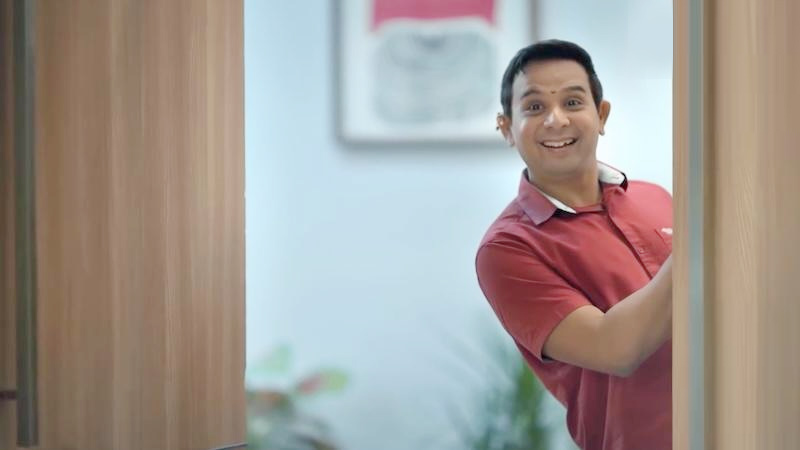
MUMBAI: Some friendships are made in heaven; others are coded in Mumbai. Hamara Vinayak, the first-ever digital original from Siddharth Kumar Tewary’s Swastik Stories, turns the divine into the delightful, serving up a story that’s equal parts start-up hustle and spiritual hustle.
Some tech start-ups chase unicorns. This one already has a god on board. Hamara Vinayak takes the leap from temple bells to notification pings and it does so with heart, humour and a healthy dose of the divine.
At its core, the show asks a simple but audacious question: what if God wasn’t up there, but right beside you, maybe even debugging your life over a cup of chai?
The show’s tagline, “God isn’t distant… He’s your closest friend” perfectly captures its quirky soul. Across its first two episodes, screened exclusively for media in Mumbai, the series proves that enlightenment can come with a good punchline.
The series follows a group of ambitious young entrepreneurs running a Mumbai-based tech start-up that lets people around the world book exclusive virtual poojas at India’s most revered shrines. But as their app grows, so do their ethical grey zones. Into this chaos walks Vinayak, played with soulful serenity and sly wit by the charming Namit Das, a young man whose calm smile hides something celestial.

He’s got the peaceful look of a saint but the wit of someone who could out-think your favourite stand-up comic. Around him spins a crew of dream-driven youngsters – Luv Vispute, Arnav Bhasin, Vaidehi Nair and Saloni Daini who run a Mumbai-based tech start-up offering devotees across the world the chance to book “exclusive” poojas at India’s most sacred shrines. It’s a business plan that blends belief and broadband – and, as the story unfolds, also tests the moral compass of its ambitious founders.
“The first time I read the script, I found the character very pretty,” Namit joked at the post-screening interaction. “It’s a beautiful thought that God isn’t distant, he’s your closest friend. And playing Vinayak, you feel that calm but also his cleverness. He’s the friend who makes you think.”
The reactions to the series ranged from smiles to sighs of wonder. Viewers were charmed by the show’s sincerity and sparkle, a quality that stems from its creator’s belief that faith can be funny without being frivolous.
Among the cast, Luv Vispute shines brightest, his comic timing adding sparkle to the show’s more reflective beats. But what keeps Hamara Vinayak engaging is the easy rhythm of its writing – one moment touching, the next teasing, always gently reminding us that spirituality doesn’t have to be solemn.
Luv spoke fondly of his long association with Swastik. “Since my first show was with Swastik, this feels like home,” he said. “Every project with them is positive, feel-good, and this one just had such a different vibe. I truly feel blessed.”
Saloni Daini, who brings infectious warmth to her role, added that she signed up the moment she heard the show was about “Bappa.”
“We shot during the Ganpati festival,” she recalled. “The energy on set was incredible festive, faithful, and full of laughter. It’s such a relatable story for our generation: chaos, friendship, love, kindness, and faith all mixed together.”

Vaidehi Nair and Arnav Bhasin complete the ensemble, each representing different shades of ambition and morality in the start-up’s journey. Their camaraderie is easy and believable, a testament to how much the cast connected off-screen as well.
This clever fusion of mythology and modernity plays to India’s two enduring loves, entertainment and faith. Mythology has long been the comfort zone of Indian storytellers, from the televised epics of the 1980s to the glossy remakes that still command prime-time TRPs. For decades, gods have been our most bankable heroes. But Hamara Vinayak tweaks the formula not by preaching, but by laughing with its characters, and sometimes, at their confusion about where divinity ends and data begins.
Creator Siddharth Kumar Tewary, long hailed as Indian television’s myth-maker for shows like Mahabharat, Radha Krishn and Porus, explained the show’s intent with characteristic clarity, “This is our first story where we are talking directly to the audience, not through a platform,” he said. “We wanted to connect young people with our culture to say that God isn’t someone you only worship; He’s your friend, walking beside you, even when you take the wrong path. The story may be simple, but the thought is big.”
That blend of philosophy and playfulness runs through the show. “We had to keep asking ourselves why we’re doing this,” Tewary added. “It’s tricky to make something positive and spiritual for the OTT audience, they’ve changed, they want nuance, not sermons. But when the purpose is clear, everything else aligns.”
For the creator of some of Indian TV’s most lavish spectacles, Hamara Vinayak marks a refreshing tonal shift. Here, Tewary trades celestial kingdoms for co-working spaces and cosmic battles for office banter. Yet his signature remains: an eye for allegory, a love for faith-infused storytelling, and an understanding that belief is most powerful when it feels personal.
Hamara Vinayak, after all, feels less like a sermon and more like a conversation over chai about what success means, what faith costs, and why even the gods might be rooting for a start-up’s Series A round.
As Namit Das reflected during the Q&A, “Life gives us many magical, divine moments we just forget to notice them. Sometimes even through a phone screen, you see something that redirects you. That’s a Vinayak moment.”
The series also mirrors a larger cultural pivot. As audiences migrate from television to OTT, myth-inspired tales are finding new form and flexibility online. The digital screen lets creators like Tewary reinvent the genre, giving ancient ideas a modern interface, without losing the emotional charge that’s made mythology India’s storytelling backbone for decades.
In a country where faith trends faster than any hashtag, Hamara Vinayak feels both familiar and refreshingly new, a comedy that’s blessed with heart, humour and just enough philosophy to keep the binge holy.
For a country where mythology remains the oldest streaming service, Tewary’s move from TV to OTT feels both natural and necessary. Indian storytellers have always turned to gods for drama, guidance and TRPs from Ramayan and Mahabharat on Doordarshan to glossy mytho-dramas on prime time. But digital platforms allow creators to remix reverence with realism, and in Hamara Vinayak, faith gets an interface upgrade.
The result is a show that feels like a warm chat with destiny, part comedy, part contemplation. And in an age of cynicism, that’s no small miracle.
As Tewary put it, smiling at his cast, “The message had to be positive. We just wanted to remind people that even in chaos, God hasn’t unfriended you.”
With 5 episodes planned, Hamara Vinayak promises to keep walking that fine line between laughter and light. It’s mythology with memes, devotion with dialogue, and a digital-age reminder that even the cloud has a silver lining or perhaps, a divine one.
If the first two episodes are any sign, the show doesn’t just bridge heaven and earth, it gives both a Wi-Fi connection.






