Event Coverage
Legal issues, copyright & intellectual property rights in the entertainment industry

The session was inaugurated by Jorgen Blomqvist, director of Copyright Law Division of the World Intellectual Property Organisation (WIPO). While putting forth the need for India to follow WIPO regulations, he came out with the salient features of the organisation.
Government support, inexpensive nature, lack of formalities and the automatic global protection in 145 countries were among the special advantages WIPO had, according to Blomqvist.
The media market is divided into few Gigaplayers (read huge) and innumerable small and medium size enterprises. The big players know and have the capabilities to protect their interests as far as copyrights are concerned but it is the smaller player who is the victim of copyright violations.

“It is the private individual’s rights that have to be taken care off, as this section is not protected and there is nobody except the person himself who has to manage the rights. Copyright protection is more dependent on self-determination, where the management cost in terms of the cost of monitoring, enforcement, legal support, etc is very high and at times may be more than the damages awarded,” says Blomqvist.
“The solution can be the collective management of the rights. In this case the associations of the respective fields will play a major role,” opined Blomqvist. “This will provide some kind of system and additional bargaining power/collective pricing.”
“Even the Insurance sector can play a major role by insuring the work as individuals and medium size enterprises can opt for that at a comparatively cheaper rate and can at least be guaranteed some compensation.” He gave the example of Hindi films that are shown in many parts of the world from Africa to Latin America, which is the best example of copyright violation. When asked about what kind of action could be taken by WIPO, he replied that WIPO itself could not take any action, but it intimates the government in that country to take action.
Talking about copyright violations due to the new technologies, specifically the Internet, he said the Internet has given a new global outlet for violation. This medium is fast and comparatively inexpensive but at the same time high piracy and high cost of monitoring discount the benefits. “The contributory liability of the Internet Service Providers needs to be fixed if piracy is to be controlled.”
Sanjay Tandon, director-general of Indian Performing Rights Society, while talking about “Challenges of Internet & Cyberlaws & Enforcement of copyright laws”, said the recent explosion in piracy cases is due to the high quality and cheaper reproduction facilities which make the pirated version easily available and at a much cheaper rate than the original. Technology can also play a major role. Like one can have his work in encrypted or digital form, which to some extent will reduce violations.
The most obvious challenge in fighting against it is enforcement. IPRS has done good work in the last few years. From recoveries of Rs 2 million five years ago they collected Rs 60 million in the year ending 31 march 2001 as penalties for violations. Out of this, more that 86 per cent has been distributed as compensation to concerned parties.
As far as Internet piracy is concerned, he was of the opinion that the point at which a person can have control over it is the ISP provider. Efforts are being made to make ISPs responsible. They should be aware of any such activity and they have carry out due diligence. They can have electronic filters, which will check the matter.
There are five ways in which music is disseminated on the Internet
1) E-Music – No prior permission required
2) Internet radio – Similar to normal radio broadcasting. Same norms applicable.
3) Music Magazine – Moral rights of the authors has to be taken.
4) Talent – Copyright applicable. Prior licensing required.
5) MP3-Clearance of reproduction, distribution, etc rights to be acquired.
Sharad Abhyankar of Little and Co. highlighted technical requirements like encryption, electronic copyright management systems, digital objects, proprietary viewers, watermarks (digital coding on the software which allows the owner to trace the reproduction) and real time audio and video which could play a major role in preventing piracy.
Further, he gave more weightage to the written contract saying that it is more important to note the “what if not performed” clause. Proper documentation including all the terms and conditions is very important in case any controversy arises, as in a court of law only written proofs are considered valid.
He dwelt at length on assignment versus licensing rights as each right can be identified and sold separately. The onus is on the owner of the work to find out various licensing rights that can be created and sold. In his opinion the set top box would prove to be a better surveillance instrument as it will record all the data that is transferred which will play a major role in future to control piracy.
Andre Chaubeau, director-general of the Paris based global copyrights organisation FIAPF (International Federation of Film Producers Associations) that works closely with WIPO and the World Customs Organisation. They are also evolving the global standard for all audio-visual properties called ISAN (International Standard Audiovisual Number). ISAN will be a 16-digit number, which will identify any audiovisual work.
The purpose of any such effort is to make an ISO standard identification database, which will be available publicly and can be used by broadcasters. This will make it easier to identify the work anywhere in the world, which will help to control piracy.
ISAN has already registered 600,000 works. “It is quite similar to a watermark except that it applies to both analogue and digital intellectual properties. Based on this number the product can be identifiable as well as the rights attached to the product will also be taken care of,” says Chaubeau. There are a number of other things that have to prepared and the backend has to be made active before it becomes really effective, but the effort is definitely towards that direction.
“The project is nearly complete and we will be setting up five regional offices by December 2001 and functioning will start from Jan 2002,” Chaubeau said, when asked when ISAN would start functioning.
KC Low, vice-president of Warner Chappel Music Publishing, explained the business of music publishing, which is a comparatively new concept in India. While talking about the large-scale violation of copyright, he illustrated it by playing an original song in Tamil recorded in Indonesia in 1996 and its direct lift in Mann, a Hindi film released in 1999.
Session:Legal issues, copyright & intellectual property rights in the entertainment industry
Moderator:Raj Tilak, Film Federation of India
Speakers:
Jorgen Blomqvist, director of Copyright Law Division of the World Intellectual Property Organisation (WIPO) – New technology copyright and small and medium sized enterprises
Sanjay Tandon, director-general of Indian Performing Rights Society-Challenges of Internet & cyber laws & enforcement of copyright laws
Sharad Abhyankar, Little and Co – Uniform commercial & legal practices in relation to copyright
Andre Chaubeau, director-general, FIAPF, Paris – New Tech. and the identification and management of rights in films
KC Low, vice-president, Warner Chappel Music Publishing






Event Coverage
Anime India announces Amazon MX Player as co-presenting partner for Anime India Kolkata 2026
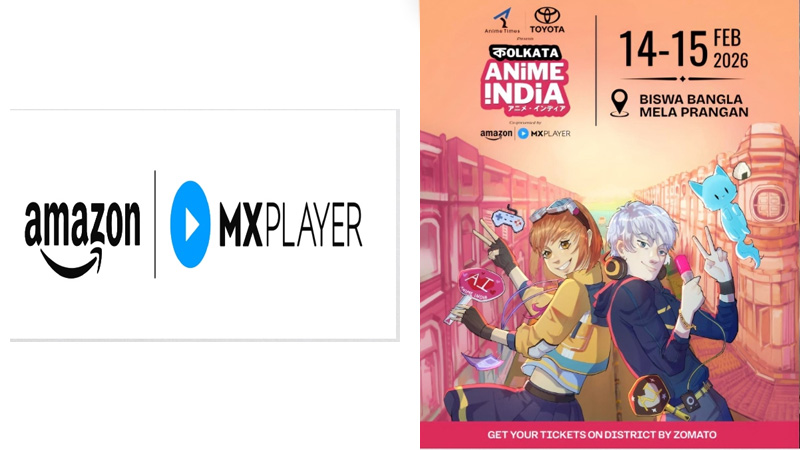
MUMBAI: Riding high on the success of its blockbuster Mumbai debut, Anime India is accelerating its nationwide expansion with the announcement of Amazon MX Player as the co-presenting partner for Anime India Kolkata. The partnership marks a significant step forward in the festival’s mission to deliver large-scale, accessible, and fan-first anime experiences across the country.
Scheduled for 14 and 15 February 2026 at the iconic Biswa Bangla Mela Prangan, Anime India Kolkata will launch the first regional chapter of what is set to be a year-long, multi-city tour. As the curtain-raiser for the 2026 circuit, the Kolkata edition aims to fuse the energy of global Japanese pop culture with India’s fast-growing community of anime, manga, and pop-culture fans.
A household name in digital entertainment, Amazon MX Player brings unmatched reach and cultural relevance to the Anime India platform. With its expanding focus on anime and youth-driven content, Amazon MX Player’s involvement as co-presenting partner reinforces Anime India’s vision of making anime culture more inclusive breaking barriers of language, geography, and accessibility to connect with fans nationwide.
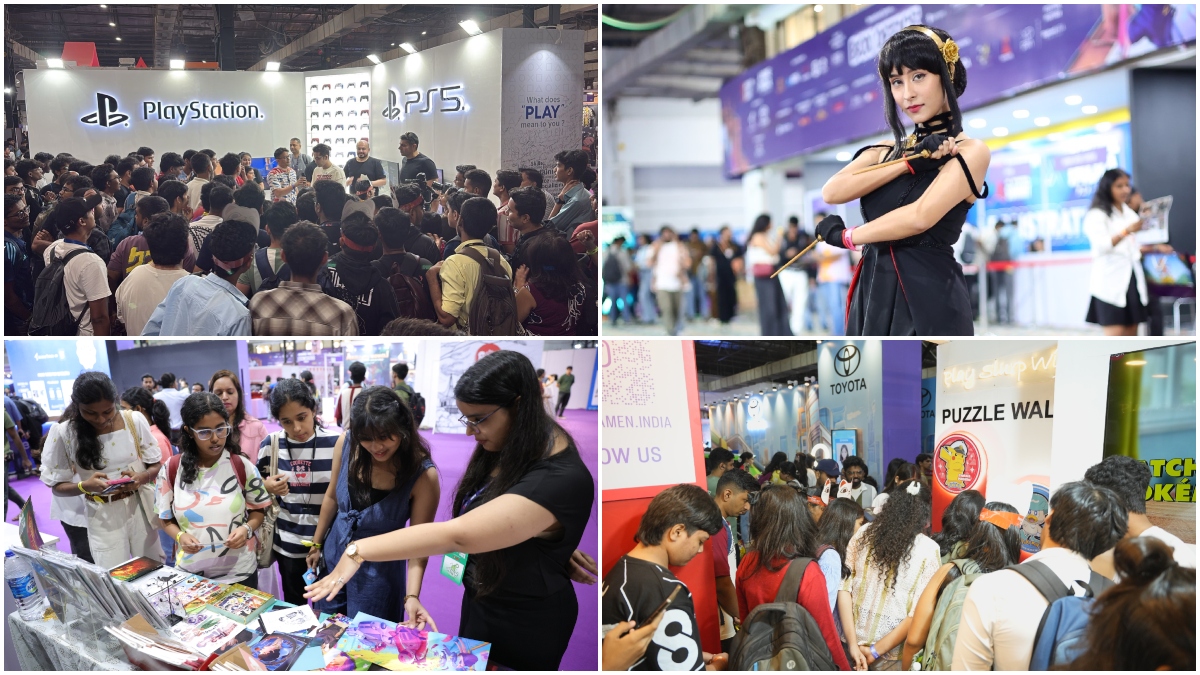
Anime India Kolkata 2026 will showcase cosplay competitions, interactive zones led by the Indian Gunpla Community, India-39 Vocaloid Community, The Japan Curry, and Adda-o-Otaku by The Otaku Guild. Fans can join tournaments across fighting games, Pokémon VGC, and more. Acclaimed Japanese director Susumu Mitsunaka (Haikyu!!) will attend as guest of honour, appearing in panels and live sessions. Positioned as an immersive celebration of fan culture and industry collaboration, the Kolkata edition marks the beginning of Anime India’s nationwide expansion.
Sharing their perspective on the partnership, Amazon MX Player director Aruna Daryanani expressed, “Anime in India has evolved from a niche interest into a mainstream cultural movement, driven by an increasingly engaged and passionate fanbase. At Amazon MX Player, our focus is on expanding access by bringing anime to audiences across the country for free and in multiple local languages. Our association with Anime India reflects our commitment to supporting the growth of anime in India and deepening connections with fans, while continuing to build Amazon MX Player as a trusted destination for free, high-quality entertainment.”
“Anime India Kolkata is a celebration of how anime has grown beyond entertainment into a powerful cultural and creative force. By bringing fans, creators, and industry leaders onto one shared platform, the festival is helping define the future of pop culture in India,” said Anime India co-founder and director Neha Mehta.
The debut edition of Anime India 2025 in Mumbai attracted over 29,000 fans, quickly cementing its status as a landmark celebration of anime and Japanese pop culture. Riding on this overwhelming response, the Kolkata chapter is projected to draw more than 40,000 visitors across two days, positioning it as one of the biggest anime conventions ever held in eastern India.
Anime India is focused on bringing together fans from across the country to create a truly pan-India celebration of anime, manga, cosplay, gaming, and Japanese culture. With plans to expand into four key metropolitan hubs in 2026—east (Kolkata), north (Delhi), west (Mumbai), and south (Hyderabad)—the festival seeks to deliver globally benchmarked experiences while supporting and uplifting creators, artists, and fan communities throughout India.






