Specials
India’s women leaders push for real change this International Women’s Day
From boardrooms to bike rallies, the women rewriting the rules ofleadership, health, and hustle

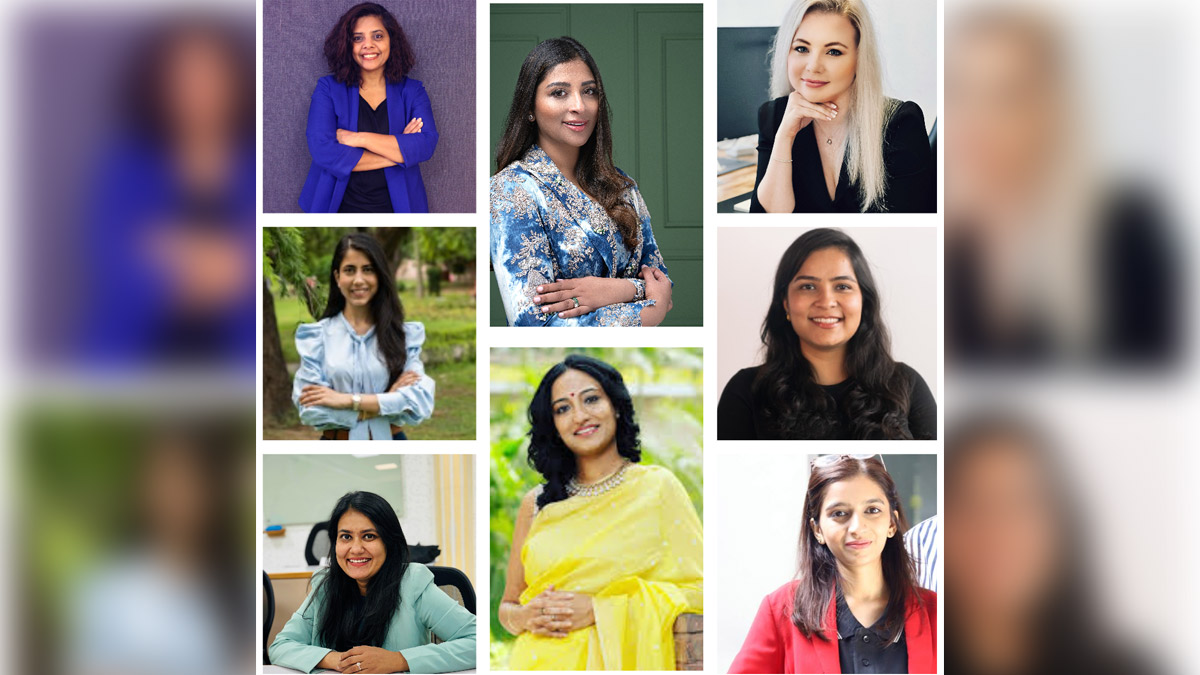
MUMBAI: Every year, International Women’s Day arrives with its banners, its hashtags, and its well-meaning declarations. But in 2026, something feels a little different. Across India’s boardrooms, clinics, startups, and HR departments, a chorus of women in leadership is saying, rather pointedly, that intent without action is just noise. From a healthcare giant championing women on night-time road rallies to a PR founder from Bihar who became the first entrepreneur in her family, the voices shaping this year’s conversation are vivid, varied, and refreshingly direct.
Here is what they had to say.
The wellness revolution

Richa Jaggi, co-founder and CMO at Awshad, sets the tone with a reminder that self-care is not a luxury but a leadership imperative.
“Women’s Day is a powerful reminder of the importance of prioritising holistic wellbeing, both for ourselves and for the communities we nurture. Today, more women are taking charge of conversations around health, mental wellness, and natural healing, breaking long-standing stigmas along the way. When women lead these conversations, the future of wellness becomes more inclusive, compassionate, and empowering for everyone.”
The confidence gap nobody talks about
Ritika Sinha, co-founder at Rocket Health, has a habit of paying close attention in meetings. What she has noticed is both fascinating and a little deflating.
“In rooms where both men and women are asked to speak about their work, I’ve often noticed an interesting pattern. Ask men to introduce what they do, and they’ll comfortably speak for several minutes, sometimes you have to ask them to stop. Ask women the same question, and even if you give them three minutes, many will finish in one. This shows the confidence gap that still persists, even when the capability gap does not. Closing the confidence gap means encouraging women to speak about their work unapologetically and claim leadership spaces. As more women step into these roles, organisations must also build cultures that prioritise wellbeing, because sustainable leadership is not just about being at the table, but being supported enough to stay there.”
It is a sharp observation, the kind that makes you glance around a meeting room and start mentally clocking the minutes.
From Bihar to the boardroom
Not every woman walks into a corner office with a safety net. Shalu Jha, co-founder and COO of PRandit Solution, grew up in Bihar with no entrepreneurial blueprint to follow. She did it anyway, and she thinks it matters enormously that others can now see it.
“Coming from Bihar and being the first entrepreneur in my family, I’ve seen how representation can change aspirations. When more women lead companies, tell stories, and shape narratives, it doesn’t just change boardrooms, it changes mindsets. In the communications industry, women are no longer just participants; they are becoming decision-makers who influence how brands, startups, and social impact stories are told. International Women’s Day is a reminder that empowering women in leadership ultimately strengthens the entire business ecosystem.”
Healthcare’s unfinished business
Few industries illustrate the representation paradox more starkly than healthcare, where women make up the vast majority of the workforce but a far smaller share of its leadership. Alisha Moopen, deputy managing director at Aster DM Healthcare India, has the numbers to prove it and the conviction to demand better.
“According to the latest Global Gender Gap Index by World Economic Forum, women comprise roughly 41% of the global workforce yet they hold only about 28.8% of senior leadership roles, a stark reminder that representation alone doesn’t equal opportunity. As we mark International Women’s Day, leaders and institutions must move beyond intent to action by actively nurturing talent and enabling equal access to opportunities. The theme ‘Give to Gain’ serves as a timely reminder that when organisations invest in empowering women, they ultimately build stronger teams, more innovative institutions, and a more equitable and inclusive future for society. When we create spaces where women can thrive without barriers, we unlock not just individual potential, but collective progress.
Enabling women to participate meaningfully in decision-making not only strengthens organisations but also inspires the next generation of professionals to aspire and lead with confidence. This is especially significant in healthcare, where women represent nearly 58.5% of the global workforce, yet their presence in top leadership roles does not proportionately reflect their contribution. Bridging this gap is not just about equity, it is about effectiveness. Diverse leadership in healthcare plays a critical role in building resilient institutions and delivering compassionate, patient-centric care. Because when women rise, healthcare systems become stronger, communities become healthier, and societies move forward with greater empathy and equity.”
Building confidence before the interview
Rakhi Pal, co-founder and COO of EventBeep, works at the intersection of education and employment, and she has a clear view of what young women need before they can claim a seat at any table.
“True progress happens when opportunity is not limited to those with the right networks or advantages. In education and recruitment today, there is a growing focus on helping young women build real career confidence through mentorship, skill development, and practical exposure to industry. When women are supported with the right tools, training, and opportunities to grow, they step into the workforce with stronger voices and fresh perspectives. That is when we truly begin to see leadership and innovation expand in meaningful ways.”
Give to gain: More than a slogan
This year’s official theme, Give to gain, has prompted a range of interpretations. Veronika Folkova, senior director and people business partner at Confluent, is not interested in the symbolic reading.
“This year’s theme #GiveToGain feels especially relevant in today’s workplace. For me, giving is not symbolic, it is structural. When workplaces actively involve women, create equitable opportunities, and invest time in mentorship, the outcome is not just inclusion, it is stronger business performance as well. I feel diverse leadership drives better decisions, deeper innovation, and greater resilience. Yet representation does not improve by intention alone; it improves when those in positions of influence consciously give access, visibility, and advocacy. Organisations that embed this mindset don’t just advance women; they build cultures of trust and sustained growth. Real progress begins when giving becomes leadership behaviour, not just Women’s Day messaging.”
Every day, not just one day
At Hero MotoCorp, Women’s Day is not being treated as a calendar event. Madhuri Mehta, chief human resources officer, explains how that ethos translates into actual programmes, from leadership development to late-night road safety rallies for women.
“At Hero MotoCorp, Women’s Day is not a moment we celebrate once a year, it is a commitment we act on every day. We believe it is about enabling equal participation, opportunity and safety. From nurturing women leaders across our workforce through our Women in Leadership (WIL) program to championing inclusive mobility through #SheRides or livelihood initiatives such as Project Jeevika, we view women’s empowerment as a holistic and impact-driven effort.
This International Women’s Day, we are taking this vision a step further by extending our commitment both within and beyond our organisation. Under our Ride Safe India initiative, we are driving inclusive road safety by organising a women’s night rally and awareness sessions that encourage confidence, respect and responsibility on the road. At the organisational level, we are celebrating women across our ecosystem through a month-long series of engagements focused on financial, physical, and mental wellness, covering topics from creative expression and financial literacy to self-defence. Inspired by the ‘Give to Gain’ theme, we will also be hosting forums for discussion with inspiring voices, creating space for dialogue while celebrating women across our ecosystem.”
Redesigning the office altogether
Perhaps the most spirited contribution comes from Priyanka Agrawal, co-founder of Punt Partners, who brings a welcome dose of wit to what can sometimes be a rather earnest conversation.
“Women entrepreneurs today aren’t just pushing through doors, they’re redesigning the office altogether, so there’s room for everyone (and maybe a little extra sunshine). Their leadership style is less about power and control and more about genuine connection and creativity, turning challenges into opportunities and teams into communities.
Take Katrina Lake, who mixed tech with personal touch to transform how people shop, or Whitney Wolfe Herd, who flipped dating apps upside down and put women in charge. These trailblazers remind us that leadership isn’t about fitting an old mould, it’s about making new ones, often with a dash of humour and a lot of heart. Whether it’s supporting fellow entrepreneurs, advocating for diversity, or simply leading by example, women are making leadership kinder, braver, and far more relatable.
So hats off to the women who lead, laugh off the outdated rules, and show us every day that success is sweetest when shared.
And here’s the thing: when working with the younger generation, ‘gender’ is barely even on their radar, so why drag it onto the agenda? They’re more interested in vision, values, and ideas. Let’s follow their lead and focus on what truly matters: building workplaces where everyone can thrive, laugh, and lead, with no labels needed.”
Taken together, these voices paint a portrait of a country where the conversation around women in leadership is growing sharper, louder, and considerably less patient with empty gestures. The boardrooms are changing. The roads are being claimed at night. The confidence is being built, one mentorship and one well-spoken minute at a time. As Folkova puts it, real progress begins when giving becomes a leadership behaviour, not just Women’s Day messaging. Given the energy in the room this year, that shift seems to be well underway.





Specials
Flipkart reveals what India bought for International Women’s Day
Flipkart data show a 5 per cent year-on-year surge in demand, with Gen Z driving a wellness boom and quick commerce growing fivefold

BENGALURU: India did not just send flowers this International Women’s Day. It sent smartphones, sarees and protein supplements. Data from Flipkart’s #FlipTrends report show overall platform demand surging 5 per cent year on year in the fortnight between February 23rd and March 8th, and the numbers reveal a nation that has turned a single calendar date into a multi-week retail moment.
Popular product choices clocked a 37 per cent year-on-year jump in orders and a 12 per cent rise in search queries. Women’s ethnic sets, sarees and mobiles were the top gifting picks, cutting across customer segments. The male-to-female shopper ratio stood at 2:1, with men buying gifts for mothers, sisters, partners, colleagues and friends, but that ratio is narrowing fast, as women shopped for themselves with notable purpose.
Gen Z shops with intent
Gen Z was the most engaged cohort, driving a 14 per cent year-on-year surge across fashion and lifestyle. The generation shopped not for indulgence but for need: searches linked to hair fall, skin pigmentation, stress, sleep and PCOS-friendly fitness rose sharply. Self-care and wellness categories, including protein supplements, vitamins, period care and grooming devices, led the charge, alongside beauty sub-categories such as face wash, face creams and sunscreens, which recorded the highest increase in demand.
Quick commerce comes into its own
Flipkart Minutes, the company’s quick-commerce arm, recorded over fivefold year-on-year growth between February 23rd and March 8th, a sign that last-minute gifting is no longer the domain of the corner florist. Curated International Women’s Day storefronts drew higher engagement than regular browsing, with shoppers discovering greeting cards, plant saplings, rings, handbags, bracelets and belts through themed collections.
Hyderabad topped the country for Women’s Day orders. Yet the more striking story was geographic spread: metros such as Ahmedabad, Chennai and Chandigarh were joined by a clutch of Tier 2 and 3 cities, including Jamshedpur, Dehradun, Coimbatore, Ranchi, Nashik, Agra, Durgapur and Bhubaneswar, signalling that aspirational, occasion-led shopping is no longer a metropolitan privilege.
If the data tell a broader story, it is this: the Indian woman is no longer waiting to be gifted wellness. She is buying it herself, in bulk, on her own terms. And she is doing it from Ranchi as readily as she is from Mumbai.






