Resources
Trai’ng hard but falling way too short


Some like it; some don’t. But there’s no denying that the Telecom Regulatory Authority of India (Trai)-mandated pay channel prices in CAS areas (Rs 5 for all pay channels) is going to stir up much more than just a storm in the proverbial cup.
It’s like those weekly village markets that are quite popular in India where the refrain is har maal paanch rupaiya mein (every product priced uniformly at Rs 5). The actual price may differ a bit, but the concept adopted by Trai is the same. Reason: low and uniform prices attract buyers.

|
Faster the adoption of a technology like CAS, sooner more transparency will come into the Indian broadcast and cable industry, which has been plagued by massive under-declaration by cable ops |
A low price entry point for a new technology — about which myths abound still for the general public — is certainly a good way of incentivising its quick adoption. And, faster the adoption of a technology like CAS, sooner more transparency will come into the Indian broadcast and cable industry, which has been plagued by massive under-declaration by cable operations and other such ills in the absence of any regulation.
But in attempting to keep cable TV as a mass service —- which it is, anyway — and having the prices of all pay channels uniform, Trai has forgotten one important aspect of regulatory process: the cost factor while deciding tariff for a service.
The real boom in the Indian cellular phone market came when players clipped price lines and made the whole process of acquiring a mobile phone connection so cheap and attractive that even a domestic hand found it hard to resist. Who can forget a certain Indian telecom player’s offer of a mobile phone connection with unlimited talk time for a certain period of time and the handset thrown in for Rs 500 under the Monsoon Hungama or monsoon bonanza scheme some time ago?
Trai, which also oversees the telecom sector, may actually take pride in claiming that it facilitated massive growth in cellular phones in the country. The numbers say it all. There are more cellular phone connections in the country compared to fixed line connections. But broadcast industry cannot crow like its telecom counterpart.
Though cable TV service, unlike some others like transport (especially capital intensive railway transport), cannot be categorized as a natural monopoly, the cost of putting together that service cannot be overlooked.
|
In forcing an entertainment broadcaster to sell its product at a ridiculously low cost, Trai is trying to say Indian consumers don’t appreciate high quality production values. |
Not as capital intensive as power or transport sectors, cable TV nevertheless does need investments to be made by all stakeholders of the value chain. By presuming that all types of content can be acquired comparatively cheap and revenue generated through volume sales (after all, India now boasts of 68 million C&S homes with all TV homes standing at 110 million), the regulator has highlighted its partial ignorance of how the broadcast business is conducted.
Imagine the plight of Nimbus, for example, which has bought Indian cricket rights for over $ 600 million hoping that the content would help it to price its proposed channel at a premium. But now it would have no option but to price a pay channel at Rs 5 and look at rejigging the whole business model.
There is no denying that the programming costs in the sports, movies and entertainment segments are higher than news or infotainment channels segment. In forcing an entertainment broadcaster to sell its product at a ridiculously low cost — when compared to the input costs of aggregating content — Trai, probably, is trying to say that Indian consumers don’t appreciate high quality production values and can be served shoddy work. Class comes with a price tag and the price decided by the regulator is unlikely to encourage quality.
Could Trai have gone in for differential pricing for some genres of channels? Yes, of course it could have, and displayed a visionary flair in the process.
But as long as regulators like Trai remain hostage to a government’s whims and fancies, it would always open itself to the criticism of pandering to politicians’ wishes, which are mostly based on populism.
Still, there is no gainsaying that the last word on this tale is a long way away from being written. And, if the way the currents are flowing are anything to go by, it could well be on this critical point that Trai’s efforts to usher in the CAS era could fall flat!






Education
Scaler appoints new heads for its online and offline businesses
Amar Srivastava becomes chief executive of the online business and group chief product officer; Vidit Jain takes charge of the offline schools
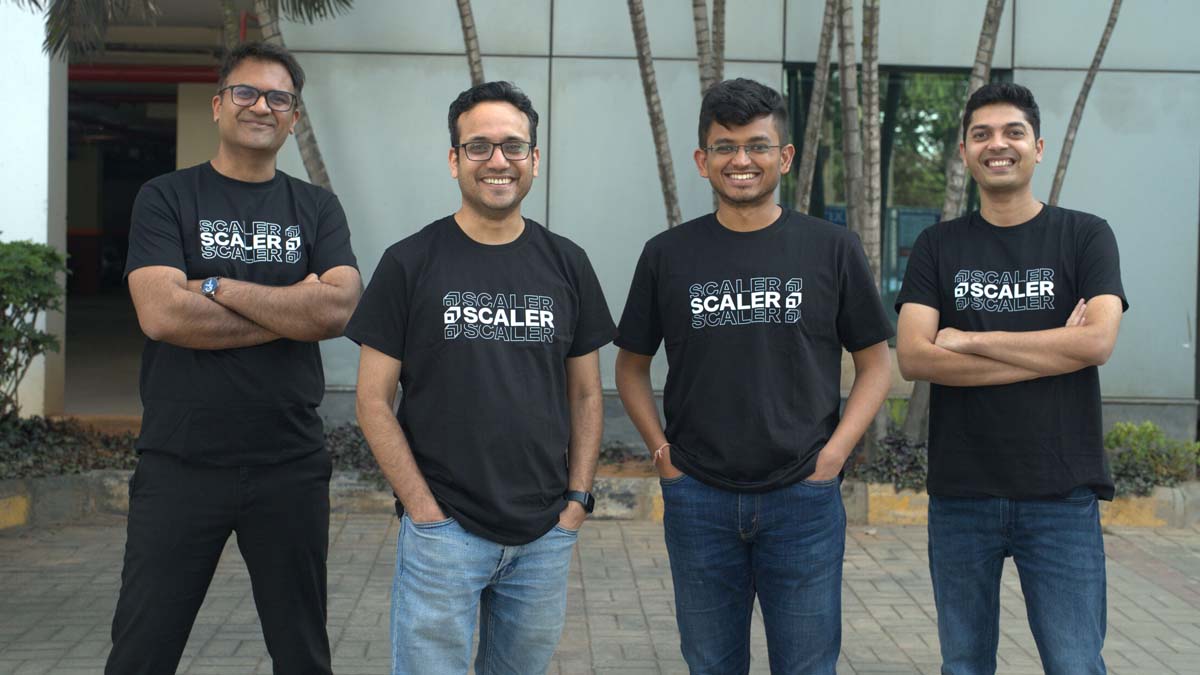
BENGALURU: Scaler is shuffling its top deck as the AI skilling race heats up. The Bengaluru-based tech education company has elevated two senior executives to lead its online and offline businesses, signalling a sharper push into an AI-driven market.
Amar Srivastava, previously senior vice president for product and business, has been appointed chief executive of the online business and group chief product officer. Vidit Jain has been elevated to senior vice president and head of Scaler School, taking charge of the company’s offline education units, the Scaler School of Business and the Scaler School of Technology.
The company has also recently appointed Ratnakar Reddy as head of enterprise for India and the Middle East and North Africa, with a brief to drive partnerships with governments and enterprises for AI-led skilling programmes.
Abhimanyu Saxena, co-founder of Scaler, said the promotions reflect the company’s confidence in both leaders and the direction it is heading. “Amar and Vidit have been central to Scaler’s journey, and their elevations reflect our conviction in their leadership and the direction we are shaping as a company,” he said. “With leadership now in place across the business, we remain focused on building engineers the world’s best companies want to hire. In an AI-first economy, that mission is more urgent and more achievable than ever. Our next chapter is centred on building an AI-native workforce from India, equipped to compete in a technology-driven global economy.”
Srivastava brings over a decade of experience building education-focused ventures. He previously founded Intellify and was part of the early team at Doubtnut. At Scaler, he will lead the online business with a focus on growth, profitability and expansion into new segments, while strengthening the product ecosystem across the group. He is blunt about what the AI economy actually needs. “The AI economy does not have a shortage of tools. It has a shortage of engineers who can think clearly, build reliably, and keep learning as the ground shifts. That is what we are building toward,” he said.
Jain brings more than 15 years of experience across startups and consulting, including stints at MPL and McKinsey and Company. He will oversee growth and profitability of Scaler’s offline business. His priorities are immediate and unambiguous. “The offline experience is where depth gets built, and that depth is critical in the AI era. Over the next 12 months, our focus will be on consistent growth, stronger unit economics, and delivering outcomes for students while building long-term employer partnerships,” he said.
Founded in 2019, Scaler is valued at $710 million and backed by Peak XV Partners, Tiger Global and Lightrock India. Its parent firm, InterviewBit, has featured on the Financial Times’ Asia Pacific High Growth Companies rankings every year from 2021 to 2025. On average, Scaler’s learners see a 4.5x return on investment and a salary increase of around 126 per cent.
With leadership locked in across every business unit, Scaler is betting that the next wave of global tech hiring will be won or lost on the quality of engineers coming out of India. It is a big bet. But the numbers, and the promotions, suggest the company is in no mood to hedge.






