Jobs
Oracle layoffs jolt workforce; 30,000 jobs at risk globally, 12,000 in India
Early-morning emails, no warning, as AI-led reset sweeps through teams


Austin: Oracle has triggered a sweeping wave of layoffs, blindsiding employees with pre-dawn emails and fuelling fears of a deep workforce reset as the company pivots towards artificial intelligence.
Staff across teams reported receiving termination notices as early as 5 to 6 am, with roles scrapped effective immediately. There was little warning and, in many cases, no prior conversations with managers or HR, amplifying the shock.
The cuts are believed to span Oracle’s computing business across regions, including India and Mexico. While the company has not confirmed the scale, posts on Blind, Reddit and X point to widespread disruption.

India appears among the hardest hit. Nearly 12,000 employees may have been laid off from a base of around 30,000, according to ANI. Globally, job losses are being pegged at close to 30,000, about 18 per cent of Oracle’s workforce, though this remains unverified by the company.
Accounts from inside teams suggest steep reductions. One X user wrote: “Just got a call from a friend who is a senior manager (at Oracle). 6 out of 20 members have been asked to leave. In many teams, almost 50% of team members are gone. Total layoffs are almost 20%.”
In several cases, emails sent directly from “Oracle Leadership” were followed by immediate revocation of system access, effectively locking employees out within minutes.
An internal note cited “organisational changes”, adding that “because of these changes, a decision has been taken to streamline the operations, and as a result, unfortunately, the position you currently hold will become redundant.”
The severance package reportedly includes 15 days’ salary for each year of service, one month’s notice pay, leave encashment, gratuity based on eligibility and a two-month salary top-up. However, this is said to apply to those who opt to resign voluntarily.
Sources suggest another round of cuts could follow within a month, though there is no official confirmation.
The layoffs come as Oracle ramps up spending on AI infrastructure and data centres, mirroring a broader industry shift. Amazon and others have trimmed headcount this year to fund similar bets.
The signal is stark. In the AI race, jobs are the first casualty, and the axe may not have finished swinging.




Jobs
Women saw higher wage growth than men in 2025: Govt data
Salaried, casual and self-employed women still earn far less than men despite stronger income growth, government data shows
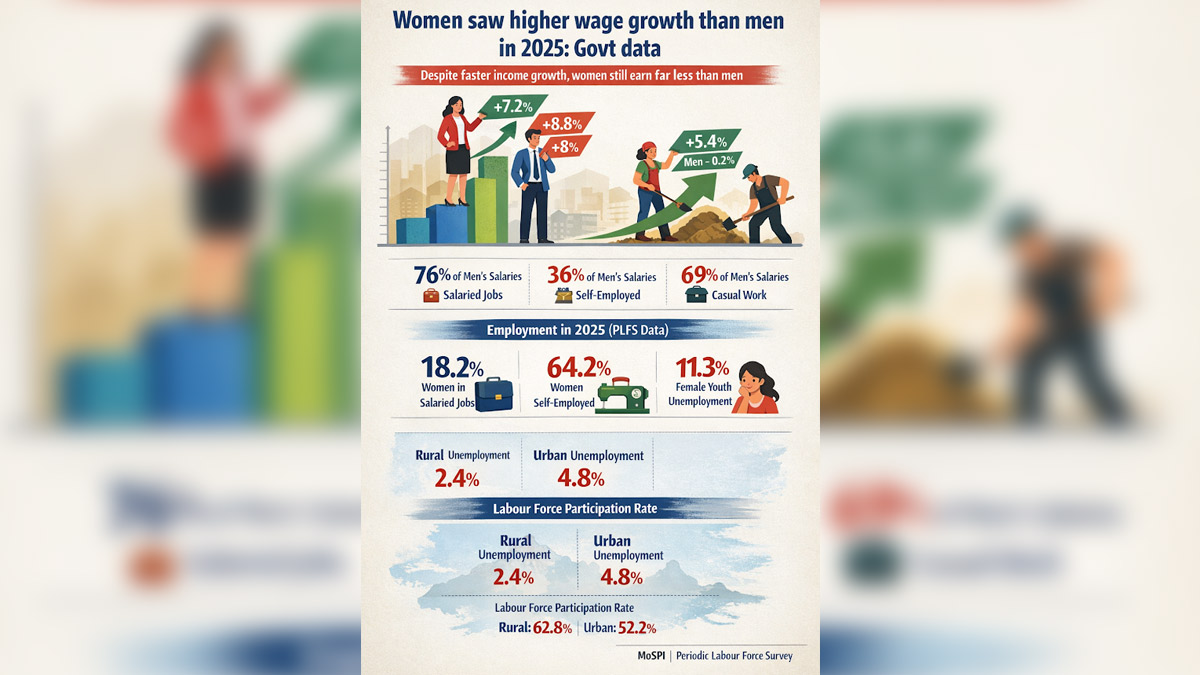
New Delhi: Women in India saw faster wage growth than men across most job categories in 2025, but the gender pay gap remains stubbornly wide, according to the latest Periodic Labour Force Survey (PLFS) released by the government.
Data from the Ministry of Statistics and Programme Implementation (MoSPI) shows women’s earnings rising across the board:
- Salaried jobs: up 7.2 per cent versus 5.8 per cent for men
- Self-employment: up 8.8 per cent versus 8 per cent for men
- Casual labour: up 5.4 per cent while men’s earnings fell 0.2 per cent
Despite the gains, women still earn only 76 per cent of men’s salaries in salaried roles, 69 per cent in casual work, and just 36 per cent in self-employment, highlighting persistent structural disparities.
The survey also shows a slow shift towards better-quality work. The share of women in salaried jobs rose to 18.2 per cent in 2025 from 16.6 per cent, while self-employment dropped to 64.2 per cent. Casual labour edged up slightly to 17.6 per cent. Overall salaried employment increased to 23.6 per cent of total employment from 22.4 per cent.
Rural unemployment dipped to 2.4 per cent, urban unemployment to 4.8 per cent, and youth unemployment fell to 9.9 per cent, though female youth unemployment rose to 11.3 per cent. Labour force participation remained mixed, with rural LFPR declining to 62.8 per cent and urban LFPR steady at 52.2 per cent.
The government estimates 616 million people were employed in 2025, including 416 million men and 200 million women.
A slowdown in the informal economy adds pressure, with wage growth at 3.9 per cent, new establishments dropping to 5.85 million, and job creation falling to 7.45 million. Since many women work in informal and self-employed segments, this leaves them exposed to income volatility and limited social protection.
Faster earnings growth may help households, but the pay gap and concentration in low-paying roles continue to restrict women’s financial independence. The slow rise in salaried employment is a silver lining, offering potential for stable incomes and formal benefits.






