Regulators
Supreme Court to hear Meta-Whatsapp CCI penalty appeals
Rs 213 crore fine challenged over 2021 privacy policy, bench led by CJI Surya Kant takes up matter on 23 February 2026.
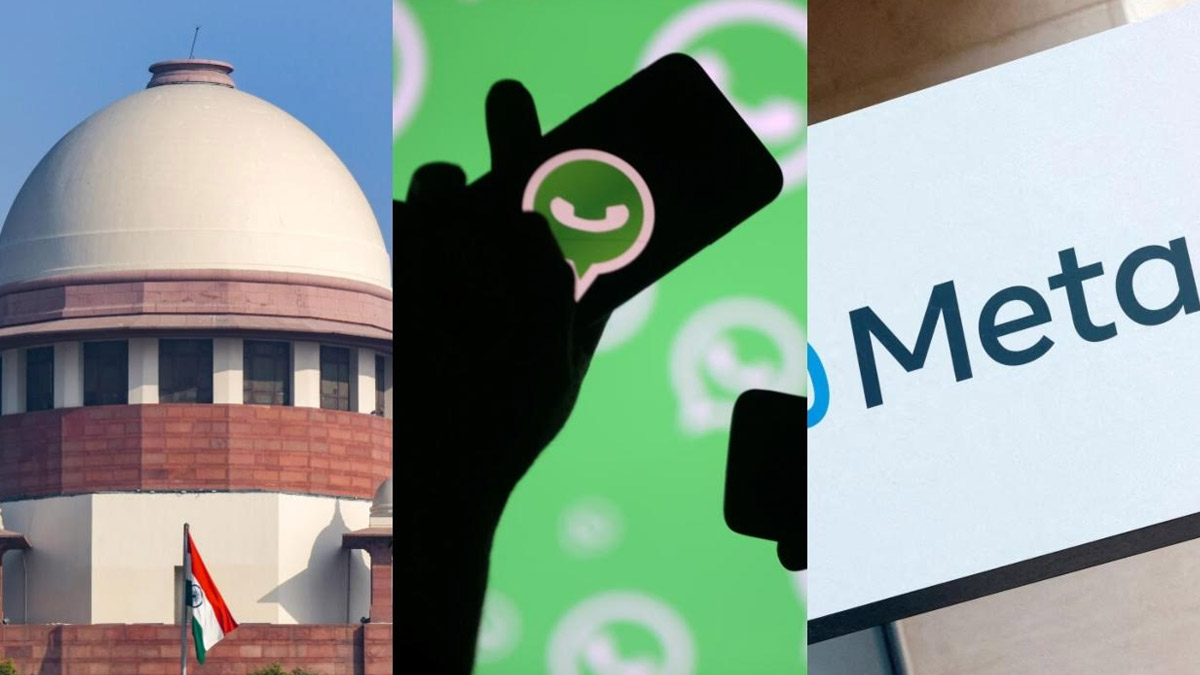
MUMBAI: Meta and Whatsapp are about to face the music in court because when privacy policies play loose, even billion-dollar apps can get a stern privacy lecture from the bench. The Supreme Court is set to dive into the high-stakes appeals filed by Meta Platforms and Whatsapp against a Competition Commission of India (CCI) order slapping them with a Rs 213.14 crore penalty. A bench headed by Chief Justice of India Surya Kant, alongside Justices Joymalya Bagchi and Vipul M Pancholi, is expected to hear the matter, with an interim order likely on 23 February 2026.
The penalty stems from Whatsapp’s controversial 2021 privacy policy update, which expanded data-sharing with parent company Meta for commercial use sparking concerns over market dominance, user consent, and misuse of personal information. In earlier hearings on 3 February, the bench didn’t mince words: it questioned whether the companies were compromising citizens’ privacy rights under the guise of data practices, called many users “silent customers” digitally dependent and often unaware of how their data is leveraged, and made clear that constitutional privacy protections won’t be diluted.
The saga took a turn in November 2025 when the National Company Law Appellate Tribunal (NCLAT) set aside part of the CCI order banning WhatsApp from sharing user data with Meta for advertising for five years. However, NCLAT upheld the Rs 213 crore fine and later clarified the ruling allowed data collection and sharing for both advertising and non-advertising purposes beyond WhatsApp’s core service. The CCI has filed a cross-appeal challenging that part of the NCLAT decision.
The Supreme Court has directed the ministry of electronics and information technology be impleaded as a party, signalling the case’s broader implications for digital regulation. With the appeals now before the top court, the proceedings sit at the tense crossroads of competition law, data privacy, and platform accountability in India’s fast-growing digital economy.
Whether the bench reins in cross-app data flows or upholds the status quo, this showdown could redraw the rules for how tech giants handle user information proving that in the privacy game, even the biggest players can’t always message their way out of a tough spot.

I&B Ministry
Digital radio, D2M tech set to reshape broadcasting and public messaging
Govt pushes next-gen delivery while TRAI tightens grip on spam ecosystem
NEW DELHI: India’s broadcasting and telecom landscape is undergoing a quiet but significant upgrade, with digital radio and Direct-to-Mobile (D2M) technologies emerging as powerful tools for mass communication, while regulators step up efforts to tackle spam calls.
According to the Ministry of Information and Broadcasting, digital radio and D2M are poised to transform how content reaches audiences by making more efficient use of spectrum. In simple terms, multiple channels can now be delivered over a single frequency, opening the door to a wider range of free-to-air content.
D2M technology takes this a step further by enabling video, audio and data to be broadcast directly to mobile handsets without relying on SIM cards or mobile data. The result is a resilient and cost-effective data pipe that can deliver everything from entertainment and education to critical emergency alerts, even in low-connectivity scenarios.
At the same time, the Telecom Regulatory Authority of India is tightening its grip on unsolicited commercial communication, better known as spam calls. The regulator has deployed a distributed ledger technology platform to bring transparency and accountability into the system.
Through this blockchain-based setup, consumers can register their preferences on receiving promotional messages, while businesses and telemarketers must also sign up and operate within defined rules. The platform also includes a complaint mechanism that allows users to report spam, with complaints shared across telecom operators for coordinated action.
The government’s broader push is being supported by infrastructure upgrades under the Broadcasting Infrastructure and Network Development scheme. Implemented through Prasar Bharati, the initiative focuses on modernising networks such as Akashvani and Doordarshan, including digitisation and adoption of next-generation broadcast equipment.
In a written reply in the Lok Sabha, Ministry of Information and Broadcasting minister of state for information and broadcasting L. Murugan said these steps are part of a larger effort to promote emerging technologies and strengthen the country’s broadcasting backbone. The response came to a query raised by member of Parliament Rao Rajendra Singh.
Together, these developments point to a dual-track strategy: expanding access to reliable, low-cost content while cleaning up the communication ecosystem. As digital pipes get smarter and spam filters sharper, India’s airwaves may soon feel a lot less noisy and far more useful.