Regulators
India’s telecom ties tighten up
Broadband crosses 1,007 million as telecom adds 8.53 million users.

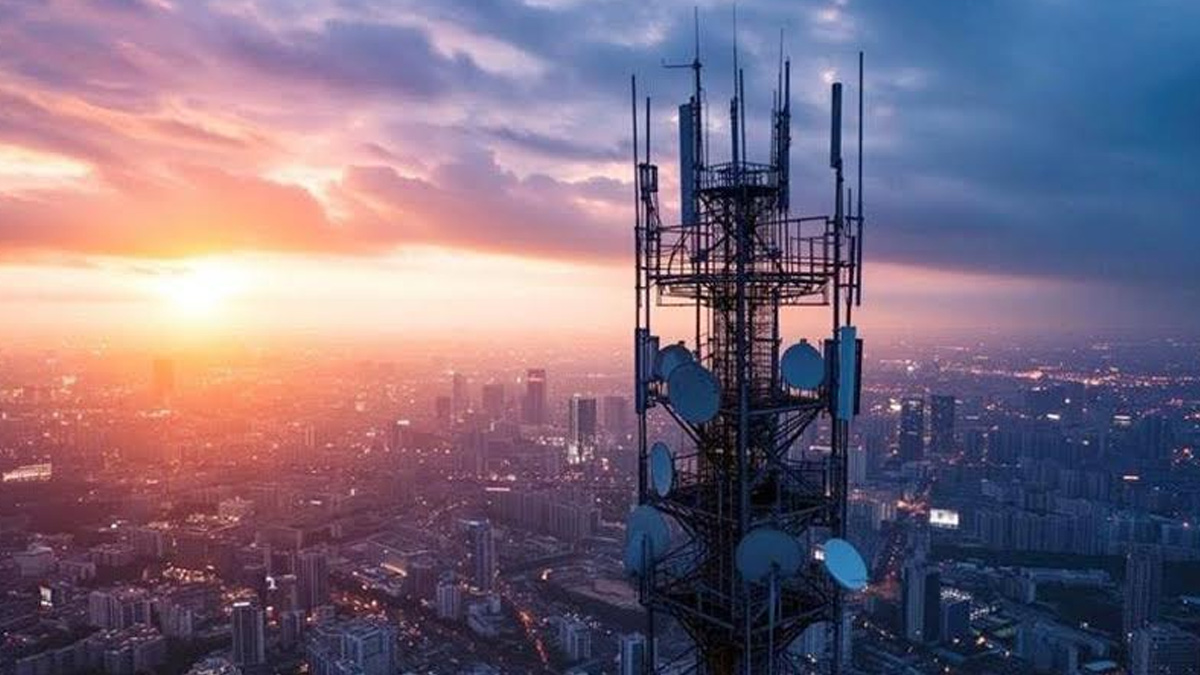
MUMBAI: In a nation where staying connected is practically a superpower, India’s telecom scene just powered up, crossing the billion-broadband threshold and adding millions more to the call queue in December 2025.
Imagine the buzz, from bustling Mumbai streets to remote rural pockets, signals are strengthening. According to the Telecom Regulatory Authority of India (TRAI), total telephone subscribers hit 1,306.14 million by month’s end, up 8.53 million with a 0.66 per cent monthly growth spurt. Urban areas led the charge with 762.44 million subscribers (net addition 7.20 million, 0.95 per cent growth), while rural regions dialed in 543.70 million (up 1.33 million, 0.25 per cent growth). The overall tele-density climbed to 91.74 per cent including machine-to-machine (M2M) connections, or 84.01 per cent without urban at a whopping 148.92 per cent, rural at 59.63 per cent.
Broadband’s the real star here, surging to 1,007.35 million users, a 0.37 per cent monthly hop from 1,003.65 million. Wired connections ticked to 45.29 million (0.39 per cent growth), fixed wireless zipped to 14.77 million (5.04 per cent jump), and mobile wireless held steady at 947.30 million (0.30 per cent rise). Reliance Jio ruled the roost with 514.35 million subscribers, followed by Bharti Airtel’s 314.26 million (using November data, mind you), Vodafone Idea at 128.47 million, BSNL 33.03 million, and Atria Convergence Technologies 2.37 million collectively commanding 98.52 per cent market share.

Drilling down, fixed wired broadband saw Jio at 13.80 million, Airtel 10.05 million, BSNL 4.47 million, ACT 2.37 million, Kerala Vision 1.45 million (70.96 per cent share). On the wireless broadband front (fixed and mobile), Jio dominated with 500.55 million, Airtel 304.21 million, Vodafone Idea 128.46 million, BSNL 28.56 million, IBus 0.12 million near-monopoly at 99.98 per cent.
Wireline subscribers edged to 47.37 million (up 0.32 million, 0.68 per cent growth), with urban density at 8.26 per cent and rural at 0.56 per cent. PSUs like BSNL, MTNL, and APSFL grabbed 19.70 per cent share, while private players like Reliance Jio (31.14 per cent), Bharti Airtel (23.13 per cent), Tata Tele (23.29 peer cent), Vodafone Idea (1.72 per cent), and others filled the pie pvt sector at 80.30 per cent.
Wireless (mobile + FWA) hit 1,258.77 million, growing 0.66 per cent with 8.21 million additions. Urban wireless, 720.15 million (0.96 per cent growth), rural 538.62 million (0.25 per cent). Mobile alone: 1,244.20 million (up 0.59 per cent, 7.24 million net), with urban tele-density 139.08 per cent, rural 58.36 per cent. Active mobile users (peak VLR), 1,162.97 million, 93.47 per cent of total. Airtel boasted 98.96 per cent VLR-to-HLR ratio, BSNL lagged at 58.23 per cent.
M2M connections exploded to 109.19 million (up from 103.48 million), thanks to Airtel’s inclusion Airtel led with 66.95 million (61.31 per cent share), Jio 19.73 million (18.06 per cent), Vodafone Idea 18.53 million (16.99 per cent), BSNL 3.97 million (3.64 per cent).
Fixed wireless details, 5G FWA at 10.99 million (up 5.59 per cent, urban 5.58 million/rural 5.41 million), UBR FWA 3.58 million (12.30 per cent growth, urban 2.54 million/rural 1.03 million), all via Jio.
Circle-wise, all showed wireless growth monthly and yearly, with Circle A adding 2.93 million wireless, Circle B 2.69 million. LSA highlights, Delhi’s tele-density soared to 359.50 per cent, Bihar’s lowest at 61.88 per cent. Nine LSAs below national average.
Switching sides? 16.12 million MNP requests, up from 14.69 million Zone-I 9.02 million (UP East tops at 2.30 million), Zone-II 7.10 million (Madhya Pradesh 1.52 million).
With providers like Jio and Airtel flexing muscles, private firms snagging 92.53 per cent mobile market, PSUs 7.47 per cent India’s telecom tango is far from over, blending urban zing with rural reach in a digital dance that’s got everyone hooked.







I&B Ministry
India tightens anti-piracy law, blocks sites and Telegram channels
New rules bring jail terms, fines and faster takedowns of illegal content

NEW DELHI: The Government of India has stepped up its fight against film piracy, invoking stricter provisions under the Cinematograph Amendment Act 2023 to crack down on unauthorised recording and distribution.
The law now imposes tougher penalties, including jail terms ranging from three months to three years and fines starting at Rs. 3 lakh, which can go up to 5 per cent of a film’s production cost. The provisions target both illegal recording in cinemas and unauthorised online transmission.
In a fresh enforcement push, authorities have notified the Telegram platform to act against piracy, leading to the identification of 3,142 channels allegedly distributing copyrighted content without permission. In parallel, access to around 800 piracy websites has been blocked through internet service providers.
The action has been taken under the Information Technology Act 2000, which empowers the government to direct intermediaries to remove unlawful content. The framework is further reinforced by the Information Technology Rules 2021, requiring platforms to act swiftly when notified of violations.
An institutional mechanism is also in place, allowing copyright holders and authorised representatives to file complaints through designated nodal officers. Once verified, these complaints trigger takedown notices to intermediaries for disabling access to infringing content.
The update was shared in Parliament by Government of India minister of state information and broadcasting l murugan in response to a query from Parimal Nathwani.
The government’s latest move signals a sharper, more coordinated approach to tackling piracy across both physical and digital channels. For the film industry, it is a step towards protecting revenues, while for viewers, it reinforces the shift towards legitimate content consumption.








