I&B Ministry
India tightens anti-piracy law, blocks sites and Telegram channels
New rules bring jail terms, fines and faster takedowns of illegal content

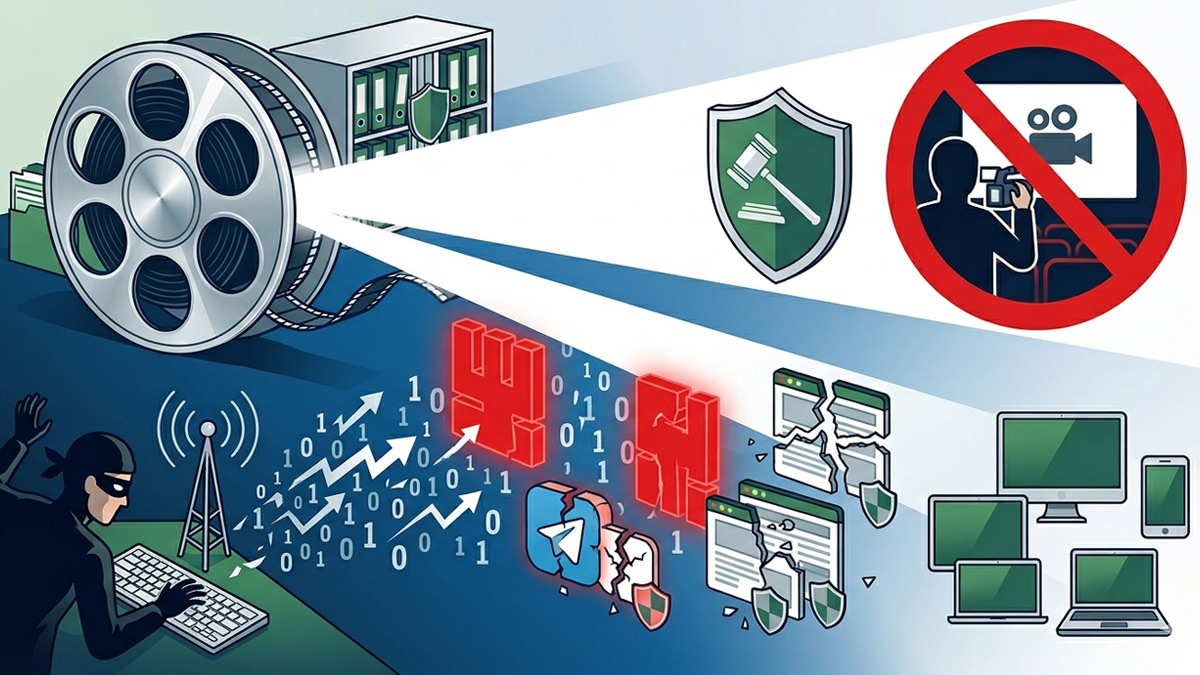
NEW DELHI: The Government of India has stepped up its fight against film piracy, invoking stricter provisions under the Cinematograph Amendment Act 2023 to crack down on unauthorised recording and distribution.
The law now imposes tougher penalties, including jail terms ranging from three months to three years and fines starting at Rs. 3 lakh, which can go up to 5 per cent of a film’s production cost. The provisions target both illegal recording in cinemas and unauthorised online transmission.
In a fresh enforcement push, authorities have notified the Telegram platform to act against piracy, leading to the identification of 3,142 channels allegedly distributing copyrighted content without permission. In parallel, access to around 800 piracy websites has been blocked through internet service providers.

The action has been taken under the Information Technology Act 2000, which empowers the government to direct intermediaries to remove unlawful content. The framework is further reinforced by the Information Technology Rules 2021, requiring platforms to act swiftly when notified of violations.
An institutional mechanism is also in place, allowing copyright holders and authorised representatives to file complaints through designated nodal officers. Once verified, these complaints trigger takedown notices to intermediaries for disabling access to infringing content.
The update was shared in Parliament by Government of India minister of state information and broadcasting l murugan in response to a query from Parimal Nathwani.
The government’s latest move signals a sharper, more coordinated approach to tackling piracy across both physical and digital channels. For the film industry, it is a step towards protecting revenues, while for viewers, it reinforces the shift towards legitimate content consumption.






I&B Ministry
Government rolls out TV Ratings Policy 2026 to boost transparency
New rules tighten audits, expand data tracking and curb rating distortions
NEW DELHI: The Ministry of Information and Broadcasting has unveiled the TV Ratings Policy 2026, introducing a sweeping overhaul of how television viewership is measured in India.
The new framework aims to bring greater transparency, accountability and credibility to audience measurement, while addressing long-standing concerns around data accuracy and potential conflicts of interest.
Among the most notable changes is the exclusion of landing page viewership from ratings calculations. While broadcasters can still use landing pages for promotion, such views will no longer count towards official audience metrics, a move expected to curb inflated numbers.
The policy also lowers the entry barrier for rating agencies, reducing the minimum net worth requirement from Rs. 20 crore to Rs. 5 crore. At the same time, it tightens governance norms, mandating that at least half of a rating agency’s board must comprise independent directors with no links to broadcasters or advertisers.
To improve reliability, agencies will be required to significantly expand their sample size to 80,000 metered homes within a defined timeline, eventually scaling up to 1,20,000 homes. Measurement will span cable, DTH, OTT and connected TV platforms, reflecting the evolving ways in which audiences consume content.
Transparency is another key pillar. Agencies must publicly disclose their methodologies and anonymised data, while ensuring full compliance with the Digital Personal Data Protection Act 2023 to safeguard viewer privacy.
A dual-audit system has also been introduced, combining quarterly internal checks with annual external audits. In addition, the ministry will deploy its own oversight teams for periodic inspections, adding another layer of scrutiny.
The policy outlines strict timelines for grievance redressal, requiring complaints to be addressed within 10 days, and introduces graded penalties for non-compliance, ranging from temporary suspension to cancellation of registration.
With these measures, the Government of India is looking to reset the rules of the ratings game. The new policy replaces the 2014 guidelines and signals a clear push towards a more transparent and trustworthy broadcasting ecosystem.








