Comment
Cracking down on Indian TV & streaming piracy, Italian style


MUMAI: Piracy has been the bane of both broadcasters and streamers for some time now. Yes, both have anti-piracy crews who spend crores of rupees behind sophisticated tools which crawl the world wide web round the clock to track illegal streams and bring down the rogue sites with the help of ISPs.
Even the Indian government has stepped in at times with the department of telecommunications (DoT) directing ISPs to take down the crooks, but more often than not the takedowns relate to what the mandarins fear could be a threat to national security, religious sentiment, is defamatory or points fingers at the powers-that-be wrongly.
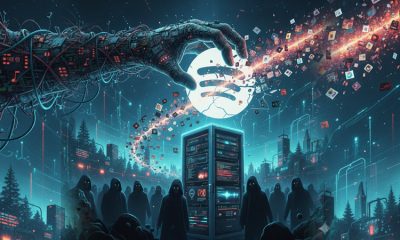
Could it learn from what the Italian government is doing to protect broadcasters and streamers and bring down piracy? The authorities there are not using Mafia-like tactics; they are simply putting in place stricter regulation, policing and implementation.

Italy has more than five million or more citizens accessing scoundrel sites costing the pay TV ecosystem (more specifically sports) – Dazn, Sky Italia, Prime Video and Mediaset Infinity – more than €400 million annually.
To get an insight into what’s happening in Italy a little bit of background in sequential order would help. In August 2023, the Italian government passed a strict anti-piracy law which brought in lay viewers into the fold of those who would be penalised with fines going up as high as €5,000. ISPs would be slapped with administrative fines of 20 million lira to 500 million lira, or in today’s currency – €10,00 to €265,000. Those involved in the supply/distribution of infringing IPTV streams would face up to three years in prison and a fine of up to €15,000.
Then on 31 January 2024, Lega Serie A (the governing body of football in Italy) launched an anti-piracy platform Piracy Shield which is operated by the nation’s Communications Regulatory Authority, AgCom. Its purpose was to identify and penalise those who are watching – mind you, those who are WATCHING – pirated content, and even those who are streaming it. Piracy Shield was designed to block illegal streaming within 30 minutes of detection by targeting both IP addresses and domain names.
In March 2024, Italians received reminders that fines were on the way, even for those who download illegal sports streaming apps from legal marketplaces operated by Google, Apple, and Amazon.
Reports are that the measures seem to be working so far. The multi-pronged exercise has succeeded in blocking over 1,000 online domains and more than 500 IP addresses associated with illegal streaming activities since the start of the new football season in Italy. However, no information was available about individuals being penalised for viewing pirated content at the time of writing.
Recently, AgCom announced the extension of Piracy Shield to cover cultural events, music and TV series. Additionally, it signed a memorandum of understanding between the prosecutor’s office and Guardia di Finanza (financial police) under which automatic information exchange between the parties will enable subscribers of pirate IPTV services to be automatically fined. Yes – AUTOMATICALLY fined.
Secondly, an amendment to the online copyright enforcement regulation approved by the Italian senate proposes prison sentences of up to a year for individuals who do not report – yes, those who DO NOT REPORT – piracy or related offences. The amendments also target service providers such as VPN and DNS companies. This includes VPN and DNS service providers such as Google and Cloudflare. These providers will face stricter obligations to cooperate with authorities in stopping the distribution of pirated material.
The amendments and changes have been welcomed by the Italian pay TV industry and streamers. The reason: under the new dispensation, authorities will soon have access to names, surnames, IP addresses, and other identifying details of those accessing criminal websites and hence penalties will be automatically imposed.
We will have to wait and see how effective these measures will prove to be and how much they will deter the pirates in Italy.
In the meantime, can the Indian pay TV ecosystem, DoT, and the government take a closer look at the Italian model of curbing piracy? Can the cash-rich Board of Control for Cricket in India (BCCI) and industry come together to create an industry wide platform to curb sports broadcast leakages? Especially, since it is the main sports body that has been raking in billions of dollars by licensing the TV rights. Can the penalties for resorting to piracy be made tougher?
A study in 2023 pointed out that Indian broadcasters and streamers are losing close to $3 billion (Rs 25,000 crore) annually on signal leakages related to sports and TV series telecasts through illegal cable TV and internet distribution. Indian anti-piracy laws also only finger and penalise the pirates – and that too infrequently as policing, and implementation is weak. Hence, piracy continues to be to be widespread and almost everyone in the ecosystem takes it lightly.
Harsher measures like making viewers and the likes of Google and Apple culpable through automatic penalties could help alleviate the problem. The authorities will not have to penalise too many violators; just making a loud noise about a few could prove a deterrent to most.
The times, they are a-changing. Can the anti-piracy efforts in India gain in strength and momentum through collaboration between the stakeholders?






MUMBAI: 2025 will be remembered as the year India’s OTT industry stopped chasing scale for its own sake and began reckoning with how audiences actually consume content. Completion rates fell, patience wore thin and the limits of long-form excess became impossible to ignore. In this guest column, Pratap Jain, founder and CEO of ChanaJor, traces how micro-drama moved from the fringes to the centre of viewing behaviour, why short-form fiction emerged as a retention engine rather than a trend, and how platforms that respected time, habit and emotional payoff were the ones that truly grew up in 2025.
If there is one thing 2025 will be remembered for in the Indian OTT industry, it’s this: the industry finally stopped pretending.
Stopped pretending that bigger automatically meant better.
Stopped pretending that viewers had endless time.
Stopped pretending that scale without retention was success.
What began as a quiet reset in 2023 and a cautious correction in 2024 turned into a very visible shift in 2025. Business models matured. Content strategies tightened. And most importantly, platforms started aligning themselves with how Indians actually watch content, not how the industry wished they would.
At the centre of this shift was micro-drama—not as a trend, but as a behavioural inevitability.
When OTT finally understood the time problem
For years, long episodes were treated as a marker of seriousness. A 45–60 minute runtime was almost a badge of credibility. Shorter formats were pushed to the margins, labelled as “snack content” or “mobile-only.”
That belief quietly collapsed in 2025.
What platform data showed very clearly was not a drop in interest—but a drop in patience. Viewers weren’t rejecting stories. They were rejecting commitment.
Across platforms, the same patterns appeared:
* First-episode drop-offs on long-form shows kept increasing
* Completion rates continued to slide
* Viewers were sampling more titles but finishing fewer
At the same time, shows with episodes in the six to 10 minute range started showing the opposite behaviour: higher completion, higher repeat viewing, and stronger daily habit formation.
Micro-drama didn’t win because it was short. It won because it respected time.
Micro-Drama didn’t arrive loudly. It took over quietly.
There was no single moment when micro-drama “launched” in India. It crept in through dashboards and retention charts.
By mid-2025, it was clear that viewers were happy watching four, five, sometimes six short episodes in one sitting—even when they wouldn’t finish a single long episode. Romance, relationship drama, slice-of-life conflict, and grounded comedy worked especially well.
This wasn’t disposable content. It was compressed storytelling.
In shorter formats, there was no room for indulgence. Every episode had to move the story forward. Weak writing was punished faster. Strong writing was rewarded immediately.
Micro-drama raised the bar instead of lowering it.
Where ChanaJor naturally fit into this shift
ChanaJor didn’t pivot to micro-drama in 2025 because the market demanded it. In many ways, the platform was already built around the same viewing behaviour.
From the beginning, ChanaJor focused on short-to-mid-length fictional stories that felt close to everyday Indian life—hostels, rented flats, office romances, small-town relationships, young people figuring things out. Stories that didn’t need heavy context or cinematic scale to connect.
What worked in ChanaJor’s favour in 2025 was clarity:
* A clearly defined audience
* Tight episode lengths
* Storytelling that prioritised emotion and pace over spectacle
While several platforms rushed to copy global micro-drama formats, ChanaJor stayed rooted in familiar Indian settings and conflicts. That familiarity mattered. Viewers didn’t have to “enter” the world of the show—it already felt like theirs.
Why audiences started responding differently
One of the biggest misconceptions going into 2025 was that audiences wanted shorter content because their attention spans had reduced. That wasn’t entirely true.
What viewers actually wanted was meaningful payoff per minute.
On platforms like ChanaJor, episodes didn’t waste time setting the mood for ten minutes. Conflicts arrived early. Characters were recognisable within moments. Emotional hooks landed fast.
A typical consumption pattern looked like real life:
* One episode during a break
* Two more before sleeping
* A few the next day
This is how viewing habits are built—not through marketing spends, but through comfort and consistency.
Viewers came back not because every show was a blockbuster, but because they knew what kind of experience to expect.
2025 was also the year OTT faced business reality
The other big change in 2025 was on the business side. Subscriber growth slowed. Discounts stopped hiding churn. Customer acquisition costs rose.
Platforms were forced to ask harder questions:
* Are viewers finishing what they start?
* Are they returning without reminders?
* Is this content worth what we’re spending on it?
This is where micro-drama began outperforming expectations. A well-written short series could deliver sustained engagement without massive budgets. It didn’t peak for one weekend and disappear—it stayed alive through repeat viewing.
Platforms like ChanaJor benefited because they weren’t chasing inflated launch numbers. The focus was on consistency and retention, not noise.
Failures Became Visible Faster
2025 also exposed weaknesses brutally.
Several platforms assumed micro-drama was a shortcut—short episodes, quick shoots, instant traction. What they discovered was that bad writing fails faster in short formats than in long ones.
Viewers dropped off within minutes. Episodes were abandoned mid-way. Weak stories had nowhere to hide.
Micro-drama didn’t forgive laziness. It amplified it.
The platforms that survived were the ones that treated short storytelling with the same seriousness as long-form—sometimes more.
OTT Stopped Chasing Prestige and Started Chasing Habit
Perhaps the most important shift in 2025 wasn’t technical or creative—it was psychological.
OTT stopped trying to look like cinema. It stopped chasing validation through scale and awards alone. It began behaving like what it actually is in people’s lives: a daily companion.
Platforms like ChanaJor found their space here because that mindset was already baked in. The goal wasn’t to dominate a weekend launch. It was to quietly become part of someone’s everyday viewing routine.
That shift changed everything—from release strategies to how success was measured.
What 2025 Ultimately Taught the Industry
By the end of the year, three truths were impossible to ignore:
* Time is the most valuable thing a viewer gives you
* Retention matters more than reach
* Format must follow behaviour, not ego
Micro-drama didn’t take over because it was fashionable. It took over because it fit real life.
Looking Ahead
Micro-drama is not replacing long-form storytelling. It is redefining the baseline of engagement.
Longer shows will survive—but only when they earn their length. Short-form fiction will continue to evolve, becoming sharper, more emotionally confident, and better written.
Platforms like ChanaJor have shown that it’s possible to grow without shouting—by understanding the audience, respecting their time, and telling stories that feel real.
2025 wasn’t the year OTT became smaller. It was the year it became smarter.
Note: The views expressed in this article are solely the author’s and do not necessarily reflect our own.








