I&B Ministry
150 govt websites earn quality certification
From PMO to PSUs, India’s digital portals ace the GIGW standards test as of Jan 2026.

MUMBAI: Clicking all the right buttons, 150 government websites have proudly flaunted their Certified Quality Website (CQW) badges, earning top marks under the Guidelines for Indian Government Websites (GIGW) proof that not every online government page is a bureaucratic black hole.
In a crisp Rajya Sabha reply to MP Mallikarjun Kharge, minister of state for electronics and IT Jitin Prasada revealed that as of 20 January 2026, the Standardisation Testing and Quality Certification (STQC) Directorate had issued exactly 150 valid CQW certifications. That’s a solid lineup, 116 snagged by Central Government portals, six by State Government sites, 14 by Public Sector Undertakings, plus a handful for statutory bodies (2), autonomous bodies (5), e-voting platforms (5), and even two Central Government mobile apps.
The breakdown underscores how the voluntary scheme valid for three years with mandatory re-certification – has spread its quality net wide. High-profile heavyweights like the prime minister’s office, president’s secretariat, CERT-In, UIDAI, CBSE, TRAI, Press Information Bureau, and various ministry hubs have all passed muster. Even critical digital infrastructure, including e-voting setups and financial gateways, made the cut.

Not everyone’s a winner, though, eight hopefuls were shown the digital door for failing to meet GIGW rules. Most current certificates rolled out under GIGW version 2.0, with fresher ones nodding to the upgraded 3.0 benchmarks, a sign the bar keeps rising. Fresh approvals stretch into January 2026, with validity ticking on through 2028 and 2029 for the newest batch.
The certifications date back as far as 2008, but the bulk of today’s valid ones hail from 2023–2026, reflecting a recent push for polished, user-friendly government web presence. Full details? They’re neatly listed on the STQC website for anyone keen to browse the certified club.
In an era where clicking “government site” often means bracing for glitches, these 150 standouts are quietly proving that when it comes to quality, some portals really do load with style.





I&B Ministry
PIB Fact Check Unit flags 2,913 fake claims, blocks 1,400 URLs
Government steps up misinformation fight with FCU and IT Rules framework.
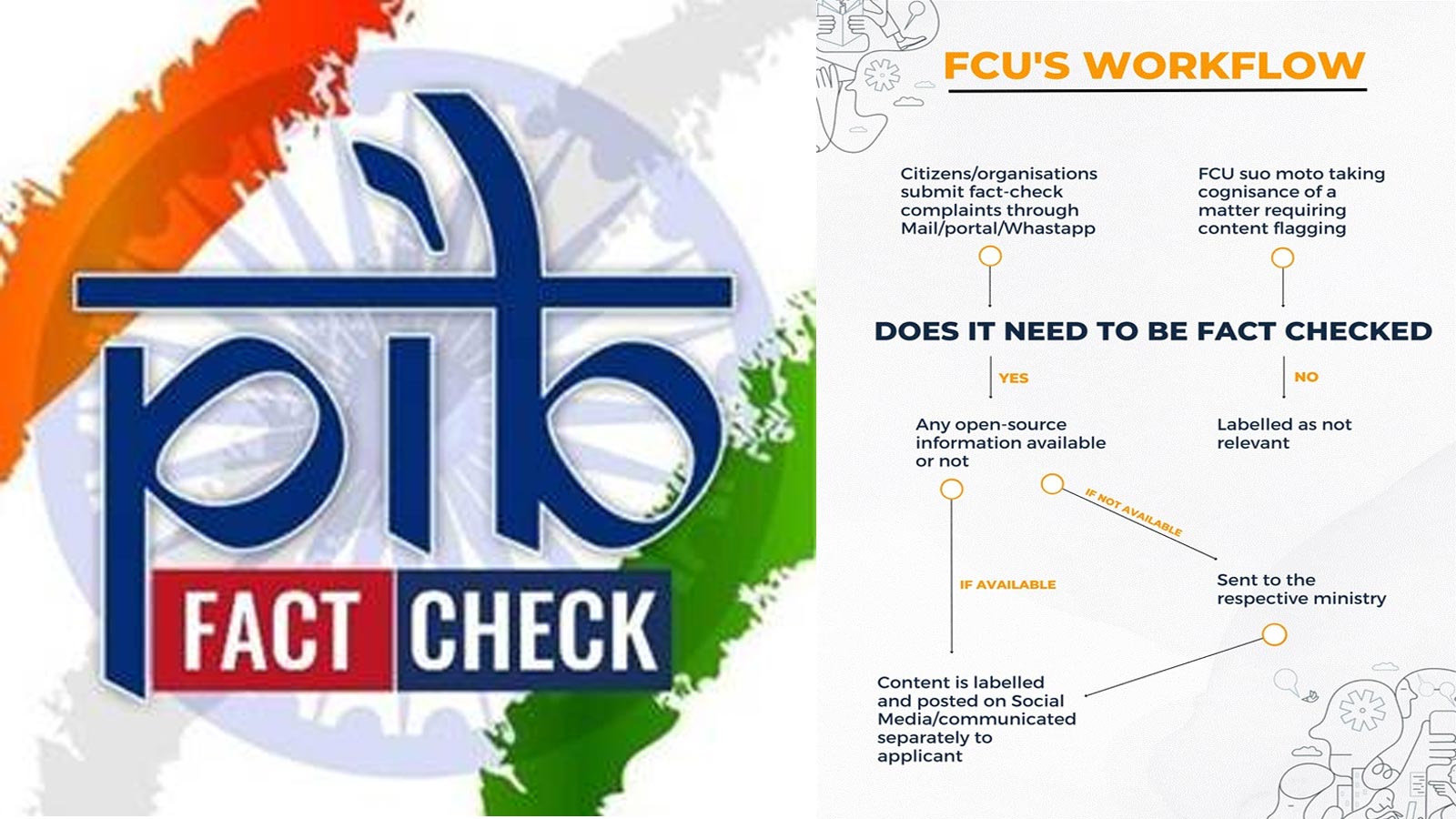
MUMBAI: In the age of viral forwards and deepfake déjà vu, the government’s fact-checkers are working overtime to separate fact from fiction. India’s Press Information Bureau Fact Check Unit (FCU), operating under the Ministry of Information and Broadcasting, has flagged a total of 2,913 instances of fake news and misinformation linked to the Central Government, highlighting the growing scale of the information battle in the digital era.
Tasked with identifying misleading content from AI-generated videos and deepfakes to forged notifications, letters and spoofed websites, the FCU verifies claims using authorised sources before publishing corrections across its social media channels. These include platforms such as X, Facebook, Instagram, Telegram, Threads and WhatsApp, turning the government’s digital presence into a real-time myth-busting network.
But the effort is not just top-down. The FCU has also been nudging citizens to play detective, encouraging users to report suspicious content for verification. The idea is simple: in a landscape where misinformation travels faster than facts, crowd-sourced vigilance can act as an early warning system.
The scale of intervention became particularly visible during Operation Sindoor, when the unit identified and countered a surge of misleading and hostile narratives circulating online. Alongside publishing verified information, the Ministry directed the blocking of more than 1,400 URLs on digital platforms, an aggressive move aimed at containing the spread of false and potentially harmful content.
The broader regulatory backbone for this effort lies in the Information Technology Rules 2021, which set out a Code of Ethics for digital publishers and establish a three-tier grievance redressal mechanism. The framework is designed to hold publishers of news and online curated content accountable, even as the ecosystem grows increasingly complex.
The update was shared in the Lok Sabha by L. Murugan, minister of state for information and broadcasting, in response to a question raised by V. K. Sreekandan.
Together, the numbers tell a clear story: misinformation is no longer a fringe problem but a mainstream challenge. And as the lines between real and manipulated content continue to blur, the battle for credibility is being fought not just in newsrooms but across every screen in the country.






