Hindi
Why Padmaavat in 3D almost didn’t happen


Fans can’t stop raving about the 3D version of Padmaavat and how it drew them right into the world of Queen Padmavati. However, it is a little known fact that director Sanjay Leela Bhansali had long been considering the idea of releasing his films in 3D. “We wanted to try 3D with Guzaarish and we’d also tested a few shots for Bajirao Mastani which looked fantastic but it eventually didn’t happen,” shared DoP Sudeep Chatterjee.
The splendid colour grading and stereo conversion services for Padmaavat were handed over to Prime Focus World (PFW). Jimmy Philip, PFW Stereo Supervisor worked closely with Padmaavat’s DoP – Sudeep Chatterjee and Director Sanjay Leela Bhansali to deliver the 3D version of the magnum opus.
Sudeep also went on to reveal how Padmaavat in 3D almost didn’t happen. He said, “Padmaavat in 3D was always an idea but it was only sometime in July-August when we got a nod for 3D conversion. Although a major apprehension was that there was very less time and we weren’t sure if we’d be able to pull it off. There are many things that can go wrong during 3D conversion – ideas can shift, dimensions can shift, with one character appearing bigger than the other. So naturally, a lot of work was put into the conversion of the film.”

Sharing details about the behind-the-scenes efforts that went into making the 3D version a reality,
PFW Stereo Supervisor, Jimmy Philip said, “There are lots of 3D moments in this scene, with floating embers, dust drifting across the battlefield and arrows flying towards camera – it’s a great sequence and a fittingly dramatic climax for the film. We leveraged our extensive elements library to recreate most of these FX elements, while also carrying out additional comping to enhance the overall effect.”
Talking about the enormity of the task, Jimmy shared, “Over 2000 stereo shots that we delivered for the movie were completed in a tight timeframe of just 2 months.”
As they say, hard-work always pays and Padmaavat emerged strong amidst controversies to give the audiences an unforgettable visual treat.





Hindi
Zee5 and Applause Entertainment team up for whodunnit ‘Everybody Loves Sohrab Handa’
Rajat Kapoor directs star-studded murder mystery streaming from 10 April.
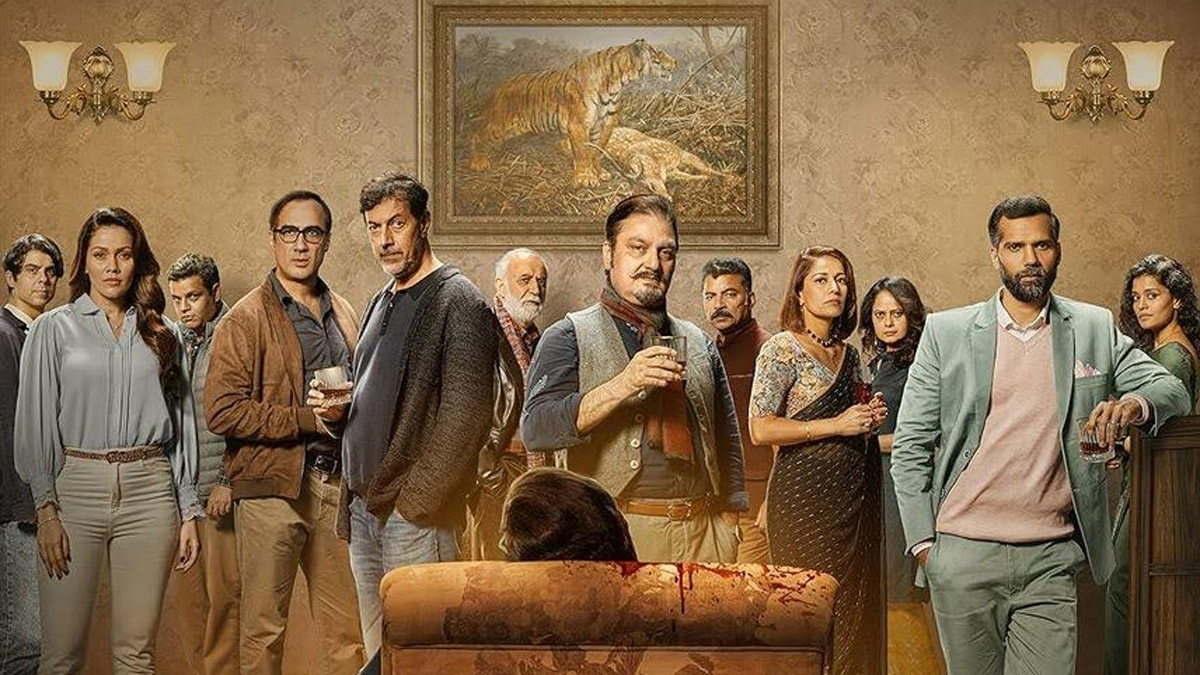
MUMBAI: Zee5 is serving up another killer collaboration and this time, the murder mystery comes with a generous side of dark humour and family dysfunction. The streaming platform has partnered with Applause Entertainment and Mithya Talkies to bring Everybody Loves Sohrab Handa, a fresh, twisted whodunnit written and directed by acclaimed filmmaker and actor Rajat Kapoor. The film will stream exclusively on Hindi Zee5 from 10 April.
The movie reimagines the classic murder mystery genre with a contemporary, darkly comic edge. It revolves around a group of friends and family who smile, drink, and celebrate together until the silence snaps and long-buried secrets spill out. The stellar ensemble cast includes Vinay Pathak, Ranvir Shorey, Waluscha De Sousa, Saurabh Shukla, Chandrachoor Rai, Neil Bhoopalam, Koel Purie, Palomi Ghosh, and Rajat Kapoor himself.
This latest offering continues the successful partnership between Zee5 and Applause Entertainment, which has previously delivered diverse hits such as Mithya, Bloody Brothers, and Jab Khuli Kitaab.
&TV Business Head of hindi Zee5 and chief channel officer Kaveri Das said, “Our collaboration with Applause Entertainment has consistently delivered distinct, high-impact storytelling. Everybody Loves Sohrab Handa is a natural progression, reinforcing our focus on genre-led content with a compelling whodunnit premise and a strong ensemble cast.”
Applause Entertainment business head for movies Sunil Chainani added, “This film adds yet another compelling layer to our slate with Rajat Kapoor’s unmistakable voice.”
Rajat Kapoor shared, “What interested me was not just the mechanics of a whodunnit, but the emotional violence that precedes physical violence. These are people who smile at each other, but there’s so much that is not said.”
The film promises razor-sharp writing, layered performances, and simmering tension, inviting viewers not just to solve the crime but to unravel the complex relationships at its heart.
If you love a good murder mystery served with wit and emotional depth, Everybody Loves Sohrab Handa looks set to be your next addictive watch. Mark your calendars, the whodunnit drops on Hindi Zee5 from 10 April.






