News Broadcasting
“There is a growing difference in the way the economies are performing”: Jack Lew

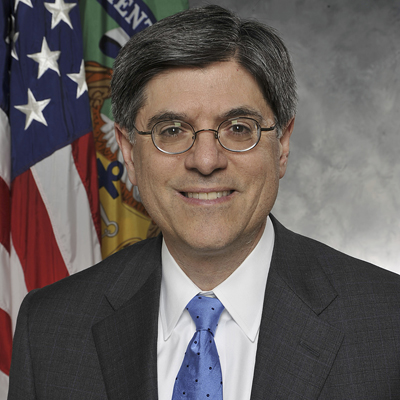
In an exclusive interview US treasury secretary Jack Lew tells NDTV Profit that he believes that the recovery in US is not fragile though he remains concerned about the pace of growth in other parts of the globe. He says the US will push back very hard when it sees countries acting unfairly on currencies.
He remains optimistic on India and hopes that reforms will make investment environment more attractive here. His message to Finance Minister Arun Jaitley is to give more clarity to investors on policies.

In an interview with NDTV Profit executive editor Prashant Nair, he speaks on Make in India, optimism about India, how to battle slowdown and much more.
Excerpts…
Nair: The global economy is growing at different speeds, very different speeds. The US has picked up growth, expectations are quiet high-Eurozone has slowed down, deflation fears persist there, China which is slowing down and of course India where hopes are very high with the new government taking charge. How is it all going to pan out, what are the prospects for the global economy looking like? I have got someone who has got the answers- Jack Lew who is the Secretary to the US Treasury and I am really honored to have him with me here. Thanks very much Sir.
Lew: Great to be with you Prashant.
Nair: So you are just back here from the G-20 meeting. What was the message, what was the take away from that meeting?
Lew: I think there was a common focus in the G-20 meeting on the need for growth and the need for stability and we had lot of discussions on both the topics. You know I think the challenge that the global economy faces is to have the whole global economy picking up, not just dependence on the United States to be the sole driver. I think that coming out of the financial crisis US has demonstrated alongwith a number of other countries like UK that when you use all the policies leverage that you have, you can change the course of your economy’s future. You need to use monetary policy, you need to use fiscal policy that help grow demand and you need to do structural reforms so that there is confidence in future and flexibility in the economy. That was my message at the G-20.
Nair: You think other economies aren’t doing that well or they are maybe too late in the game?
Lew: I think that it is challenging in each system to use each of the tools. Certainly it is challenging in our system and it’s not always as quick and as simple as you want it to be. I think that what we have shown is that when you do deploy all the tools it has the right effect. If you rely too heavily on any one of the tools it is not going to be as powerful. I think that the challenge is to bring particularly the fiscal tools in some places and the reform tools in other places into gear when the monetary tools are already being deployed, I think it will be more effective strategy If all these leverages were used.
Nair: What’s your view on US economy? I read somewhere you said that it has turned a corner.
Lew: I think it has turned a corner, I think if you look at the economic growth over these past six months, the past year we are seeing a dramatic change from the past. We are seeing sustained growth in jobs, we are seeing even an increase in wages which were slow to come, but over the last year there is over 2% increase in wages. We are seeing strength in manufacturing and we are even seeing a comeback in the housing and construction sector which has been the slowest part of the economy to recover from the recession that was really driven by the collapse in that area. I think that what we have now in US is the kind of recovery that will feed on itself and grow but we can’t look at the US as if it is an island all by itself. So we are very much concerned that there needs to be more growth in other parts of the global economy as well. I don’t think it is the situation like we saw even in 2012, where the US recovery was fragile and headwinds from global economy growing not as strong as it should, that were a real risk. I think that now we are going to continue to grow, the question is how fast and I would like our economy to grow as fast as it possibly can for us to grow as many jobs as we possibly can. But I think the global economy really needs morefor there to be more growth in other places as well, and that’s why we carry the message that we do.
Nair: You know some have said that the FED will increase interest rates. It will start to raise interest rates sometime in 2015, what you said is important that growth is self sustaining in the US now and it feeds into itself. So, if that’s the case, a) FED rate hike will happen and second there is no reason for more stimulus in the US now, is that clear now?
Lew: Now Prashant, it is a well-established tradition that treasury secretaries do not comment on the monetary policy in US, the FED will have to make a decision based on its valuation of the data as it comes in and I will leave that to the FED and the very able chair Janet Yellen.
Nair: What do you make of what is happening in the Eurozone and what should happen there now?
Lew: Well I think in the Eurozone there are multiple things that are challenging right now. I think there has been a reluctance to use the fiscal tools because there are some countries which have fiscal space others that don’t. Having deployed the monetary policy tools, I think were Europe to use some of its fiscal space, to grow demand, it would actually make monetary policy more effective. It will help to get the economy moving. There is also need for reforms. I think that ideally you will see the structural reforms and the demand moving together and you have all 3 levers being deployed. It has been challenging and it’s not the first time that we have made that argument. I think I heard more people making that argument at this last G-20 than I have in the past. I think there is a growing sense but obviously Europe has to make its own decisions. At the same time, I think Europe has some real challenges both with the situation in Ukraine and in Greece, where stability is something that they need to maintain. That is why it is so important that the global community comes together and have a financial package that will support Ukraine and the Ukraine will make the reforms that it needs to going forward in order for it to be released. And I think it is important that all parties in the Eurozone, as I have said several times clamp down the rhetoric and work on a practical solution that everyone can agree to.
Nair: Most countries are devaluing their currencies to try to stimulate their exports because the domestic demands is not there. China as some say is on the verge of launching a massive programme which again will sort of devalue & push the Yuan down.I would like your thoughts on what’s happening in terms of currencies and specifically your thoughts on China?
Lew: Look I think that there obviously is a growing difference in the way the economies are performing, which is leading to some differentials in currency valuations. There is a very big difference between countries that use domestic tools for domestic purposes, macroeconomic tools to grow their economy which is something that in the world community we have agreed to and we in the United States have used in QE for example.On the other hand, it is another thing to target your currencies for the purpose of gaining unfair trade advantage. We have been clear, that kind of unfair policy is something that we won’t pose and we will push back very hard on. On the other hand we do understand that macro- economic tools need to be used. But on the back of what I said about using all the levers, I think it is a mistake to over rely on any one lever. And using all the levers I think we will actually prevent some of that and I think it would be a very big mistake for the world to get into a situation where I think there is kind of a race to devalue.
Nair: For India-here the prospects are looking better and better. Financial markets have been very appreciative of the change in the past structure here over the last year with the new government. International investors seemed to be quite bullish. You interacted with business leaders here, what’s your perception about what’s going on here?
Lew: Well Prashant, I met today-both leaders of the Reserve Bank and leaders in the business community. Tomorrow I will be meeting in Delhi with Finance ministry officials and other leaders in the government and I met in Washington at international meetings and a number of occasions with our colleagues. I think there is a great deal of enthusiasm for the reform agenda that the Prime Minister has put forward. I hear it internationally, I hear it from business leaders in India, I hear it from business leader in the United States. I think India is a very attractive investment opportunity for American institutional investors. The desire for US in the economic relations is strong on both sides and I think it is in our mutual interest. So I actually think this is a relationship that we can continue to develop and the reforms that the prime minister has talked about will make India even more attractive target for investment.
Nair: What do you make of the ‘Make In India’ campaign of the government or the flagship program of the Prime Minister Modi?
Lew: I think that there are many aspects of the program there that are designed to make it easier do business in India and to get manufacturing and other jobs growing. I think that India has no shortage of talent, it has no shortage of entrepreneurs. The reform program will I think take away some of the obstacles that have made it hard for people in India to do business and for others to come and do business. So I think that if the reforms are implemented as they have been planned, it should lead to significant job creation and investment. We look forward as I say to having strong United States- India partnership. The President came here again for second visit, the first US president to come twice. In those meetings he discussed the importance of the economic relationships and I am here now to continue that dialogue.
Nair: You will be meeting the Finance Minister Mr. Jaitley, what are the 2 or 3 things you would ask him to do in terms of reforms that you spoke about?
Lew: I think that the importance of making the investment environment in India, one that is attractive even more attractive to foreign investors is important. There has been over the years a sense of difficulty of getting clarity in certain areas and some rules that were more rigid, that would make it ideal. I think that in terms of the domestic economy, the reforms they have been talking about in terms of making it easier to do business and having the legal changes to make the structures of doing business work better are very important, and I think the budgetary ideas-though I haven’t seen the new budget but the budgetary ideas-cutting back on subsidies and freeing up resources to invest in the future should make the economy both more efficient and build the foundation for future growth.
Nair: Have you seen this kind of interest amongst US corporations to come to India, after the new government?
Lew: Yes, when the Prime Minister was in Washington a few months ago there was some extraordinary turnout of business leaders. And its not just that they came, but there is an enthusiasm and the hope that the reforms would go from being campaign platforms to being policies that are implemented. I think that there is real interest and I think that you will see that going forward.
Nair: You know one big focus area for the new government is adding jobs, a million jobs a month, and there has been some amount of debate about how to do it, whether to do what China did a few decades back, you know big factories, lots of workers, keep the currency under control, is that going to work? The RBI governor feels it won’t work, the world has changed, I would just like your thoughts on this.
Lew: I don’t believe that there is one solution to creating jobs in any economy. The economy as large as India’s, with population as large as India has, there is going to be need for many different areas of economic growth. So there will be some growth in manufacturing that looks like large factories. There will be other things-where more entrepreneurs are doing start-ups that create the economic engine for the future. I think that if India is able to design its economic program to encourage some more risk taking, some more entrepreneurship that will lead to changes that will open up small and large doors. And you know, large companies start as small companies and large factories start as small ones.
Nair: You were at the UID Centre that’s been one of the flagship programmes by the last government that has been continued by the new government and sort of talks about inclusion, all kinds of inclusion.
Lew: I thought it was very impressive. Inclusive financing is very important. To sign up 800 million people in a program where they have access to banking services, many for the first time ever, is extraordinary. What I saw today was technology that was simple and was working. People were enthusiastic about having access to banking services and who understood that it was important in terms of both a place to do their banking and a way to build their credit history, and to have access to financial products in the future. So I think access to financial services is correctly important in developed and developing economies. And what India has done at this scale is truly impressive.
Nair: Thanks very much for your time and its truly an Honour Sir.
Lew: Thank you very much for having me.






News Broadcasting
CNN-News18 to host Fury in the Gulf conclave on West Asia crisis
Three-hour summit to unpack geopolitical fallout and impact on India

MUMBAI: CNN-News18 is set to host a special three-hour broadcast, Fury in the Gulf – War Conclave, on April 7, aiming to decode the escalating West Asia crisis and its far-reaching implications for India.
Scheduled from 4:00 PM to 7:00 PM, the conclave comes at a time when tensions between Iran and the United States are reshaping global geopolitics and triggering economic uncertainty. With India’s deep energy ties, trade links and large diaspora in the Gulf, the developments carry significant domestic relevance.
Built around the theme ‘Conflict, Consequences, and The Future,’ the programme will feature six curated sessions combining one-on-one interviews and panel discussions. The focus is to cut through the clutter and offer viewers a clearer understanding of the fast-evolving situation.
Key sessions include ‘Diplomacy in Times of War’ featuring Shashi Tharoor, and ‘World After the Iran Conflict’ with voices such as Ram Madhav, Reuven Azar, representatives from the European Union and the Iranian Deputy Envoy. Another session titled ‘Another Dunkirk?’ will bring together K. J. S. Dhillon and Jitin Prasada among others.
CNN-News18 editorial affairs director Rahul Shivshankar said, “In times of war, clarity becomes the most powerful tool. Fury in the Gulf – War Conclave brings together credible voices to address the questions and confusion that arise amid an overwhelming influx of information.”
He added that the initiative is aimed at delivering “facts, perspective, and insight” at a time when misinformation can easily cloud public understanding.
Echoing the sentiment, CNN-News18 CEO– English and business news Smriti Mehra said the conflict marks a defining global moment, with consequences that extend well beyond the region. She noted that the conclave seeks to present the crisis with “depth, nuance and responsibility” so audiences can better grasp its real-world impact.
As geopolitical tensions continue to dominate headlines, the conclave positions itself as an attempt to bring order to the noise, offering viewers a structured, insight-led look at a complex and rapidly shifting global situation.






