Hindi
Prime Focus proud to partner with the 100 crores grosser Housefull 3.

MUMBAI: After stupendous success of Housefull and Housefull 2, Sajid Nadiadwala is back with the latest installment in the Housefull series – Houseful 3 and Prime Focus is proud to have delivered for the third consecutive time a full suite of VFX, DI & wide range of shooting kit for the movie.
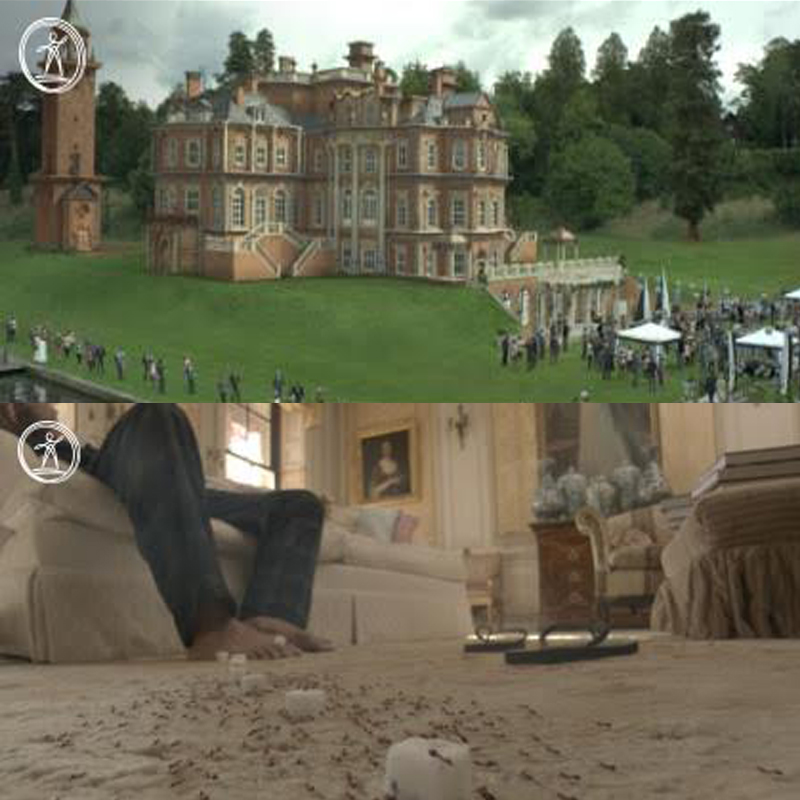
Of the many VFX shots delivered for Housefull 3, Prime Focus predominantly worked on restructuring the entire architecture of the house, adding crucial extensions and backgrounds.
Mahesh Baria, VFX Supervisor explains, “The complexity came in making the castle look bigger which we were able to achieve with the help of CGI. We replaced the original building with a much larger structure and at the same time ensured that the lighting conditions matched the original live footage.”

Additionally, CGI was used to create a colony of ants for what might be one of the most hilarious sequences in the film. The greatest challenged faced by the CG team at Prime Focus was to capture the randomness of the ants’ movement on an uneven surface. The animation team went through huge amounts of reference footage of ants’ movements, which they developed into a behavioral pattern so that the ants in the film reacted realistically to their environment.
In addition to providing VFX, Prime Focus also provided a flawless DI service and supplied a wide range of shooting equipment and technical support to the production. Colorist Aashirwad Hadkar, who also graded Housefull 2, set the overall look and colour palette of the film.
Speaking on Prime Focus’ contribution to Housefull 3, Sajid-Farhad said, “Having already worked on the first two films in the series, the VFX and DI teams at Prime Focus were the perfect partners for us on Housefull 3. We were more than impressed by the creative services and the camera rental services that they delivered for the film.”
Housefull 3 released on 3rd June 2016 and emerged as the highest opening weekend grosser of 2016.



Hindi
Remembering Gyan Sahay, the lens behind film, television and advertising
From a puppet rabbit selling poppadums to Hindi cinema, he framed it all.
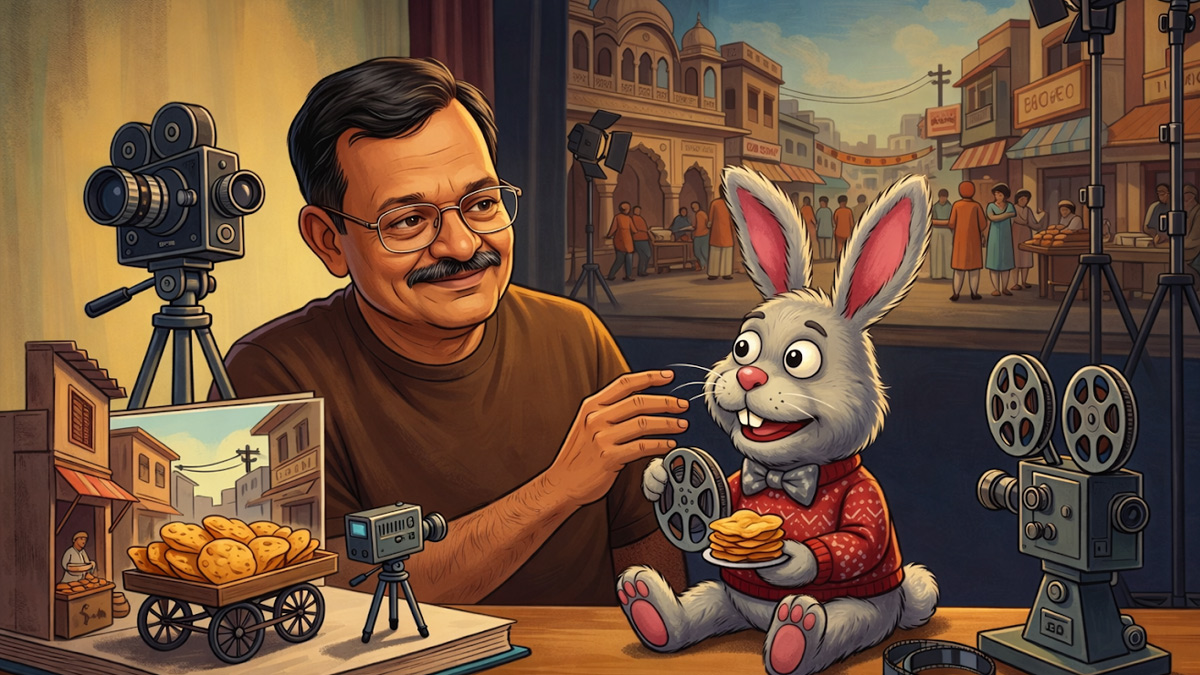
MUMBAI: There are careers, and then there are canvases. Gyan Sahay, the veteran cinematographer, director, and producer who passed away on 10 March 2026 in Mumbai, had one of the latter. Over several decades in the Indian film and television industry, he turned lenses, lights, and the occasional puppet rabbit into something approaching art.
A graduate of the Film and Television Institute of India (FTII) in Pune, Sahay built his reputation as a director of photography across a career that stretched from the early 1970s all the way to the digital age. He was the kind of craftsman who understood that a well-composed shot is not merely a technical achievement but a quiet act of storytelling.
For most Indians of a certain age, however, Sahay will forever be the man behind the rabbit. His direction of the iconic long-running television commercial for Lijjat Papad, featuring its now-legendary puppet bunny, gave the country one of its most cheerfully persistent advertising images. It was the sort of work that sneaks into the national subconscious and takes up permanent residence.
His big-screen credits as cinematographer include Anokhi Pehchan (1972), Pagli (1974), Pas de Deux (1981), and Hum Farishte Nahin (1988). In 1999, he stepped behind a different kind of camera altogether, making his directorial debut with Sar Ankhon Par, a drama that featured Vikas Bhalla and Shruti Ulfat, with a cameo by Shah Rukh Khan for good measure.
On television, Sahay was particularly prized for his command of multi-camera production setups, a skill that made him a go-to technician for large-scale shows and reality programmes. In an industry that has never been especially patient with complexity, he was the calm hand on the rig.
In later life, Sahay turned teacher. He participated regularly in masterclasses and Digi-Talks, often hosted by organisations such as Bharatiya Chitra Sadhna, sharing hard-won wisdom on cinematography, the comedy of timing in a shot, and the sweeping changes brought by the shift from celluloid to digital. He was also said to have been involved in a project concerning a biographical film on Infosys co-founder N.R. Narayana Murthy.
Tributes from the film industry poured in following the news of his passing, with colleagues remembering him as a senior cameraman who served as a rare bridge between two entirely different eras of Indian cinema. That is, perhaps, the finest thing one can say of any craftsman: he kept up, and he brought others along with him.







