Components
KCCL launches Cardless security solution from Conax including latest chip technology from ALi


MUMBAI: Conax, a leading global provider of solutions for securing digital video content distribution on all networks and devices, today announced that Kerala Communicators Cable Ltd has entered a pilot project to deploy the new Conax Cardless solution launched in September at IBC Expo. KCCL is a consortium of over 3000 independent cable TV networks in Kerala, South India. The pilot project includes an upgrade of KCCL’s existing Conax Contego™ security back-end to include support for the new Conax Cardless secure CA client. The solution consists of Conax Cardless CA and uses Coship STBs with secure chipsets from ALi Corporation, seamlessly complementing the existing card-based STB population. Coship is one of the vendors in a portfolio of licensed STB partners for the Conax Cardless offering.
KCCL operators represent 70% of cable TV services in the southwestern Indian state of Kerala – a region with a population of 33 million people. The enhanced Conax Contego security hub will empower KCCL network operators to easily operate both Smart Card and Cardless clients and differentiate between security requirements of diverse consumer groups and content. Now KCCL will be able to offer a cost efficient solution for targeting low ARPU segments and enabling rapid digitization – as well as reducing churn.

Through a strategic partnership with ALi Corporation, the Conax solution will provide KCCL with a highly secure Cardless solution utilizing a unique combination of hardware (security) and software security; for a revolutionary level of protection not available in pure software solutions. The secure software is executed within a purpose-built hardware protected environment (Secure Execution Environment) within the ALi chipset, the main CPU in the set-top-box level of protection. KCCL has chosen to deploy Conax security evaluated set-top-boxes from Coship. To enable rapid development of the cardless set-top-boxes from Coship and other STB vendors, Conax and ALi are providing a reference design with an embedded Conax Cardless security core.
-Mr. Nassir Hassan Anwar, Director, KCCL, “We are pleased to further strengthen our relationship with security partner Conax based on the Conax brand value, long experience and reliability in India, 24/7 support, flexibility of operations and open policy for STB selection. Upgrading KCCL’s security back-end to include Conax Cardless, using Ali chipsets and Coship STBs, will allow member operators to easily create new product offerings using cards or cardless clients based on varied consumer groups. The Conax solution will continue to enable KCCL operators with a future-proof, secure roadmap.”
The combined solution will enable KCCL to capture new business in the next phase of digitization in South India, while expanding their platform for additional business models and content offerings. The Conax Contego solution will also provide KCCL with easy upgrade for integrating future offerings such as VOD, multiscreen and over-the-top content viewing.
-Tom Jahr, EVP Products & Partner, Conax, “Conax is very proud that KCCL, a forward-thinking consortium with a unique business model and vision for the future, has chosen to partner in the Conax Cardless pilot deployment. Our aim is to enable KCCL to benefit from the best of both worlds, employing the cardless solution for low-end video content and smart card security for premium content. With the new solution, Conax is providing KCCL with the comprehensive and flexible tools for developing secure business models and capturing future growth.”
-Tony Chang, General Manager of International Business Unit, ALi Corporation, “Only a few months after the launch of Conax Cardless security solution at IBC including the latest generation of ALi’s secure cable STB SoC, we are proud that KCCL has chosen Conax Contego supporting both Smart Card and Cardless clients with ALi’s secure chipsets. Using the reference design provided by ALi and Conax, we are pleased that Coship was able to rapidly deploy a cardless STB, thus together we are enabling KCCL to rapidly respond to different market needs. This also further confirms the technical leadership of ALi’s secure chipset solutions in both standard and high definition, as well as the partnership with Conax on delivering cost effective cardless solutions to the low APRU segment.”
Technical recap:
· Conax Cardless is fully supported as one of the client options for the Conax Contego™ security back-end, making it easy for KCCL to expand their security hub to include cardless content distribution
· Utilizing a dedicated security core in the new chipset technology from ALi, Conax combines hardware security and software security to place a cardless security client within the ALi chipset integrated in the STBs from Coship. As the security of the solution relies on both software and hardware security, Conax Cardless has a significant market advantage over competitors’ software solutions.

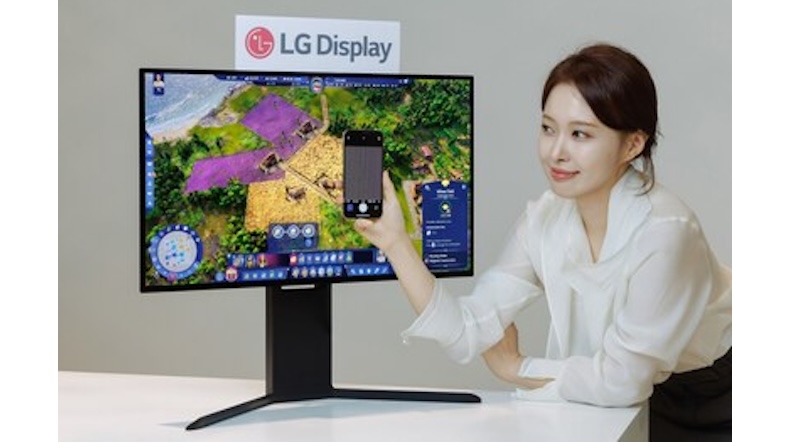
SEOUL: In the eternal battle between gamers demanding lightning-fast refresh rates and professionals craving pixel-perfect clarity, LG Display reckons it has found détente. The South Korean display titan is unveiling the world’s first 27-inch 4K OLED monitor panel that marries an RGB stripe structure with a blistering 240Hz refresh rate—a combination previously thought incompatible, like oil and water or fashion and function.
The breakthrough lies in how the pixels are arranged. RGB stripe structure lines up red, green and blue subpixels in neat rows, banishing the colour bleeding and fringing that plague lesser screens when you park your nose close to the display. It is the difference between reading crisp text and squinting at a rainbow-tinged mess. OLED panels using this method existed before, but they topped out at a sluggish 60Hz—fine for spreadsheets, useless for fragging opponents in first-person shooters.
LG Display’s engineering wizardry changes the game. By cranking the refresh rate to 240Hz whilst maintaining that pristine RGB stripe layout, the company has produced a panel that works equally well for colour-critical design work and twitchy gaming sessions. Better still, the panel incorporates Dynamic Frequency & Resolution technology, letting users toggle between ultra-high-definition at 240Hz and full-HD at a frankly ludicrous 480Hz. That is fast enough to make your eyeballs sweat.
The specs are suitably impressive: 160 pixels per inch for exceptional detail, optimised performance for Windows and font-rendering engines, and colour accuracy that should please the Photoshop brigade. LG Display achieved this by boosting the aperture ratio—the percentage of each pixel that actually emits light—and applying what it coyly describes as “various new technologies.” Translation: years of R&D and probably some sleepless nights.
Existing high-end gaming OLED monitors have relied on RGWB structures (which add a white subpixel) or triangular RGB arrangements. Both work, but neither delivers the sharpness that professionals demand. LG Display’s new stripe pattern is tailored specifically for monitor use, a recognition that staring at a screen from two feet away demands different engineering than watching telly from across the room.
The company is betting big on this technology, targeting the high-end monitor market where it already commands roughly 30 per cent of global OLED panel production. Among gaming OLED panels in mass production, LG Display claims world-leading specs across refresh rate, response time and resolution—a trifecta that sounds like marketing bluster until you check the numbers.
“Technology is the foundation of leadership in the rapidly growing OLED monitor market,” says LG Display head of the large display business unit Lee Hyun-woo. He promises to keep pushing “differentiated technologies compared to competitors”—corporate-speak for staying ahead of Chinese rivals snapping at LG’s heels.
The new panel will debut at CES 2026 in Las Vegas, where LG Display plans to woo customers and expand its lineup. Initial rollout targets high-end gaming and professional monitors, the sweet spot where people actually pay premiums for superior screens rather than settling for whatever came with their laptop.
Whether this technology reshapes the monitor market or remains a niche luxury depends on two things: pricing and production scale. But for now, LG Display has pulled off something rare—a genuine technical leap that solves a real problem. Gamers get their speed, designers get their clarity, and LG gets bragging rights. In the cutthroat world of display tech, that counts as a win.







