News Broadcasting
CNN revisits the devastating Asian Tsunami one year on 25 December

TSUNAMI: ONE YEAR AFTER
Airtimes: Indian Standard Times
Sunday, December 25 at 19:00hrs

Monday, December 26 at 10:00am and 20:00hrs (replays)
Tuesday, December 27 at 10:00am (replays)
VOICES FROM THE TSUNAMI
Airtimes: Indian Standard Times
Saturday, December 24 at 18:30hrs
Sunday, December 25 at 09:30am (replay)
Hundreds of thousands died and hundreds of thousands remain homeless in thirteen countries one year after one of the most catastrophic natural disasters in history swept through South Asia. On December 25 and 26, CNN International broadcasts “TSUNAMI: ONE YEAR AFTER” to report on the issues raised in the aftermath of the tsunami as well as updating some of the key stories which touched the world in the days and weeks following the devastation.
CNN correspondent Atika Shubert reports from the Indonesian province of Aceh where, to date, only one major project is underway. The Road to Meulaboh links the province’s west coast to the capital Banda Aceh. Shubert talks to the people and communities along the way in a bid to find out how long Aceh’s road to recovery will be.
In the face of adversity there were, however, some positive signs as Shubert reports on Intel’s contribution to help rebuild Aceh by providing wireless networks. CNN also examines how peace was brought to the region when Aceh’s separatist rebels signed a peace deal with the Indonesian government.
CNN’s Satinder Bindra reports from Sri Lanka where approximately U.S. $11 billion in pledges and donations was pledged. While some villages have fared reasonably well from such aid and have managed to rebuild their lives, CNN also looks at the other towns which haven’t fared as well. Bindra also meets ‘Baby 81’ a child who was claimed by many families as theirs; but was only reunited with his real parents after an agonizing wait and DNA testing.
For many in Sri Lanka, the train which was washed from its tracks killing 1,500 became a symbol of the nation’s grief. The rail service has now been restored and CNN will be taking a trip to meet a conductor who was on the line on that fateful day and who has returned to work on the same line since services were restored.
From India, CNN’s Ram Ramgopal looks at the plight of the children orphaned by the devastating tsunami. Have they been adopted or are they caught up in red tape? Ramgopal also looks at the success rate of a government post-tsunami program to reverse a birth control procedure carried out in Tamil Nadu—where at least 2,500 children perished in the natural disaster.
In Thailand, CNN’s Aneesh Raman reports from Bangkok and the popular tourist destination of Phuket where one hotel owner who lost his daughter in the disaster, is preparing to reopen for business. Raman will also take this opportunity to look into how the Thai government is trying to revitalize the island’s tourist industry.
Also reporting from Thailand is Kristie Lu Stout, where the American Aid Organization USAID works with the National Oceanic and Atmospheric Administration (NOAA) and other geological agencies to plan an integrated tsunami warning network for countries surrounding the Indian Ocean who were affected by events which transpired on that day.
In addition to “TSUNAMI: ONE YEAR AFTER”, CNN will replay an updated version of last year’s special program ‘VOICES FROM THE TSUNAMI’. CNN’s Alex Quade reunites with three siblings who were orphaned after the tsunami destroyed their village located on Aceh’s coast. All that was left of their belongings was the motorbike they used to out-run the wave and the clothes on their back. Quade sees how these children have managed to survive the past year without their parents, their house and their belongings. Matthew Chance, Stan Grant and Mike Chinoy also provide reports on stories of life, love and loss from the stricken regions.
AIRTIMES ARE SUBJECT TO CHANGE







News Broadcasting
WITT Summit 2026 concludes in New Delhi
Babar Azam’s comical diving attempt goes viral as league introduces anti-dew measures.
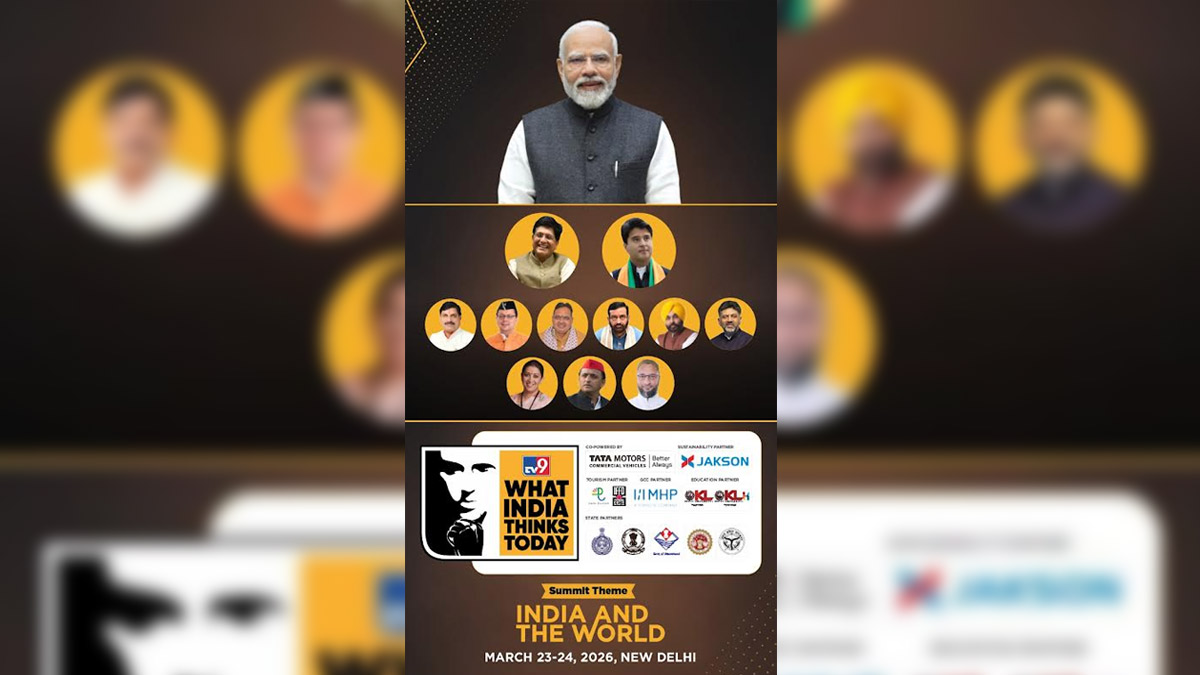
MUMBAI: The WITT Summit just wrapped up with enough big ideas to fill a policy playbook because when India’s leaders, thinkers and icons gather under one roof, even the conversations hit sixes. The eighth edition of TV9 Network’s flagship What India Thinks Today (WITT) Summit 2026 concluded on Saturday after two days of dynamic discussions at its New Delhi venue. India’s largest multi-domain public policy and culture summit brought together political leaders, policymakers, sports icons, artists and technology innovators to examine the forces shaping contemporary India and its global standing.
Prime minister Narendra Modi delivered the keynote address on the theme “India and the World” for the third consecutive year. In a wide-ranging speech, he addressed the ongoing conflict in West Asia, calling for restraint and compassion while highlighting India’s continued development trajectory despite global turmoil.
The summit featured candid conversations with state leaders. Telangana Chief Minister A. Revanth Reddy articulated a people-first governance model and contrasted it with other development approaches. Madhya Pradesh Chief Minister Mohan Yadav declared that Left-wing extremism had been effectively eliminated in his state and highlighted preparations for the upcoming Kumbh Mela. Punjab Chief Minister Bhagwant Mann defended his government’s record, citing the closure of 19 toll plazas and creation of the Sadak Suraksha Force. Karnataka Deputy Chief Minister D.K. Shivakumar expressed confidence in Congress prospects in Assam and addressed recent allegations against him.
On geopolitics and national security, Union Minister Jyotiraditya Scindia outlined India’s ambition to become a builder of trusted digital infrastructure for the world, citing the rapid 5G rollout and village-level 4G connectivity.
Cricket received significant attention. Former India captain Sourav Ganguly praised player freedom and trust as hallmarks of great leadership and named MS Dhoni as the greatest captain due to his World Cup successes. India women’s team bowling coach Aavishkar Salvi credited the BCCI and Women’s Premier League for building a pipeline of world-class talent behind the team’s recent ODI World Cup triumph.
The summit also hosted the inaugural AI² Awards 2026, celebrating the convergence of human creativity and machine intelligence in storytelling and content creation. Poet and kathavachak Kumar Vishwas delivered a nuanced take on India’s concept of Dharma and criticised the recent arrest of an 80-year-old Shankaracharya. Veteran lyricist Sameer Anjaan and storyteller Neelesh Misra reflected on changing music trends and artistic responsibility in the wake of a recent controversy involving Nora Fatehi.
In a country where conversations often run as deep as the Ganges, the WITT Summit proved once again that when leaders, thinkers and storytellers come together, the real winner is public discourse lively, layered and refreshingly unafraid to tackle the big questions shaping India’s tomorrow.








