News Broadcasting
Celebrate new year with NDTV


MUMBAI: Finally it’s that time of the year when we look back at the year that was. NDTV, India’s pioneering news channel, will highlight the memorable events of 2006 with a line-up of special programmes and shows in the last week of December.
Watch out for the newsmakers, the movers and shakers, the hits and the flops, the controversies, the events that dominated Indian and Global news on NDTV 24X7, NDTV India and NDTV Profit, starting December 25. “As the world bids adieu to the year gone by and ushers in a new year, we bring alive the most dramatic events witnessed in the year 2006, with our reporters’ unmatched perspective and analysis. On the features side, NDTV 24X7 will continue to bring to its discerning viewers the most relevant and innovative programmes,” said Sonia Singh, Managing Editor, NDTV 24X7.

“The year 2006 has been a great year for us, a year to cherish…We have delivered some great news stories and we are all proud that our chat show ‘Muqabla’ won the Best Chat Show award this year from among a group of English shows. We aspire to give our viewers an equally exciting host of programmes in the year ahead and will stay out of sensationalism of news,” said Dibang, Managing Editor, NDTV India.
“Business made, business lost…indigenous ventures gave the multinationals a run for their money while India crossed a few more milestones in global business. Year 2006 has witnessed these and many more on NDTV Profit. Crafted by the best talent in business journalism, NDTV Profit will bring our financially savvy viewers this year’s developments and smart business tips for the New Year,” said Shivnath Thukral, Executive Editor, NDTV Profit.
NDTV 24X7, India’s leading news channel, will bring its viewers a one-hour special “Highlights of the Year ‘06” programme on New Year’s eve. This show will have a section on the juicy controversies, biggest indigenous joint ventures, strongest pictures, obituaries, Best Indian of the Year and a lot more. This will be followed by a half-hour special programme on sports and five different selections from its highly commended night-out shows.
Viewers can savour the very best of NDTV’s acclaimed programmes like The Big Fight, We the People, Cricket Controversies, Walk the Talk and The Great Indian Tamasha.
NDTV Profit commemorates an exciting year of business and lifestyle through a series of special episodes of some of its hallmark shows. Starting with a one-hour exclusive programme called ‘Top four stories of the Year 2006’, it takes a sneak peek at the world of business for the coming week. This is followed by a special D-Street year-ender on the famous mergers and acquisitions of the year, titled ‘India on the prowl.’
NDTV Profit will also show special episodes of some of its most popular shows like Value for money, Good Food, Gadget Guru, Cell Guru and Money Mantra.
The excitement and festivity does not cease here. NDTV India, the acclaimed Hindi news channel will host a series of programmes crafted especially for the occasion, commencing from December 25, 2006, 10 pm onwards.
There will be thought-provoking programmes on terrorist attacks, legal procedures and verdicts, controversies of the year, a special show on how the movie Lage Raho Munnabhai recreated Gandhi in the Indian mind and a lot more…
There will also be special telecasts on the year 2006’s biggest films, best sequels and remakes. So get comfortable and enjoy NDTV’s 2006 retrospective before welcoming year 2007.




News Broadcasting
WITT Summit 2026 concludes in New Delhi
Babar Azam’s comical diving attempt goes viral as league introduces anti-dew measures.
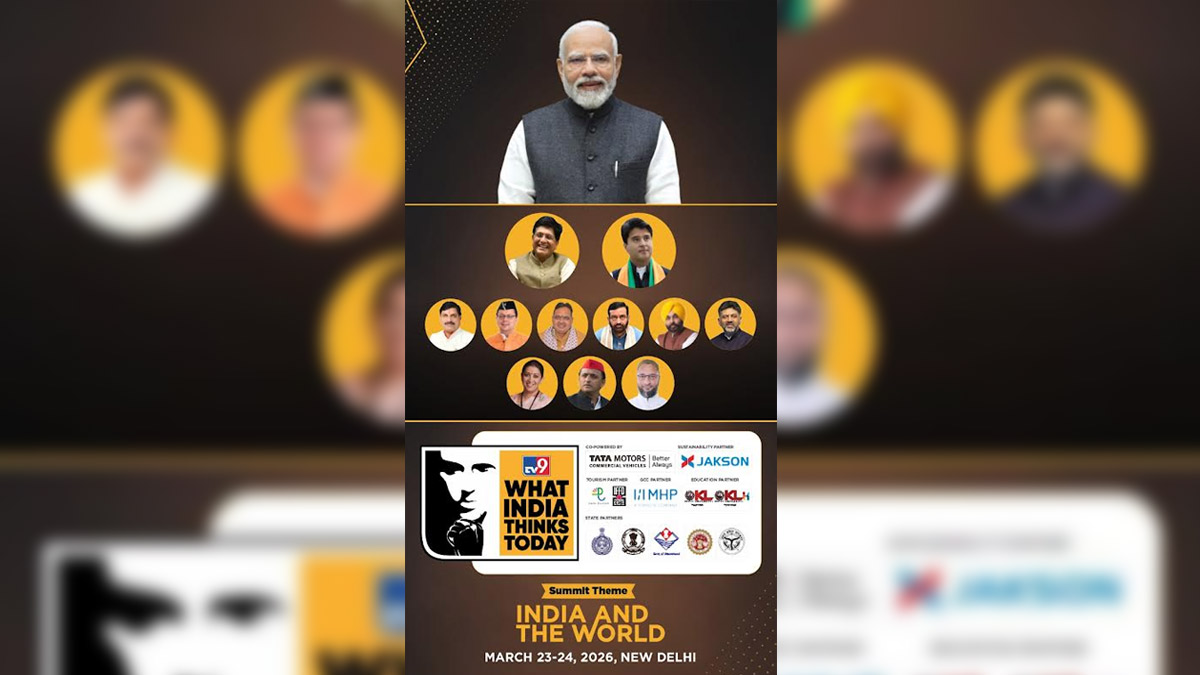
MUMBAI: The WITT Summit just wrapped up with enough big ideas to fill a policy playbook because when India’s leaders, thinkers and icons gather under one roof, even the conversations hit sixes. The eighth edition of TV9 Network’s flagship What India Thinks Today (WITT) Summit 2026 concluded on Saturday after two days of dynamic discussions at its New Delhi venue. India’s largest multi-domain public policy and culture summit brought together political leaders, policymakers, sports icons, artists and technology innovators to examine the forces shaping contemporary India and its global standing.
Prime minister Narendra Modi delivered the keynote address on the theme “India and the World” for the third consecutive year. In a wide-ranging speech, he addressed the ongoing conflict in West Asia, calling for restraint and compassion while highlighting India’s continued development trajectory despite global turmoil.
The summit featured candid conversations with state leaders. Telangana Chief Minister A. Revanth Reddy articulated a people-first governance model and contrasted it with other development approaches. Madhya Pradesh Chief Minister Mohan Yadav declared that Left-wing extremism had been effectively eliminated in his state and highlighted preparations for the upcoming Kumbh Mela. Punjab Chief Minister Bhagwant Mann defended his government’s record, citing the closure of 19 toll plazas and creation of the Sadak Suraksha Force. Karnataka Deputy Chief Minister D.K. Shivakumar expressed confidence in Congress prospects in Assam and addressed recent allegations against him.
On geopolitics and national security, Union Minister Jyotiraditya Scindia outlined India’s ambition to become a builder of trusted digital infrastructure for the world, citing the rapid 5G rollout and village-level 4G connectivity.
Cricket received significant attention. Former India captain Sourav Ganguly praised player freedom and trust as hallmarks of great leadership and named MS Dhoni as the greatest captain due to his World Cup successes. India women’s team bowling coach Aavishkar Salvi credited the BCCI and Women’s Premier League for building a pipeline of world-class talent behind the team’s recent ODI World Cup triumph.
The summit also hosted the inaugural AI² Awards 2026, celebrating the convergence of human creativity and machine intelligence in storytelling and content creation. Poet and kathavachak Kumar Vishwas delivered a nuanced take on India’s concept of Dharma and criticised the recent arrest of an 80-year-old Shankaracharya. Veteran lyricist Sameer Anjaan and storyteller Neelesh Misra reflected on changing music trends and artistic responsibility in the wake of a recent controversy involving Nora Fatehi.
In a country where conversations often run as deep as the Ganges, the WITT Summit proved once again that when leaders, thinkers and storytellers come together, the real winner is public discourse lively, layered and refreshingly unafraid to tackle the big questions shaping India’s tomorrow.








