News Broadcasting
ABP NEWS NIELSEN – KAUN BANEGA PRADHANMANTRI – Modi most preferred as PM


MUMBAI: NDA to bag 236 seats, BJP likely to get 217 seats in LS polls, AAP 10 and Cong 73 seats; Modi most preffered as PM: ABP News-Nielsen opinion poll
BJP likely to emerge as the single largest party with 217 seats and NDA to get 236 in the 2014 Lok Sabha polls, predicts opinion poll conducted by ABP News-Nielsen. Congress to confine with 73 seats and Kejriwal’s AAP likely to get atound 10 seats in the Lok Sabha polls. NDA has gained 10 seats as compared to the opinion poll conducted in January, 2014. NDA predicted to get a vote share of 46 per cent from Western India and around 38 per cent vote share in northern India.

UPA 92
NDA 236
Left. 29
Others 186
Total 543
As per the ABP News-Nielsen opinion poll, Narendra Modi seems to be a clear choice as Prime Minister. Over 57 per cent respondents want Modi to be PM. Rahul Gandhi scores over Kejriwal with 18 per cent. Only 3 per cent respondents have voted for Arvind Kejriwal as prime minister.
Narendra Modi 57%
Rahul Gandhi 18%
Arvind Kejriwal 3%
As per the opinion poll, the so-called federal front is predicted to beat the UPA with around 186 seats.
AIADMK 19
AITC 29
BJD 16
BSP 13
CPM 18
CPI 7
DMK 13
JDU 9
According to the ABP News-Nielsen opinion poll, Inflation emerges as the issue which affects people the most in their day to day life with 46% respondents saying so. According to 34 per cent respondents corruption is the biggest problem and 18 per cent feel unemployment is a major problem.
Price rise./inflation 46%
Corruption. 34%
Unemployment. 18%
As per the opinion poll, BJP likely to get around 80 seats in north India. NDA to get around 88 seats of the 151-seat north India. AAP likely to get 9 seats and Congress 17 seats. UPA predicted to get 23 seats.
UPA. 23
NDA. 88
Left. 0
Others 40
Total 151
As per the ABP News-Nielsen opinion poll, NDA likely to get 88 seats in western India. BJP alone to get 79 seats. Congress likely to get 15 seats and AAP to get only one seat in the 116- seat western India.
UPA. 22
NDA. 88
Left. 0
Others 6
Total 116
According to the ABP News-Nielsen opinion poll, UPA to lead marginally over NDA with 26 seats in southern India. Congress to get 23, BJP likely to get 20 seats in South.
UPA. 26
NDA. 21
Left. 15
Others 72
Total 134
As per the ABP News-Nielsen opinion poll, NDA to lead with 39 seats, BJP likely to get 38 seats. Congress predicted to get around 18 seats in Eastern India.
UPA. 21
NDA. 39
Left. 14
Others 68
Total 142
The opinion poll was conducted by ABP News- Nielsen in 129 constituencies with 29,252 respondents during 4th February to 15th February 2014.





News Broadcasting
News18 India launches Command Centre war explainer with Arya
New show shifts from debates to decoding global conflicts and impacts
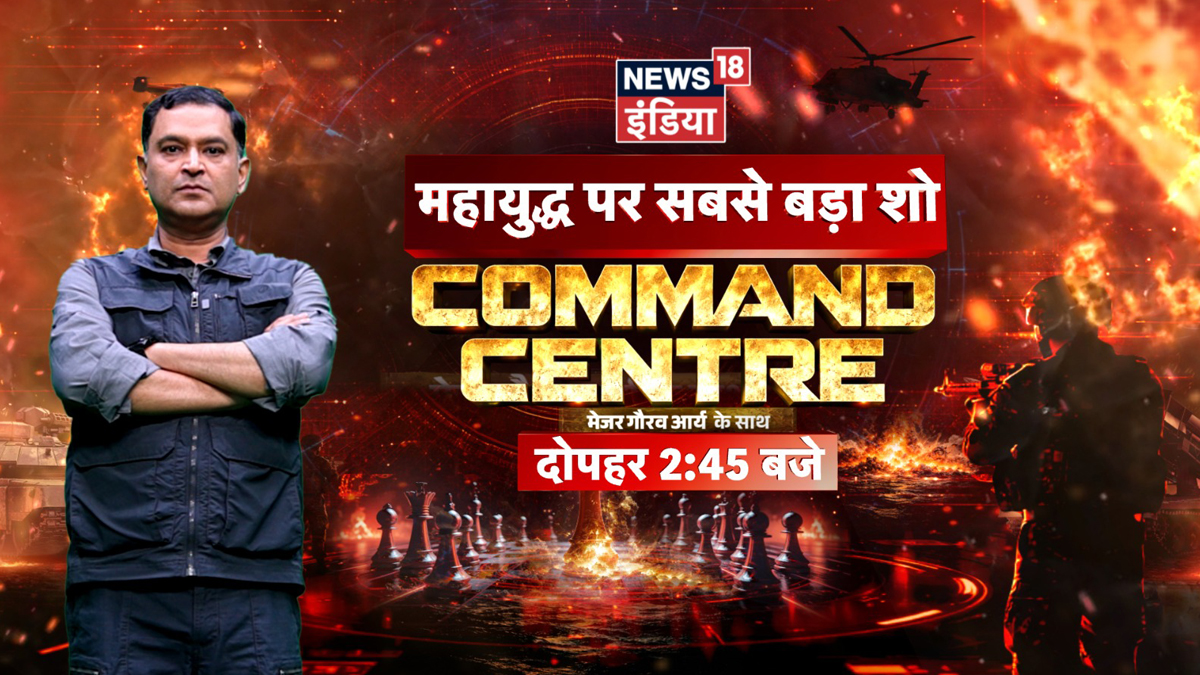
MUMBAI: News18 India has rolled out a new war-focused programme, Command Centre, featuring Gaurav Arya, as it looks to offer viewers a sharper, more grounded take on global conflicts amid rising tensions in West Asia.
Positioned as an “insider war room”, the show moves away from conventional panel debates and instead focuses on explaining military developments, decoding strategy and connecting global events to their everyday impact, from fuel prices to economic shifts.
The format leans heavily on visuals and data. The studio has been designed like a command hub, complete with large LED war maps, real-time graphics and an alert system to track developments as they unfold.
At the centre of it all is Arya, who brings his military background to simplify complex war strategies for viewers. His signature line, “Seedhi baat samjhiye”, anchors the show’s promise of clarity over noise.
News18 India managing editor Jyoti Kamal said, “Command Centre, featuring Major Gaurav Arya is designed to deliver accurate insights and a clear perspective on how evolving conflicts impact everyday life, from household budgets to national security. With expert voices analysing every development in real time, the show goes beyond headlines to decode what’s happening now, what it means, and what could come next.”
Echoing the intent, Gaurav Arya added, “In times of war, confusion is the biggest threat. With News18 India’s Command Centre, we are bringing viewers inside the war room, decoding strategies, tracking every escalation, and explaining, in the simplest terms, what it means for India and for every household. Seedhi baat samjhiye, this is where you understand not just what is happening, but what happens next.”
The weekday show will air in the afternoon slot and will also feature Gaurav Shukla, adding to its editorial depth.
With its mix of analysis, visuals and a clear focus on impact, the show reflects a broader shift in news consumption. Viewers are no longer just watching events unfold, they are looking to understand what those events mean for them.







