News Broadcasting
ABP Ananda as the emblem of Bengali culture: 15 years & counting


West Bengal’s most illustrious news channel, ABP Ananda, has added yet another chapter to its glorious history, completing 15 years of operations this month. Since inception, the channel has been the quintessence of local, on-ground reporting in Bengal and has carved a special place in the heart of the Bengalis.
With a mission to empower, inspire & serve as the voice of the people, the channel has not only created a strong brand equity in the market of West-Bengal, but also withheld its no. 1 position consistently. Among the five channels that have constantly appeared in BARC’s weekly lists of Top 5 Bangla news channels, ABP Ananda has remained the most consistent & most-watched. The channel, through its many memorable shows, has given a televisual feast to its viewers, and was the No.1 channel in the entire West Bengal TV Universe in terms of reach, for 13 consecutive weeks. (Source: BARC, TG – NCCS 2+, Mkt- WB, Wk 12-24’2020, Cume. Reach in Cr.) ABP Ananda has not only surpassed GECs, but all channels available in West Bengal – making history in the news broadcasting sphere.
However, achieving this undisputed leadership position was no cakewalk. Over the years, the channel has fervently pursued its vision towards responsible, action-oriented & impactful journalism, delivering top-notch content to its viewers. Carrying forward its editorial philosophy of radical opinions with a reverence for facts, the channel has proficiently undertaken issues of both local and national importance via cutting-edge reportage. In fact, ABP Ananda was the first channel to break the story of Rizwanur Rahman – A high profile case of an inter-religion marriage leading to an accidental death of Rizwanur in August 2007, the Saradha Financial Scam pertaining to the collapse of a Ponzi scheme run by Saradha Group in 2013, the Park Street Rape case of Feb 2012, Maoist Kishenji’s death and the Posta Flyover Collapse in 2016, among many other cases with perplexing, meddlesome dimensions.

What’s more is that, the channel has been a close ally of the viewers during the time of crises and helped them sail through grief & despair, by keeping them apprised at all times. In May 2019, when Cyclone Fani intensified into an Extremely Severe Cyclonic Storm, ABP Ananda’s GKSS was No.1 in WB TV Universe (Source BARC, TG- NCCS 2+, Fri 3rd May’19, TB- 2000-2100 Hrs, Mkt- WB, GVTs). Similarly, the calamity that struck Bengal during the Cyclone Amphan, ABP Ananda’s Live TV garnered 6.2 million views in one day (20th May, 2020), despite a major breakdown in communication networks. This truly depicts the faith of Bengali viewers in ABP Ananda’s coverage, which has chronicled every single story of the state.
Even amid the ongoing COVID-19 crisis, when viewers have been on a constant lookout for latest developments in their district/township, ABP Ananda has been a frontrunner in delivering updates across all platforms.
Moreover, as we grapple with the numerous ramifications of the pandemic, various beleaguered sectors are looking for sustenance, especially that of education. The scholastic and academic loss to students, particularly those belonging to disadvantaged groups, has demanded an expeditious action. In this light, ABP Ananda aired virtual classes for students of IX to XII of state-aided Madhyamik & Higher Secondary schools and ICSE & ISC students to make up for the lost lessons, which received an overwhelming response from the viewers.
Apart from relentlessly bringing meaningful stories of West Bengal to its people, the channel has also embroiled itself into the culture & ethos of the state, through local on-ground initiatives and events. Some of their most acclaimed events include the Khaibaar Pass Food Festival – one of Kolkata’s biggest on-ground Food Festivals which celebrates the scintillating Bengali food culture, and the success of which has paved the way for three more Khaibaar Pass Events in North Bengal, South Bengal, and North 24 Parganas; Sera Bangali, an award show that honors eminent personalities of Bengal; Jukti-Tokko – a renowned debate show which delivers authentic, ground-breaking conversations on key political & social issues of the state; and Sharad Ananda & Aloke Ananda, two properties that have become an integral part of a Bengali’s celebration of the most auspicious festivals – Durga Puja & Kali Puja
By the dint of these special initiatives, ABP Ananda has become a household name in Kolkata and a true confidant of the Bengali audiences all across the country.
In the ever-evolving television industry, the viewership patterns, content offerings, and audiences have diversified drastically in the past 15 years. But ABP Ananda has thrived and retained its crown despite the changing landscapes. Having achieved so much over the years, the channel has emerged as a hallmark of superior quality and credibility with the highest ethical standards of news reportage.
And as it embarks on another noteworthy year, the channel is poised to make even bigger strides in the realm of television news.
An undisputed leader, 15 years and counting.





News Broadcasting
Kamlesh Singh receives Haldi Ghati Award from MMCF
India Today Group editor honoured for three decades of journalism at Udaipur ceremony.
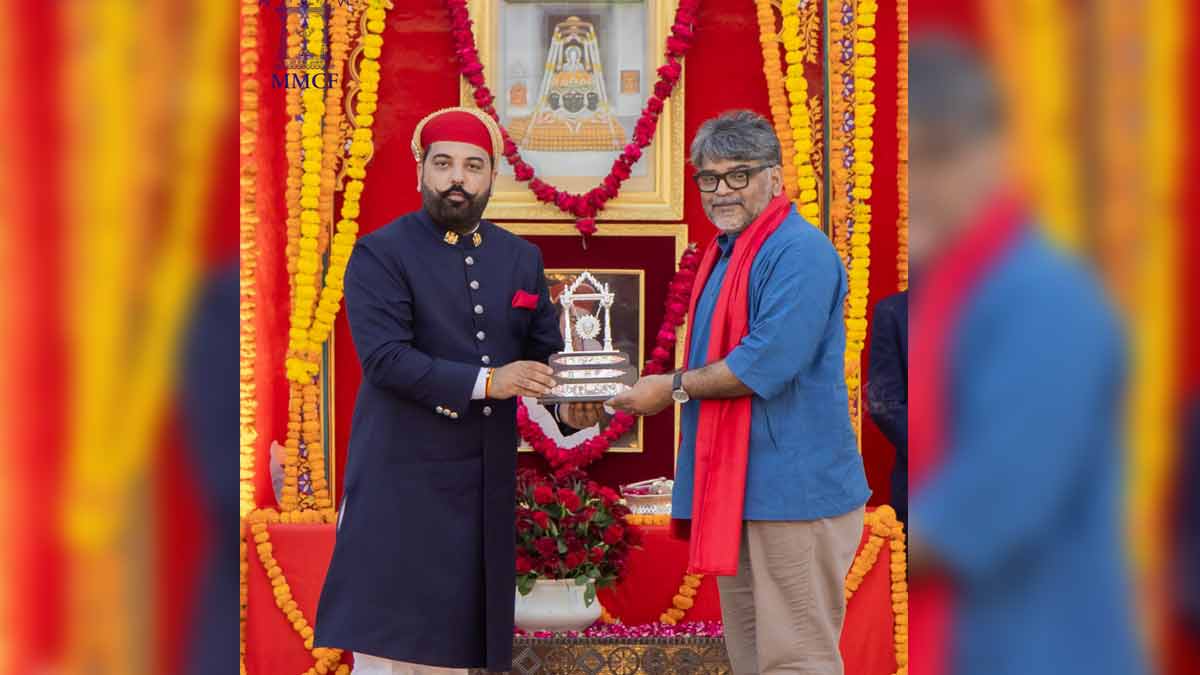
MUMBAI- Kamlesh Singh just turned a lifetime of sharp words into a shiny shield because when journalism wakes up a society, even the Maharana of Mewar wants to pin a medal on it.
The Maharana of Mewar Charitable Foundation (MMCF) conferred its prestigious Haldi Ghati Award on Kamlesh Singh, a senior editor at the India Today Group, during a ceremony in Udaipur on 15 March 2026. The national award, instituted in 1981-82, recognises “work of permanent value that initiates an awakening in society through the medium of journalism.”
Singh, who leads several editorial initiatives including Aaj Tak Radio, the Teen Taal community and The Lallantop, was presented the honour by Lakshyaraj Singh Mewar, Managing Trustee of MMCF. The citation highlighted his three decades of contributions to Indian media, innovations in digital journalism, mentoring young reporters, and his popular podcast persona “Tau” on Teen Taal, which fosters thoughtful public discourse.
The Haldi Ghati Award, named after the historic Battle of Haldighati symbolising valour and resilience, is one of four national awards given annually by MMCF. Past recipients include Tavleen Singh, Piyush Pandey and Raj Chengappa.
Other honourees this year included Padma Vibhushan Pt Hari Prasad Chaurasia, Vedamurti Devvrat Rekhe, Treeman of India Marimuthu Yoganathan, Vir Chakra Capt Rizwan Malik, and US-based researcher Molly Emma Aitken, who received the Colonel James Tod Award for contributions to understanding Mewar’s spirit and values.
In an era where headlines often shout louder than substance, the MMCF quietly reminded everyone that real journalism isn’t about noise, it’s about the quiet, persistent work that stirs society awake, one thoughtful story at a time.







