Hindi
Zohra Sehgal – the artiste with an infectious smile, is no more

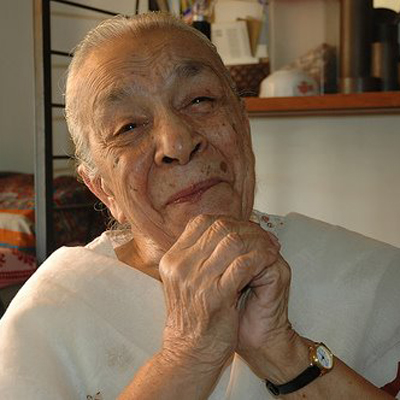
NEW DELHI: Veteran actress Zohra Sehgal – who was known for her charming smile and keen sense of timing – passed away in the capital on 10 July at 4:00 pm.
Zohra, who had turned 102 on 27 April this year, felt uneasiness after dinner on 9 July night and was rushed to Max Hospital in south Delhi. Her family confirmed that she had a cardiac arrest in the afternoon.

She is survived by her son Pavan and her daughter (eminent danseuse Kiran Sehgal), and four grandchildren.
Born in 1912, she started her career as a dancer in choreographer Uday Shankar’s troupe. From 1935 to 1943, she was a leading dancer with the troupe and performed across the world including the United States and Japan.
As an actress, Zohra appeared in varied roles that showed her range as an artiste. She had last appeared in the 2007 film ‘Saawariya’.
She has appeared in just over 50 films and television series starting with K A Abbas’ debut film Dharti ke Lal in 1946.
Some of her better remembered films are Bhaji on the Beach (1992), The Mystic Masseur (2001), Bend It Like Beckham (2002), Dil Se (1998) and Cheeni Kum (2007); Hum Dil De Chuke sanam (1999), Veer Zara (2004), and the TV series, The Jewel in the Crown (1984), Tandoori Nights (1985–87), Amma and Family (1996).
At the age of 90, she got the lead character around whom the story revolved in 2002 film Chalo Ishq Ladaaye, where she had stunt sequences, emotional scenes, etc. Considered the doyenne of Indian theatre, she acted with Indian People’s Theatre Association and Prithviraj Kapoor’s Prithvi Theatre for 14 years.
Zohra received the Padma Shri in 1998, Padma Vibhushan (2010), the Kalidas Samman in 2001, and in 2004, the Sangeet Natak Akademi’s highest award, the Sangeet Natak Akademi Fellowship for lifetime achievement.
Born as Sahibzadi Zohra Begum Mumtaz-ullah Khan into a traditional Muslim family in Saharanpur in Uttar Pradesh, to Mumtazullah Khan and Natiqua Begum, belonging to Rampur, Uttar Pradesh, she was the third of seven. She was a tomboy fond of climbing trees and playing games. Zohra lost vision in her left eye as she contracted glaucoma at the age of one year. She was referred to a hospital in Birmingham where she was treated.
She lost her mother while still young. According to her mother’s wishes, she and her sister were sent to Queen Mary College in Lahore (then part of undivided India). Her maternal uncle Sahebzada Saeeduzzafar Khan who was based in Edinburgh arranged for her to apprentice under a British actor. In Europe, her aunt Dicta took her to try in the Mary Wigman’s ballet school in Dresden, Germany, but she had not ever danced. She got admission and became the first Indian to study at the institution. She stayed in Dresden for the next three years studying modern dance, while living in the house of Countess Liebenstein. She happened to watch the Shiv-Parvati ballet by Uday Shankar who was touring Europe and this marked a turning point. He promised her a job on return to India.
But even before she came back, she received a telegram from Uday Shankar asking her to accompany on a tour to Japan. On 8 August 1935, she joined his troupe and danced across Japan, Egypt, Europe and the US, as a leading lady, along with French dancer Simkie. When Uday Shankar moved back to India in 1940, she became a teacher at the Uday Shankar India Cultural Centre at Almora.
It was here that she met her future husband Kameshwar Sehgal, a young scientist, painter and dancer from Indore, eight years her junior. They married on 14 August 1942 and had two children, Kiran and Pavan. For a while the couple worked in Uday’s dance institute at Almora. Both became accomplished dancers and choreographers. Kameshwar composed a noted ballet for human puppets and choreographed the ballet Lotus Dance. When it shut down later, they migrated to Lahore and set up their own Zohresh Dance Institute.
Because of the growing communal tension preceding the Partition of India, they returned to Mumbai where her sister Uzra was already working with Prithvi Theatres. She joined Prithvi Theatre in 1945 as an actress with a monthly salary of Rs 400, and toured every city across India with the group for the next 14 years.
She also joined IPTA and acted in several plays, and made her film debut in IPTA’s first film production, directed by Khwaja Ahmad Abbas, Dharti Ke Lal in 1946; she followed it up with another IPTA-supported film, Chetan Anand’s Neecha Nagar which became India’s first film to go to Cannes and won the Palme d’Or at the Cannes Film Festival.
She also did the choreography for several Hindi films, including Guru Dutt’s Baazi (1951) and the dream sequence song in Raj Kapoor’s film Awaara.Kameshwar, on the other hand, became art director in Hindi films and later tried his hand at film direction.
After her husband’s death in 1959, Zohra first moved to Delhi and became director of the newly founded Natya Academy. She then moved to London on a drama scholarship in 1962.Her first role for British television was in a BBC adaptation of a Kipling story, The Rescue of Pluffles, in 1964. She also anchored 26 episodes of BBC TV series, Padosi (Neighbours; 1976–77).
In London, Zohra got her first break in the films and was signed by Merchant Ivory Productions. She appeared in The Courtesans of Bombay directed by James Ivory in 1982. This paved way for an important role as Lady Chatterjee in the television adaptation The Jewel in the Crown (ITV, 1984). She then acted in several other films and TV series before returning to India.
She returned to India in the mid-1990s and lived for a few months in Burdwan. At that time she acted in several films, plays and TV series since. She first performed poetry at a memorial to Uday Shankar organised by his brother, Ravi Shankar in 1983, and soon took it in big way; she started getting invited to perform poetry at various occasions. She even traveled to Pakistan to recite verses for “An Evening with Zohra”. Her impromptu performances of Punjabi and Urdu became a norm. After stage performances she was often requested by the audience to recite Hafeez Jullundhri’s famous nazm, Abhi To Main Jawan Hoon.
In 1993, a critically acclaimed play, Ek Thi Nani, was staged in Lahore for the first time, featuring Zohra and her sister Uzra Butt now staying in Pakistan. The English version, A Granny for All Seasons, was held at UCLA in 2001. In 2008, at the United Nations Population Fund (UNPF)-Laadli Media Awards in New Delhi, she was named Laadli of the century.
In 2014, she became the longest-living actor to have appeared on Doctor Who, as well as the first centenarian associated with the show. The second is Olaf Pooley, who celebrated his 100th birthday on 13 March 2014.



Hindi
Remembering Gyan Sahay, the lens behind film, television and advertising
From a puppet rabbit selling poppadums to Hindi cinema, he framed it all.
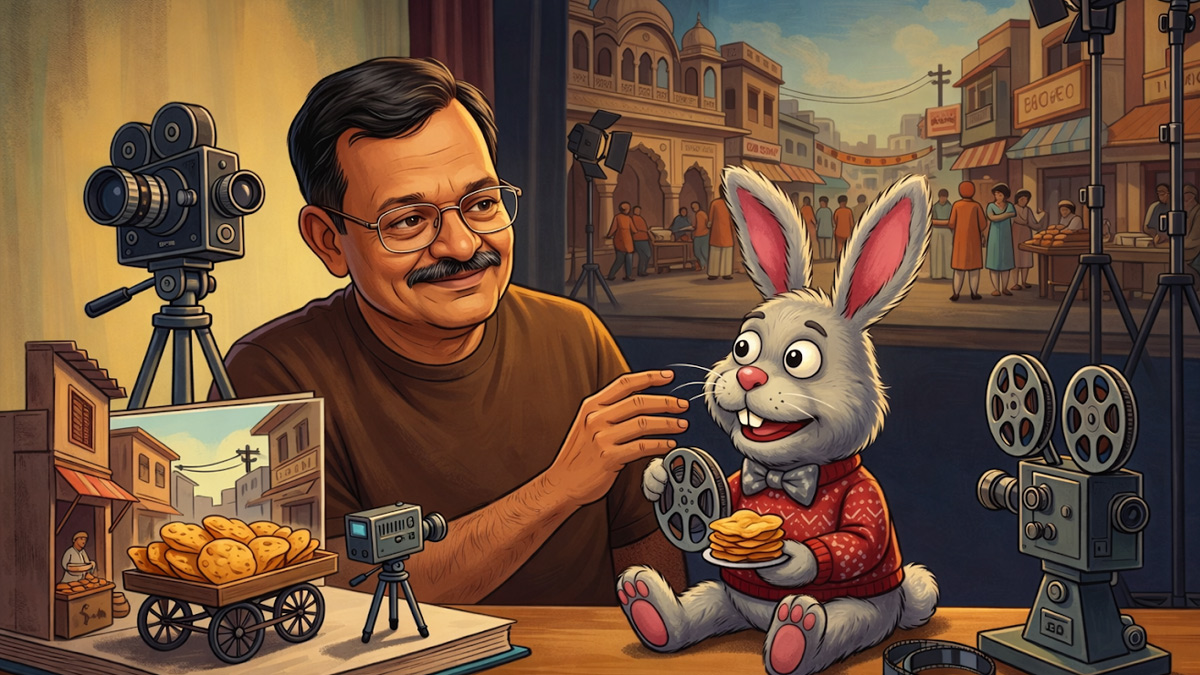
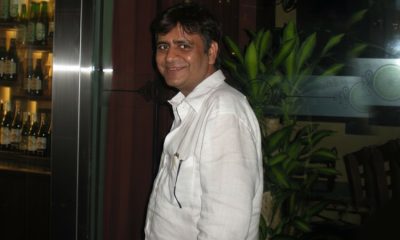
MUMBAI: There are careers, and then there are canvases. Gyan Sahay, the veteran cinematographer, director, and producer who passed away on 10 March 2026 in Mumbai, had one of the latter. Over several decades in the Indian film and television industry, he turned lenses, lights, and the occasional puppet rabbit into something approaching art.
A graduate of the Film and Television Institute of India (FTII) in Pune, Sahay built his reputation as a director of photography across a career that stretched from the early 1970s all the way to the digital age. He was the kind of craftsman who understood that a well-composed shot is not merely a technical achievement but a quiet act of storytelling.
For most Indians of a certain age, however, Sahay will forever be the man behind the rabbit. His direction of the iconic long-running television commercial for Lijjat Papad, featuring its now-legendary puppet bunny, gave the country one of its most cheerfully persistent advertising images. It was the sort of work that sneaks into the national subconscious and takes up permanent residence.
His big-screen credits as cinematographer include Anokhi Pehchan (1972), Pagli (1974), Pas de Deux (1981), and Hum Farishte Nahin (1988). In 1999, he stepped behind a different kind of camera altogether, making his directorial debut with Sar Ankhon Par, a drama that featured Vikas Bhalla and Shruti Ulfat, with a cameo by Shah Rukh Khan for good measure.
On television, Sahay was particularly prized for his command of multi-camera production setups, a skill that made him a go-to technician for large-scale shows and reality programmes. In an industry that has never been especially patient with complexity, he was the calm hand on the rig.
In later life, Sahay turned teacher. He participated regularly in masterclasses and Digi-Talks, often hosted by organisations such as Bharatiya Chitra Sadhna, sharing hard-won wisdom on cinematography, the comedy of timing in a shot, and the sweeping changes brought by the shift from celluloid to digital. He was also said to have been involved in a project concerning a biographical film on Infosys co-founder N.R. Narayana Murthy.
Tributes from the film industry poured in following the news of his passing, with colleagues remembering him as a senior cameraman who served as a rare bridge between two entirely different eras of Indian cinema. That is, perhaps, the finest thing one can say of any craftsman: he kept up, and he brought others along with him.