News Broadcasting
Zee Vs BCCI case hearing continues Friday; Pak tour delayed

MUMBAI: The Board of Control for Cricket in India (BCCI) stated today that Pakistan’s upcoming tour of India would in all likelihood be delayed by four to five days. The announcement was made by BCCI president Ranbir Singh Mahendra in the capital even as down south, the Madras High Court, which is hearing a petition brought against the Indian cricket board on the issue of telecast rights, said arguments would continue tomorrow.
The board also said that in deference to the Pakistan side’s objections to playing a Test in Ahmedabad, the scene of communal riots in 2002, it had offered the Pakistan team the option to play a One-Day International in Ahmedabad instead, with the Test fixture being shifted to Kolkata. Pakistan is scheduled to play three Tests and five ODIs on their upcoming tour of India.
The court case, meanwhile, pertains to a plea filed by Zee Telefilms contending that cancellation of the bidding process by the BCCI amounted to breach of its fundamental rights under Article 226 of the Indian Constitution. The board, in a counter affidavit filed yesterday, had told the court that since it owned the telecast rights, it was entitled to have dealings with anyone it chose to and had sought dismissal of Zee’s petition. The court had earlier passed an injunction restraining the board from awarding television telecast rights to any broadcaster or party while the case was being heard.

Mahendra’s declaration that the Pakistan tour would be delayed has like as not a lot to do with the fact that till the court delivers a ruling, the BCCI cannot negotiate with any broadcaster, including Indian pubcaster Doordarshan, on the rights for the upcoming series that is scheduled to begin early March.
Along with the Zee petition, there is also a plea filed earlier by ESPN Star Sports in the Supreme Court seeking legal protection against BCCI awarding cricket rights to anybody else without considering ESS’ bid too.
That the board is in a bind of its own making is clear from the comments Mahendra made on the rights’ issue. He said the matter would not be taken up until the board received a directive from the court.
And judging from the inconclusiveness of today’s day-long hearing, there is no surety that the court will deliver a verdict tomorrow either.
In the event the case drags, one option the board has is to revisit an earlier proposal it had been considering that envisaged producing the cricket matches itself, buying time on a channel for telecast like producers of sponsored serials on Doordarshan do and then marketing commercial time. Or else the tried and tested patchwork solution used on earlier occasions could be brought to bear on the proceedings: Seek the Supreme Court’s intervention “in light of the urgency of the matter”. If the second (more likely) option is taken, then the apex court would in all probability clear the decks for DD to telecast pending a final verdict.
The series against Australia and South Africa earlier in the season were also telecast by DD.
But if, as it looks more and more likely now, DD does get the telecast by default, one thing that the board can kiss goodbye to is a whole load of money. Going by the board’s own admission, not awarding the rights to a private broadcaster during the South Africa and Australia series cost it a cool Rs 1.5 billion. And that too after subtracting the Rs 1 billion the board received from Prasar Bharati for the two series.
The upcoming series is worth much, much more!





News Broadcasting
WITT Summit 2026 concludes in New Delhi
Babar Azam’s comical diving attempt goes viral as league introduces anti-dew measures.
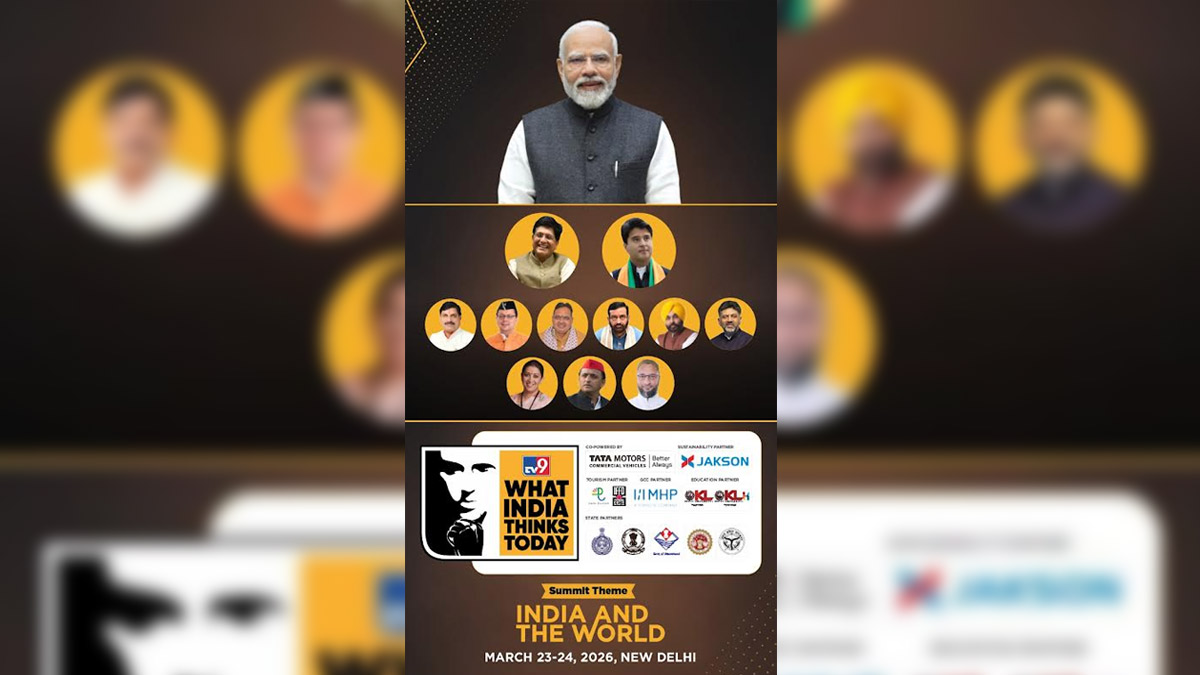
MUMBAI: The WITT Summit just wrapped up with enough big ideas to fill a policy playbook because when India’s leaders, thinkers and icons gather under one roof, even the conversations hit sixes. The eighth edition of TV9 Network’s flagship What India Thinks Today (WITT) Summit 2026 concluded on Saturday after two days of dynamic discussions at its New Delhi venue. India’s largest multi-domain public policy and culture summit brought together political leaders, policymakers, sports icons, artists and technology innovators to examine the forces shaping contemporary India and its global standing.
Prime minister Narendra Modi delivered the keynote address on the theme “India and the World” for the third consecutive year. In a wide-ranging speech, he addressed the ongoing conflict in West Asia, calling for restraint and compassion while highlighting India’s continued development trajectory despite global turmoil.
The summit featured candid conversations with state leaders. Telangana Chief Minister A. Revanth Reddy articulated a people-first governance model and contrasted it with other development approaches. Madhya Pradesh Chief Minister Mohan Yadav declared that Left-wing extremism had been effectively eliminated in his state and highlighted preparations for the upcoming Kumbh Mela. Punjab Chief Minister Bhagwant Mann defended his government’s record, citing the closure of 19 toll plazas and creation of the Sadak Suraksha Force. Karnataka Deputy Chief Minister D.K. Shivakumar expressed confidence in Congress prospects in Assam and addressed recent allegations against him.
On geopolitics and national security, Union Minister Jyotiraditya Scindia outlined India’s ambition to become a builder of trusted digital infrastructure for the world, citing the rapid 5G rollout and village-level 4G connectivity.
Cricket received significant attention. Former India captain Sourav Ganguly praised player freedom and trust as hallmarks of great leadership and named MS Dhoni as the greatest captain due to his World Cup successes. India women’s team bowling coach Aavishkar Salvi credited the BCCI and Women’s Premier League for building a pipeline of world-class talent behind the team’s recent ODI World Cup triumph.
The summit also hosted the inaugural AI² Awards 2026, celebrating the convergence of human creativity and machine intelligence in storytelling and content creation. Poet and kathavachak Kumar Vishwas delivered a nuanced take on India’s concept of Dharma and criticised the recent arrest of an 80-year-old Shankaracharya. Veteran lyricist Sameer Anjaan and storyteller Neelesh Misra reflected on changing music trends and artistic responsibility in the wake of a recent controversy involving Nora Fatehi.
In a country where conversations often run as deep as the Ganges, the WITT Summit proved once again that when leaders, thinkers and storytellers come together, the real winner is public discourse lively, layered and refreshingly unafraid to tackle the big questions shaping India’s tomorrow.