GECs
Zee TV’s India’s Best Dramebaaz bids adieu; Kapil Sharma hosts the grand finale

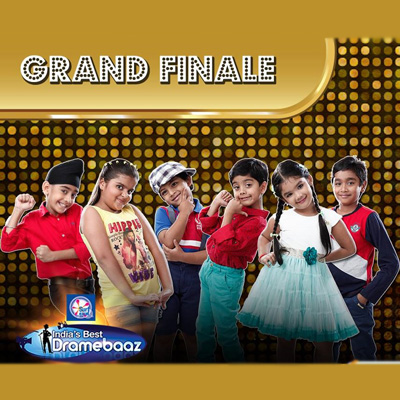
MUMBAI: Comedian Kapil Sharma brought to close season two of India’s Best Drameebaz (IBD) on Sunday, March 6 by hosting its grand finale. Produced by Frames Productions, season two completed its 26 episode journey. On 12 December 2015 Zee TV had once again brought back the second season of this home grown laughter dose which had children in the age group of 5 to13 years. .
Zee Enterprises Entertainment Ltd (ZEEL)’s flagship channel Zee TV has always provided platforms that have contributed talented performers to the entertainment industry. Being a pioneer in making its own home grown reality shows, Zee has always given some of the best entertaining reality shows. After producing a series of talent reality shows like Sa Re Ga Ma Pa, Dance India Dance, Dance India Dance Li’l champs, India’s Best Cinestar Ki Khoj, the channel had launched India’s Best Dramebaaz (IBD) in 2013.
Zee TV roped in a number of brands for the season 2 of IBD. These included Surf Excel as the title sponsor and Patanjali Atta Noodles as co-powered by sponsor. Besides, the channel also had other brands including Britannia Tiger Crunch, Yamaha Fascino, Epson, Vistaprint.in and Dabur Chawanprash as associate sponsors.

A source informed indiantelevision.com that the production cost for the show was Rs 70-80 lakh per episode, and the ad rate for a 10 second slot was Rs 1.5 lakh.
Zee marketed IDB season 2 aggressively. The campaign posed a distinctive challenge because it had kids at the forefront and hence would have been perceived as a kids show and would not appeal to the other audiences.
To specifically counter the unique challenge that IBD faced, a unique strategy was devised. All communication on IBD was contextual via customized communication for TGs and specific markets which was carried across all media vehicles including TV, radio and cinema.
Special promos resonating with various genres of TV audiences were created and run across different mediums including cinema, music, news and kids channels. Clutter-breaking and entertaining radio spots were specifically created for each market highlighting issues. A special print innovation was carried across key publications.
On the digital front, various innovations were a part of this campaign. Zee TV tied up with Facebook and conducted a Facebook bus activity wherein fun content was generated with the judges and participants and populated across social media.
As the show approached the finale week, Zee TV tied up with Twitter to provide a unique social media experience to its fans. The Twitter Challenger App was a unique initiative that brought forth the fun side of its participants through various challenges. The judges, anchors and the top 6 finalists created pictures and videos that were funny, topical and fresh. The same were populated across social media during the finale week.
The efforts put in by Zee TV to market the show seem to have paid off handsomely. In week 6 of Broadcast Audience Research Council (BARC), IBD emerged as the number one non-fiction show in Hindi GEC space with 8148 TVTs while in week 7 the show continued to be the number one non-fiction show with 7057 Impressions’ 000. In week 8 IBD remained at the top with an increase in viewership from 7057 to 7382 Impressions ‘000.
Frames Production’s Ranjit Thakur said, “India’s Best Dramebaaz has really won the heart of Indian audiences. The kids were fabulous and fantastic, also all the three judges Sonali Bendre, Vivek Oberoi and Sajid Khan, we all are like a big family now. Also working with Zee after a couple of years was amazing. I am happy that we have delivered this beautiful show.”






GECs
Sahara One reports financial results, notes director exit and business realignment
Muted revenues, steady expenses and strategic adjustments shape company’s current phase
MUMBAI: In a tale where the sands seem to be slipping faster than they can be gathered, Sahara One Media and Entertainment Limited has reported another quarter of wafer-thin income and widening losses, even as a boardroom exit adds to the unease.
The company informed the Bombay Stock Exchange that its board, in a meeting held on April 4, approved its unaudited financial results for the quarter ended September 30, 2025. The numbers paint a stark picture. Total income for the quarter stood at just Rs 0.13 lakh, unchanged sequentially and sharply down from Rs 0.26 lakh a year earlier.
Losses, meanwhile, deepened. The company posted a net loss of Rs 24.16 lakh for the quarter, compared to Rs 18.81 lakh in the June quarter and Rs 39.69 lakh in the same period last year. For the six months ended September 2025, the cumulative loss stood at Rs 39.69 lakh, while the full-year loss for FY25 was reported at Rs 60.72 lakh.
Expenses continued to outweigh income by a wide margin. Total expenses for the quarter came in at Rs 24.30 lakh, led by employee benefit costs of Rs 6.51 lakh and other expenses of Rs 17.78 lakh. Earnings per share remained in the red at Rs (0.11) for the quarter.
The balance sheet reflects a company with significant assets on paper but limited operational momentum. Total assets stood at Rs 23,065.57 lakh as of September 30, 2025, broadly unchanged from March 2025. Equity share capital remained steady at Rs 2,152.50 lakh, while total equity was reported at Rs 18,004.85 lakh.
Cash and cash equivalents saw a modest uptick to Rs 6.75 lakh from Rs 4.68 lakh earlier, supported by a positive operating cash flow of Rs 180.01 lakh for the period.
Yet, beneath these numbers lies a more complex narrative. The company’s auditors flagged their inability to obtain sufficient evidence to form a conclusion on the financial statements, citing lack of access to records. They also raised concerns over the company’s ability to continue as a going concern, pointing to insufficient funds, delayed recoveries, and stalled content investments.
Adding to the governance overhang, the company disclosed that Rana Zia has resigned as whole-time director, effective October 16, 2025, citing other professional commitments. The resignation, noted and accepted by the board, also brings an end to her role across company committees.
Regulatory pressures continue to loom large. The Securities and Exchange Board of India has already initiated penal actions for non-compliance with listing norms, with trading in the company’s shares remaining suspended. There is also a risk of promoter demat accounts being frozen.
Legacy legal issues remain unresolved. A substantial deposit of Rs 694,027.88 thousand linked to the long-running OFCD dispute involving Sahara group entities is still under the purview of the Supreme Court of India. Restrictions on asset disposal continue to weigh on the company’s financial flexibility.
Operationally, challenges persist across multiple fronts. Advances worth Rs 1,92,916 thousand given for film content remain stuck, with delays in project completion and uncertain recoverability. The company’s YouTube channel, despite being operational, has generated no revenue for over three years due to compliance lapses. In a further twist, management has indicated that revenues may have been fraudulently diverted through unauthorised changes to its AdSense account, with a police complaint in the works.
There are also missed revenue opportunities. Television content rights continue to be used by a related party despite the expiry of the licence agreement, with fresh negotiations still underway.
For now, Sahara One Media and Entertainment Limited appears caught between legacy disputes and present-day operational hurdles. As losses linger and governance questions mount, the road to recovery looks less like a sprint and more like a slow trudge through shifting sands.






