News Broadcasting
Zee Telefilms to launch two more FTA channels


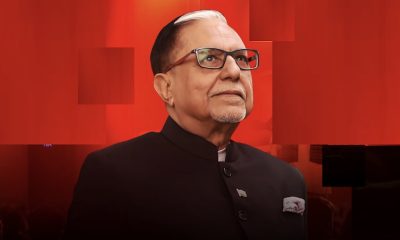
NEW DELHI: The Subhash Chandra-promoted Zee Telefilms is very bullish on certain aspects of conditional access system (CAS) and feels that it is rightly positioned to take advantage of the evolving scenario in the country. On cue, it has decided to launch two other channels in the free to air mode.
“The company would be launching two more channels soon,” Zee Telefilms director, news group, Laxmi Goel told indiantelevision.com. Though he did not give a time frame for the launch, Goel did admit that the two proposed channels would be free to air.
India’s largest vertically integrated media company would come out with Zee Manasi, primarily targeted at women, and Zee Comedy, which, as the name suggests, would serve comic or light fare. Details on the two proposed channels were not available.

Industry experts felt that though the two proposed channels look like niche products, going by the sketchy information available on them, launching them in the free to air mode is surprising. Niche channels, experts felt, would work better as part of a DTH bouquet or may even work for the headend in the sky model (HITS) through which Zee is aiming at introducing CAS in a digital mode.
But Zee’s plans to launch by mid-year a business news channel, Zee Biz, seems to have got stuck in bureaucratic hurdles. While information and broadcasting minister Ravi Shankar Prasad told indiantelevision today that the relevant file on Zee Biz had not yet reached him, officials in the ministry maintain that Zee Telefilms would have to undergo restructuring as per the new uplinking policy if it wished to get permission for uplinking the proposed business news channel from India.
“The case of Zee’s business channel is being studied in the view of the new uplinking policy,” a senior government official had told indiantelevision.com few days back.
As per the new uplinking policy by the Indian government, news channels desirous of uplinking from India cannot have more than 26 per cent foreign holding.
The likes of Star News and CNBC India were given 90 days to comply with the regulation and it was understood that Zee News, since it already uplinked directly to a broadcast satellite from India, was to get a year’s time to undergo restructuring to fulfil the norms. In Zee Telefilms, the total foreign holding is over the prescribed level at the moment.
Meanwhile, the Zee Tele scrip today closed lower by 3.86 per cent or Rs 3.20 at Rs 79.80 with volumes of 3,665,506 on the Bombay Stock Exchange.
According to a CNBC India analysis, the Zee scrip had been rising since last Tuesday, when it closed at Rs 78.20. But the stock reversed the trend yesterday to close lower at Rs 83. It hit a high of Rs 105.25 on 10 January, and a low of Rs 60.15 on 31 March 2003.




News Broadcasting
CNN-News18 rolls out Battle for the States ahead of key polls
Multi-format election coverage tracks voter mood across five battleground states
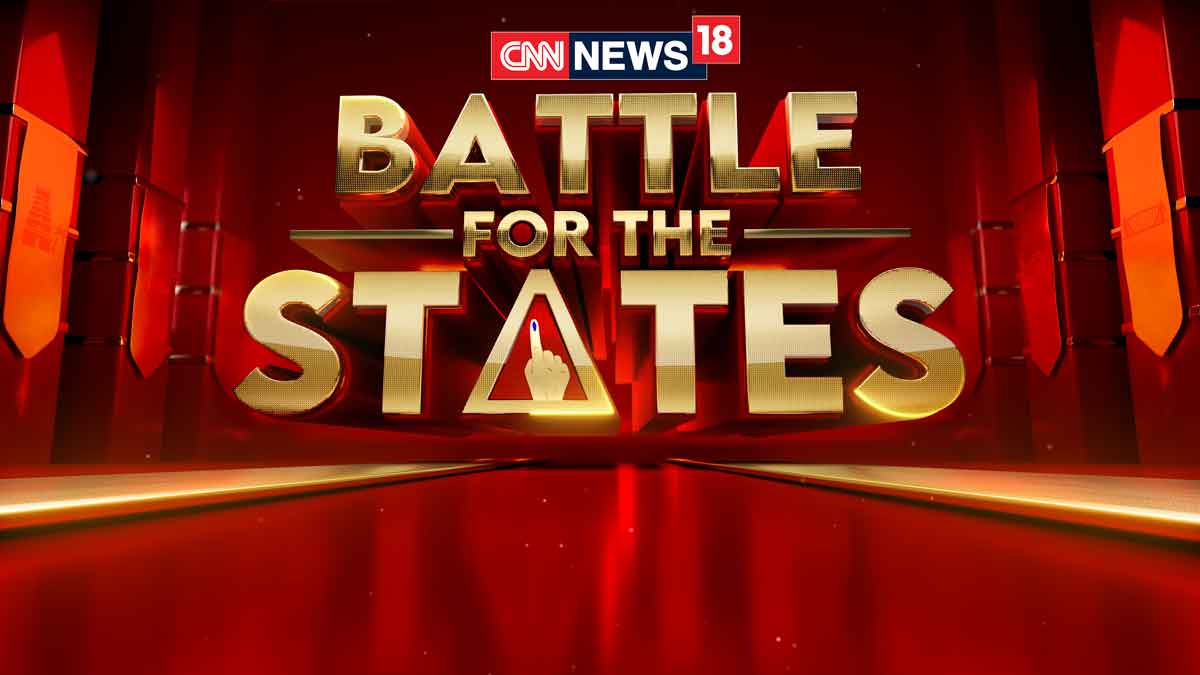
NEW DELHI: CNN-News18 has launched a special election programming initiative titled Battle for the States, as India gears up for high-stakes Assembly elections across West Bengal, Tamil Nadu, Kerala, Assam and Puducherry.
Built around the theme ‘Road to Power’, the multi-format coverage aims to follow the entire electoral journey, from campaigning and polling to results and government formation. The network is leaning into on-ground reportage and data-backed storytelling to decode voter sentiment across regions where local issues often shape the narrative.
The programming line-up includes ‘Vote Tracker’, a three-part series developed in collaboration with survey agency Vote Vibe. The show blends survey insights with expert commentary and field reporting, using augmented reality graphics to present complex electoral data such as vote share, seat projections and leadership preferences in a more accessible format. It will air every Monday evening until April 6.
Adding a cultural lens to political reporting is ‘So Saree!’, a ground-driven segment where women anchors travel across constituencies dressed in traditional handwoven sarees from each state. The format uses attire as a storytelling device, highlighting regional identity while capturing grassroots voices.
Meanwhile, ‘Unfiltered Kaapi’ and ‘Chai-Niti’ bring a more conversational tone, drawing inspiration from everyday political discussions in tea stalls and coffee corners. These segments aim to break down key issues through candid, fast-paced exchanges between anchors and reporters, tailored to regional sensibilities.
For viewers seeking deeper insights, the weekend docuseries ‘Reporters Project’ takes a longer view, with correspondents travelling across constituencies to map voter concerns and political shifts on the ground.
“Elections are about people, their aspirations, identities and the issues that matter to them, and every state tells a different story,” said CNN-News18 editorial affairs director Rahul Shivshankar. He added that the initiative focuses on understanding “the sentiment on the ground and what’s driving voter choices”.
Echoing the emphasis on credibility, Network18 CEO – English and business news Smriti Mehra said the network aims to combine on-ground reporting with data-led insights to deliver clear and timely coverage as the elections unfold.
With a mix of data, culture and grassroots reporting, CNN-News18 is positioning Battle for the States as a comprehensive window into one of India’s most closely watched electoral cycles, where every vote carries a story waiting to be told.