News Broadcasting
Zee Media gets permission for 4 regional news channels


MUMBAI: After a long tenure of being strict in awarding channel licenses, the Ministry of Information and Broadcasting (MIB) has finally become lenient. In the month of September, eight new channels received licenses while none saw their licenses cancelled as on 30 September 2018.
Out of the eight channels, four channels were of Zee Media Corporation Ltd (ZMCL). All the four permissions are for news channel named 1 Chennai (Tamil, English), 1 Mumbai (Marathi, English), 1 Kolkata (Bengali, English) and 1 Delhi (Hindi, English). The permission was given on 11 September 2018 for both uplinking and downlinking of the four channels.
On the other hand, Disney Broadcasting India got the permissions for a non-news channel UTV HD (English) for both uplinking and downlinking on 14 September 2018.

Vedic Broadcasting has got permission for launching three new channels named Aastha Tamil, Aastha Telugu and Aastha Kannada on 26 September 2018.
The 14 licenses which were cancelled earlier by MIB due to security denial by Ministry of Home Affairs (MHA) are still now under stay order from the court.
After cancelling permission to 247 channels, the number of private satellite TV channels having valid permission in India stands at 869 as on 30 September 2018. 483 channels are non-news channels and the remaining 386 are news channels.
Of the 868 permitted private satellite channels, TV channels permitted for uplinking from India and also to downlink into India are 769 among which 365 are news channels and 404 are non-news channels. 11 non-news channels and five news channels are permitted for uplinking from India but not downlink into the country. 84 TV channels are uplinked from abroad which only have downlinking permission in India. This category includes 15 news and 69 non-news channels.







News Broadcasting
BBC to cut up to 2,000 jobs in biggest overhaul in 15 years
Cost pressures and leadership change drive major workforce reduction plan
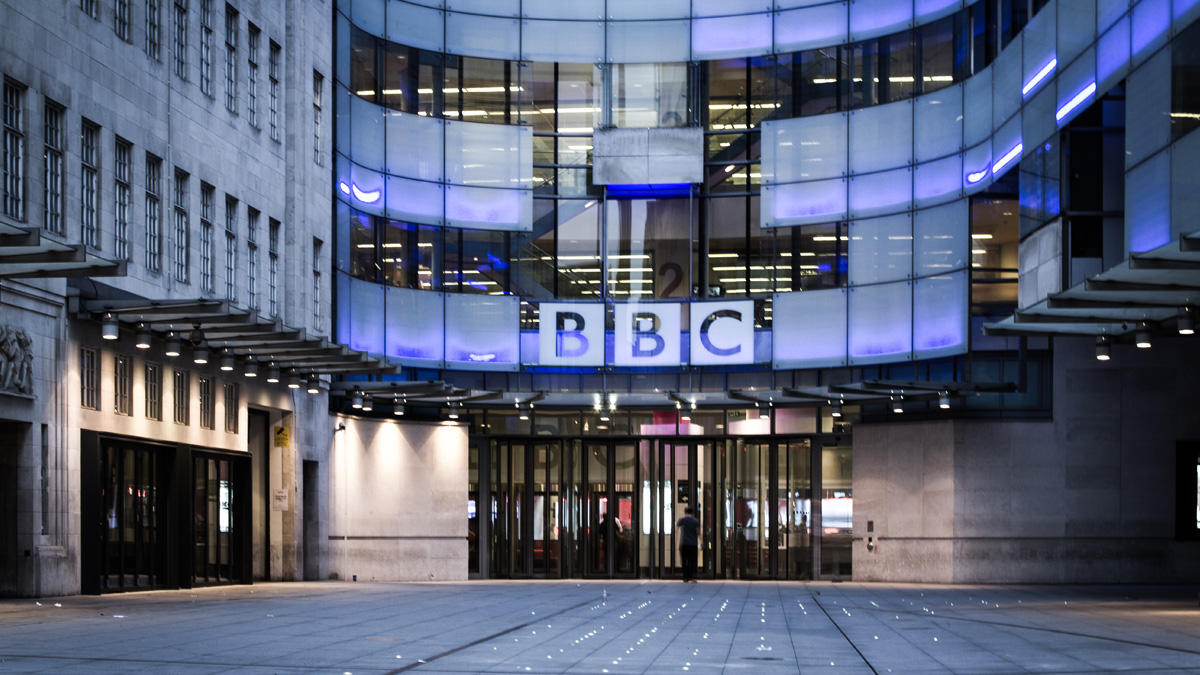
LONDON: BBC has unveiled plans to cut up to 2,000 jobs, roughly 10 per cent of its global workforce, in what marks its biggest downsizing in 15 years.
The announcement was made during an all-staff meeting led by interim director-general Rhodri Talfan Davies, as the broadcaster moves to tackle mounting financial pressures and reshape its operations.
Between 1,800 and 2,000 roles are expected to be eliminated from a workforce of around 21,500. The cuts form part of a broader plan to save £500 million over the next two years, aimed at offsetting rising costs, stagnating licence fee income and weaker commercial revenues.
In a communication to staff, BBC interim director-general Rhodri Talfan Davies said, “I know this creates real uncertainty, but we wanted to be open about the challenge,” acknowledging the impact the move would have across the organisation.
The restructuring comes at a time of leadership transition. Former director-general Tim Davie stepped down earlier this month, with Matt Brittin, a former Google executive, set to take over the role on May 18, 2026.
While some cost-cutting measures are being implemented immediately, the majority of the structural changes are expected to roll out over the next few years, with full savings targeted by the 2027–2028 financial year.
The broadcaster had earlier signalled its intent to reduce its cost base by around 10 per cent over a three-year period, warning of “difficult choices” as it adapts to shifting economic realities and audience expectations.
With operating costs hovering around £6 billion annually, the BBC’s latest move underscores the scale of the financial challenge it faces, as it balances public service commitments with the need for long-term sustainability in an increasingly competitive media landscape.