News Broadcasting
Zee Media brings DNA under its fold

MUMBAI: It was in early 2012 that the Subhash Chandra owned company Essel Group bought out its Joint Venture (JV) partner D B Corp’s 50 per cent stake in the English national newspaper DNA, cementing the media baron’s presence in the print media. Now, it has taken a long leap again. In a recent announcement to the Bombay Stock Exchange (BSE), Zee Media Corporation Limited (ZMCL) announced its intention to venture into the print media business with the amalgamation of Essel Publishers that brings out DNA and itself.
Following a postal ballot held between 30 October and 28 November, 95.46 per cent or 652 people out of 683 shareholders were in favour of the amalgamation.

“Having already built a nationwide largest television news network with its varied news channels, with an object of creating a news powerhouse in the country, Zee Media aspires to expand its product offering across multiple platforms, regions and languages,” read the document to investors on the amalgamation scheme.
And it was in keeping with Zee group chairman Subhash Chandra statement in a release a while ago that the company is on a mission to consolidate its broadcast, print and internet content under one umbrella.
According to ZMCL CEO Alok Agrawal, the merger process has just begun and will take a year to complete. And the net result (says the document sent out to shareholders following which they gave the fusing of the two firms the nod) will be that : “Zee Media will be in a position to leverage the combined network of resources, working in an integrated newsroom through multiple platforms as well as providing a bouquet of services to advertisers which would strengthen its market reach.”
“Stories will be shared across the two mediums thus allowing English, Hindi and other regional languages to benefit from each other,” says Agrawal. With this move, ZMCL employees will be also be multi-tasking just like in other efficiently run media organisations the world over.
At the same time, it means additional work as well. “Employees will get cross exposure now. Those who accept the challenge will prosper and those who don’t will falter. That’s the law of the land,” remarks Agrawal.
Since 2009, the management of DNA has been handled by the Essel Group with Malcolm Mistry as the current CEO. The integrated newsroom will take some time to evolve. Initially, the focus will be on evaluating the requirement for separate offices for the two media entities, consolidating the teams wherever possible in various cities nationally, and in the process generate savings.
ZMCL has its eye set firmly on expanding DNA by launching new editions in newer towns in phases. DNA is currently published from Mumbai, Pune, Ahmedabad, Jaipur, Indore and Bengaluru. Delhi would be the next target;however, Agrawal says it will take some time as Delhi is a very competitive market with The Times of India and The Hindustan Times fiercely battling each other.
According to the Indian Readership Survey 2012 Q4 topline findings the circulation of DNA was 972, 000. The number may well have gone up significantly since then.
Was it easy to convince shareholders about the expansion plans? “The overwhelming response we got was surely a bit of a surprise but they saw the good opportunity. As a TV channel, our reach was limited and the amalgamation makes it more holistic and well rounded,” explains Agrawal. ZMCL claims that its bouquet of six channels in the news space reach out around 130 million viewers.
The deal proposed to shareholders was that for every 11 shares of Re 1 each held in Essel Publishers, 2 shares of Re 1 each from ZMCL would be issued and allotted. But no shares would be given for fractional entitlements. Post the announcement, the market value of ZMCL’s share saw a spike and at the time of filing this report it was quoting at Rs 14.04 on the BSE.
The authorised share capital of Essel Publishers and ZMCL put together has been enhanced to Rs 170 crore with Rs 70 crore from Essel Publishers and Rs !00 crore from ZMCL.
The amalgamation scheme became effective from 3 December and thus Essel Publishers now stands dissolved without being wound up. And all the newspaper staff have henceforth become ZMCL employees.
ZMCL’s financial result for Q2 2014 showed that advertising and subscription revenues were higher than the previous quarter. Total revenue for Q2 2014 was Rs 160.7 crore with ad revenue at Rs 52.92 crore and subscription revenue at Rs 24.9 crore. PAT stood at Rs 2.8 crore while EBIDTA stood at Rs 74.8 crore.






News Broadcasting
News18 India launches Command Centre war explainer with Arya
New show shifts from debates to decoding global conflicts and impacts
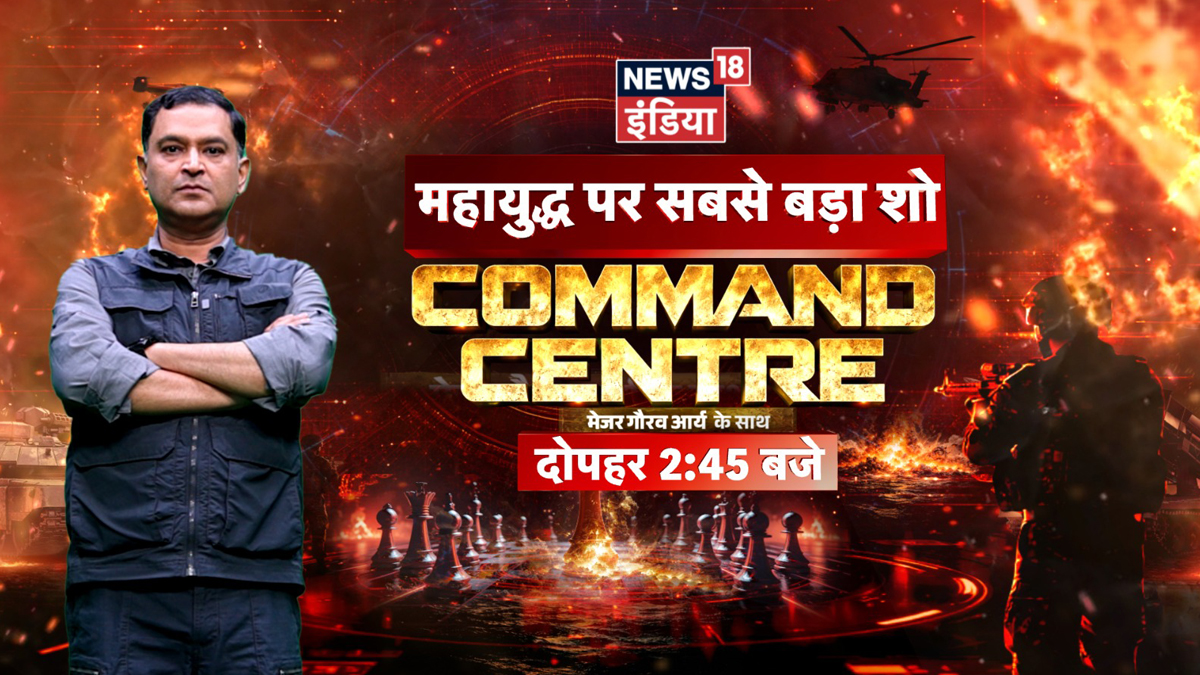
MUMBAI: News18 India has rolled out a new war-focused programme, Command Centre, featuring Gaurav Arya, as it looks to offer viewers a sharper, more grounded take on global conflicts amid rising tensions in West Asia.
Positioned as an “insider war room”, the show moves away from conventional panel debates and instead focuses on explaining military developments, decoding strategy and connecting global events to their everyday impact, from fuel prices to economic shifts.
The format leans heavily on visuals and data. The studio has been designed like a command hub, complete with large LED war maps, real-time graphics and an alert system to track developments as they unfold.
At the centre of it all is Arya, who brings his military background to simplify complex war strategies for viewers. His signature line, “Seedhi baat samjhiye”, anchors the show’s promise of clarity over noise.
News18 India managing editor Jyoti Kamal said, “Command Centre, featuring Major Gaurav Arya is designed to deliver accurate insights and a clear perspective on how evolving conflicts impact everyday life, from household budgets to national security. With expert voices analysing every development in real time, the show goes beyond headlines to decode what’s happening now, what it means, and what could come next.”
Echoing the intent, Gaurav Arya added, “In times of war, confusion is the biggest threat. With News18 India’s Command Centre, we are bringing viewers inside the war room, decoding strategies, tracking every escalation, and explaining, in the simplest terms, what it means for India and for every household. Seedhi baat samjhiye, this is where you understand not just what is happening, but what happens next.”
The weekday show will air in the afternoon slot and will also feature Gaurav Shukla, adding to its editorial depth.
With its mix of analysis, visuals and a clear focus on impact, the show reflects a broader shift in news consumption. Viewers are no longer just watching events unfold, they are looking to understand what those events mean for them.






