News Broadcasting
Zee Business institutes Pinnacle Awards to recognise the best in real estate sector

MUMBAI: With an aim to take definitive look at success and achievements in the real estate sector, and recognise excellence, the Hindi business channel –Zee Business has announced the Zee Business M-Tech Pinnacle Awards. Driven by positive growth in the economy, real estate in India is booming, thus Zee Business M-Tech Pinnacle Awards are being instituted when the Indian Real Estate Industry is going through a metamorphosis and is witnessing a boom.
According to an official release, Pinnacle Awards will feature and honor the finest professionals in the construction, building and allied industries. The awards will become an annual event highlighting the glory of India’s fast growing real estate industry. Pinnacle as the name suggests will honor men and women who have achieved and contributed to building India. It will strive to become a platform to give India’s real estate industry an iconic status.
The awards will have 23 categories from the construction, building and allied industries in real estate. It will recognise talents for their contribution in technical, creative and individual achievements. Entries will be evaluated by a jury of experts drawn from fields, which are diverse yet relevant to construction industry.

The jury comprises of industry leaders like DTZ (Debenham Tie Leung) MD Ankur Srivastava, Cushman & Wakefield joint MD Sanjay Verma, Zee News Ltd director news group Laxmi Goel, National Institute of Design executive director Dr (Prof.) Darlie O Koshy and Fairwood Consultants CEO Ranudas.
The last date of receiving entries is 10 September, while the entries will be judged on 3 October. The final award ceremony will take place in Delhi on 6 October, 2006. The audit firm, ECS LTD (ECS), a premier management consulting firm will handle the entire nomination process. There will be a dedicated jury for each of the award categories and jury will vet all the selected nominations on the pre-defined parameters and decide on the winners for each category, according to an official release.
Speaking on the occasion, Zee News LTD director news group Laxmi Goel says, “We have always believed in encouraging and identifying talent. Pinnacle awards, aims to bring together the finest mix of accomplished individuals and corporates in India’s booming real estate and construction industry. We hope to receive an overwhelming response as our aim is to make this an annual affair.”
Commenting on the need for the awards in the booming Indian Real Estate scenario, Goel added, “With a 30 per cent annual growth for the domestic construction industry, the Indian construction industry is all set to become Rs 18 lakh crore sector by year 2010 from its present size of RS 14 lakh crore. The time is ideal for the sector to propel national economy on a higher growth trajectory, by maximising performance and operational efficiency. There is a need for a greater level of transparency in the sector to enable it to be better placed in swinging investments / FDI. The Pinnacle Awards will provide a benchmark for construction industry in India by present a platform to recognize excellence in the field.”






News Broadcasting
CNN-News18 to host Fury in the Gulf conclave on West Asia crisis
Three-hour summit to unpack geopolitical fallout and impact on India
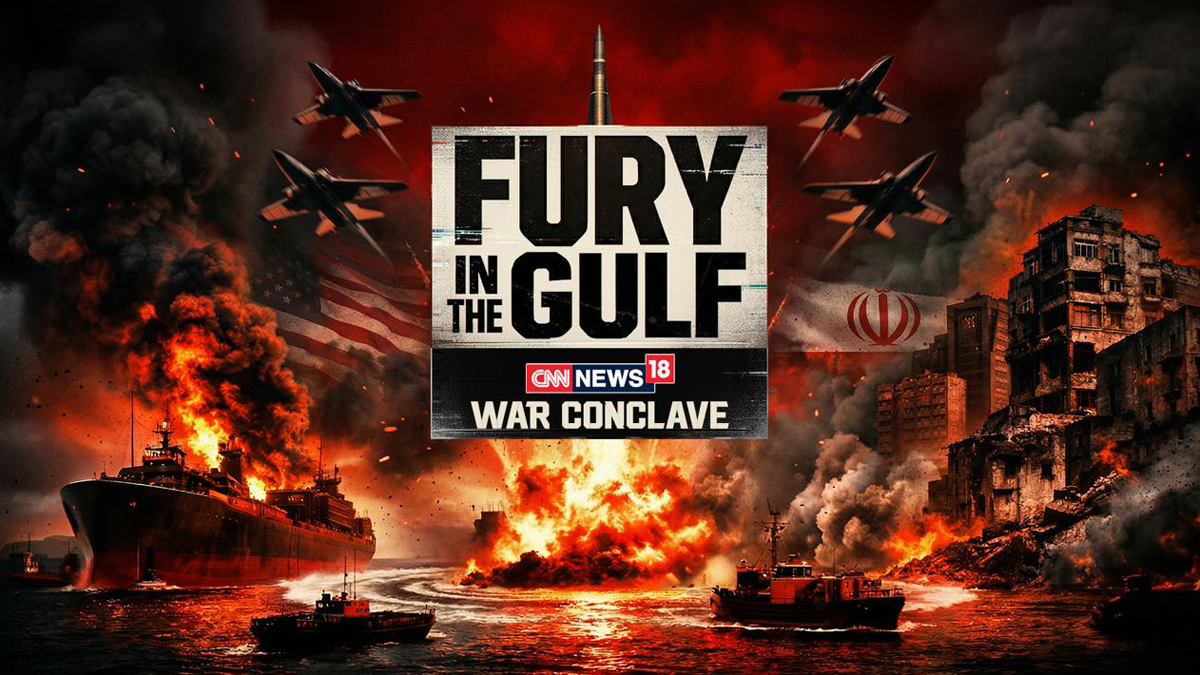
MUMBAI: CNN-News18 is set to host a special three-hour broadcast, Fury in the Gulf – War Conclave, on April 7, aiming to decode the escalating West Asia crisis and its far-reaching implications for India.
Scheduled from 4:00 PM to 7:00 PM, the conclave comes at a time when tensions between Iran and the United States are reshaping global geopolitics and triggering economic uncertainty. With India’s deep energy ties, trade links and large diaspora in the Gulf, the developments carry significant domestic relevance.
Built around the theme ‘Conflict, Consequences, and The Future,’ the programme will feature six curated sessions combining one-on-one interviews and panel discussions. The focus is to cut through the clutter and offer viewers a clearer understanding of the fast-evolving situation.
Key sessions include ‘Diplomacy in Times of War’ featuring Shashi Tharoor, and ‘World After the Iran Conflict’ with voices such as Ram Madhav, Reuven Azar, representatives from the European Union and the Iranian Deputy Envoy. Another session titled ‘Another Dunkirk?’ will bring together K. J. S. Dhillon and Jitin Prasada among others.
CNN-News18 editorial affairs director Rahul Shivshankar said, “In times of war, clarity becomes the most powerful tool. Fury in the Gulf – War Conclave brings together credible voices to address the questions and confusion that arise amid an overwhelming influx of information.”
He added that the initiative is aimed at delivering “facts, perspective, and insight” at a time when misinformation can easily cloud public understanding.
Echoing the sentiment, CNN-News18 CEO– English and business news Smriti Mehra said the conflict marks a defining global moment, with consequences that extend well beyond the region. She noted that the conclave seeks to present the crisis with “depth, nuance and responsibility” so audiences can better grasp its real-world impact.
As geopolitical tensions continue to dominate headlines, the conclave positions itself as an attempt to bring order to the noise, offering viewers a structured, insight-led look at a complex and rapidly shifting global situation.






