News Headline
Why IPL2020 makes sense for marketers and brands

MUMBAI: The countdown to the 2020 season of India’s biggest sports extravaganza – the Indian Premier League (IPL) – has begun. Come 19 September, more than a billion eyes will be riveted on their TV screens as the first ball of the first match between Mumbai Indians and Chennai Super Kings is bowled at 7.30 pm. It does not get better than this for IPL fans, for whom it will be a revisit of the 2019 finals when the Mumbai lads beat the southern team by a whisker of a run, in a heart-stopping duel.
The 2020 league, which is one of the most premium in the world, is coming at a time when brands sorely need to get back into the consumer’s mindset. Most marketing mavens believe there has been an erosion in brand love among consumers. Thanks to the disruption in supply chains, consumers have hitherto been okay with buying products rather than their favourite brands. The percentage of shoppers buying online has leapfrogged, footfalls in brick and mortar stores have dived. The humungous response to the Flipkart and Amazon sales in the past two weeks shows customers want to spend and that demand is there.
Observers believe that big brands which have refrained or cut back their communication with consumers need to get back with their mesmerising and engaging TV and digital commercials so that the consumer connect gets forged once again.

“Even as the cases are going up, consumer confidence is slowly but surely coming back,” says Group M head of entertainment and sport Vineet Karnik.
As time goes by, consumers will increasingly go out, spend and the economy will surely follow, or that is the corollary.
“Marketers believe the IPL is a good opportunity to give a boost to that consumer sentiment even further,” says IPG Media Brands CEO Shashi Sinha
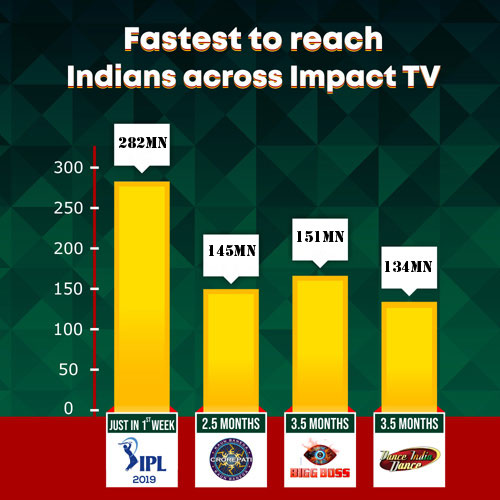
Sinha had been quoted sometime back in an interview that the IPL is a tentpole property, the biggest in India. “Television is anyway fragmented. The highest ratings come on IPL in India. IPL is the only platform which allows you that single window to reach masses, audiences. Our brands have consistently used it for some time now,” he had said.
What will make cricket an even bigger audience builder this year is the fact that viewers have not got to watch Rohit Sharma, MS Dhoni and Virat Kohli play for a large part of 2020. Clearly, the desire for sports has been bottled up and is expected to explode into a frenzy of viewing between September and November. Fans are raring to go and have been tweeting, posting their joy, annoyance and opinions on every social media and blogging platform.
All thanks to being locked down courtesy the virus, India and Indians have been consuming more content – video, audio, games and what have you – in heavy doses and binges. Data shows that TV consumption is up over 15 per cent (source: BARC) as compared to pre-Covid2019 times, and it is unlikely to slow down, and in fact will sharply accelerate northwards.
The BCCI has also rejigged the match timings, which should augur well for TV viewers and advertisers. Instead of 2019’s 4 pm and 8 pm starts, the matches in the UAE will now commence at 3.30 pm and 7.30 pm IST respectively. The 3.30 slot will end up extending into early prime, while the 7.30 pm match will end during peak primetime when audiences will also be at their peak.
The biggest USP of the IPL, a media observer points out, is that it provides for a very good advertising environment with less clutter. Ad breaks average 50 seconds, means that four to five TV commercials can be played out. The free commercial time per hour during the IPL is also limited at 800 seconds per hour, as compared to other genres where it crosses 920 seconds and some time goes up to as high as 1,120 seconds. All this works well for brands as the OTS on commercial and engagement goes up.
Sinha is as optimistic – if not more – today with IPL’s prospects than he was three months ago. “I genuinely believe the IPL will do very well with viewers,” he said. “Some of our smaller brands are also asking us to put their spends behind it. The advertisers will definitely give it a good shot at giving a good push to their businesses.”
Shall we say amen to that?






NEW DELHI: Hamdard Laboratories gathered a cross-section of India’s achievers in New Delhi on Friday, handing out the Hakeem Abdul Hameed Excellence Awards to figures who have left their mark across healthcare, education, sport, public service and the arts.
The ceremony, attended by minister of state for defence Sanjay Seth and senior officials from the ministry of Ayush, celebrated individuals whose work blends professional success with a sense of public purpose. It was as much a roll call of achievement as it was a reminder that influence is not measured only in profits or podiums, but in people reached and lives improved.
Among the headline awardees was Alakh Pandey, founder and chief executive of PhysicsWallah, recognised for turning affordable digital learning into a mass movement. On the sporting front, Arjuna Awardee and kabaddi player Sakshi Puniya was honoured for her contribution to the game and for pushing women’s participation onto bigger stages.
The cultural spotlight fell on veteran lyricist and poet Santosh Anand, whose songs have echoed across generations of Hindi cinema. At 97, Anand accepted the honour with characteristic humility, reflecting on a life shaped by perseverance and hope.
Healthcare honours spanned both modern and traditional systems. Manoj N. Nesari was recognised for strengthening Ayurveda’s place in national and global health frameworks. Padma shri Mohammed Abdul Waheed was honoured for his research-backed work in Unani medicine, while padma shri Mohsin Wali received recognition for his long-standing contribution to patient-centred care.
Education and social development also featured prominently. Padma shri Zahir Ishaq Kazi was honoured for decades of work in education, while former Meghalaya superintendent of Police T. C. Chacko was recognised for public service. Goonj founder Anshu Gupta received an award for his dignity-centred rural development initiatives, and the Hunar Shakti Foundation was honoured for empowering women and young girls through skill development.
The Lifetime Achievement Award went to former IAS officer Shailaja Chandra for her long career in public healthcare and governance, particularly in the traditional systems under Ayush.
Speaking at the event, Hamdard chairman Abdul Majeed said the awards were a tribute to those who combine excellence with empathy. “These awardees reflect Hakeem Sahib’s belief that healthcare, education and public service must ultimately serve humanity,” he said.
Minister Seth struck a forward-looking note, saying India’s young population gives the country a unique opportunity to become a global destination for learning, health and wellness by 2047.
The ceremony also featured the trailer launch of Unani Ki Kahaani, an upcoming documentary starring actor Jim Sarbh, set to premiere on Discovery on 11 February.
Instituted in memory of Unani scholar and educationist Hakeem Abdul Hameed, the awards have grown into a national platform that celebrates those building a more inclusive and resilient India. For one evening at least, the spotlight was not just on success, but on service with substance.






