News Headline
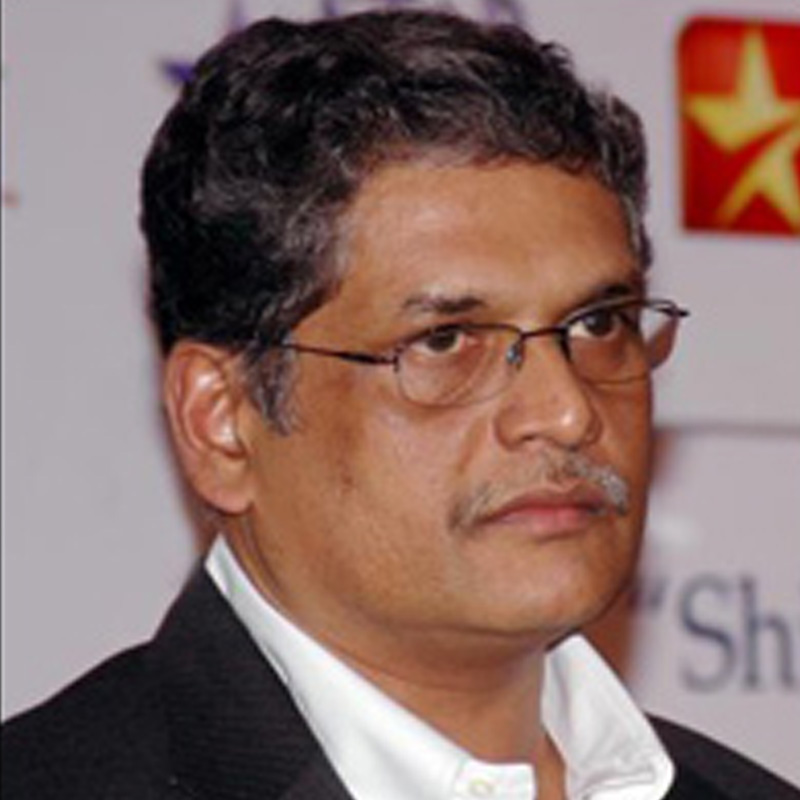
Whither, or Wither, Cable TV industry? Star India President (South India) Jagdish Kumar

Circa 1994: Star Movies decides to convert from a free-to-air service to become the first pay TV channel in India. Negotiations between the pay channel and cable operators went thus:
Pay channel executive (prosperous looking and suited executive): “You have to pay to receive Star Movies”.
Operator (not very prosperous looking and ordinarily dressed): “Only some of my customers watch Star Movies and my customers pay only Rs 150 per month. After meeting my operating expenses, how much can I pay?”
Pay channel executive: “I have a budget to achieve. I don‘t have a lot of time to negotiate. I have a flight to catch to get to headquarters. My target for this town is Rs 10000 and I have decided your share is Rs 1000. I will send you our standard agreement shortly. That‘s it- no further negotiations”.

Circa 2010: There are 154 pay channels registered with the Telecom Regulatory Authority of India (Trai) and the negotiations between channels and cable operators go thus:
Pay channel executive (casually dressed): “You have to increase your payment by 20 per cent to receive our bouquet of channels”.
Operator (very prosperous looking and attired in designer brands): “Only some of my customers watch your bouquet and my customers pay only Rs 150 per month. After meeting my operating expenses, how much can I pay?”
Pay channel executive: “Please understand, I have a budget to achieve to get my bonus. My growth target for this town is 20 per cent. However as an exception, only for you, I can work with a special growth rate of 5 per cent. Please agree to settle for Rs 1500. I will separately organise a foreign tour for you.”
Operator: “Thank you. But I would also like to inform you that there is a huge demand for bandwidth and you have to pay Rs 750 as carriage fees”.
Fortunes of the players have reversed since the beginning of pay TV services in India 16 years ago. While many channels are limping financially, operators have achieved prosperity beyond their imagination. Should we grudge the good life that operators are enjoying? Definitely not! During the last two decades India has witnessed incredible growth in C&S TV connectivity to the current level of about 95 million homes mainly driven by the entrepreneurism of the operators.
There are two elements which have remained constant between 1994 and 2010:
- The retail price of pay TV services have stagnated at around Rs 150 per month ( India has the cheapest pay TV service in the world) and
- Incrementalism and myopic pay TV revenue targets set by channels.
There seems to be near unanimity of opinion that the current abysmal state of the cable TV business in India is the result of under-declaration of subscribers by operators. While there is truth in that conclusion; it is not the whole truth. There is one truth which gets lost in the din of consultation papers, conferences, workshops and digital summits – The tyranny of incrementalism and the short-term nature of pay TV revenue targets of channels.
The community of pay TV executives in India straddles two different worlds- Cable TV networks and corporate meeting rooms. The former world has a law of its own driven by native intelligence and the latter is a world of power- point presentations driven by business school intelligence. These two worlds have a love-hate relationship and a pay channel executive has to acquire skills to navigate between both these worlds. Both these worlds meet periodically either during contract renewal negotiations or during incentive jaunts in the sand dunes of Dubai/ blue waters of Bali/alleys of Amsterdam. They sometimes also have acrimonious meetings in the dreary environs of Sastry Bhavan or Sanchar Bhavan in Delhi.
From the beginning, due to the lack of addressability, agreements between channels and operators for pay TV services are settled by the hustling power of the negotiators. Annual contract renewal discussions are sting operations full of obfuscations, sophistry, innuendos, threats, rumours and sometimes emotional outbursts which would put some of our TV programmes to shame! Only oblique references are made to the core matter of the negotiation, viz., connectivity numbers and price. Actual subscriber numbers and price is normally a by-product of the main negotiation primarily to satisfy computerised billing software programmes of the channels and regulatory filings.
Over a period of the last two decades, pay TV executives were relentlessly handed down incremental targets set on an annual basis by the Board rooms of the channels. Based on these incremental targets, pay channel executives begin their contract signing campaign with operators with all the possible wit and wisdom at their command. Sometimes these contractual negotiations become weapons in the pay channel executive‘s hands to demarcate network operating areas between competing operators. In case of disagreements during the negotiations, a competing “rebel” operator is encouraged by the pay channel executive to encroach into the incumbent operator‘s area. This practice has led to chaotic conditions in the last mile with each area being serviced by more than one operator and all players perfecting the art of brinkmanship.
Introduction of the MSOs into the distribution chain during the last decade was meant to professionalise and consolidate the last mile. However, territory wars amongst MSOs and a period of easy capital availability for new entrants has resulted in the opposite. The industry has fragmented irreversibly.
We are confronted with dismal scenarios when we crystal gaze into the future of the analog cable TV industry in India. However, I believe all is not lost. Ironic though it may seem, the threat of DTH has thrown open a door of opportunity to the cable TV industry – Digitalisation. An additional shot in the arm for the cable TV industry is the latest initiative by I&B Ministry and Trai to mandate full digitalisation in India by 2015 with intermediate time bound milestones.
The ambitious digitalisation objectives as stated by the I&B Ministry requires massive deployment of financial and technical resources. Let‘s hope all stakeholders of the cable TV industry step up to the challenge.
Here is my wish list for 2011 for the cable TV industry:
” All MSOs to arrive at an amicable settlement by demarcating territories of operations and cease encouragement of migration of last mile operators between MSOs. ” MSOs/LCOs to gear up financially and technically to meet the challenges of the ambitious digitalisation targets proposed by the I&B Ministry.
- Pay channels to temper their incremental short term revenue targets during the investment phase of digitalisation to reap the benefits of addressability later.
- MSOs to reduce their dependence on carriage fees as the main source of revenue and generate subscription revenues from the last mile as their primary revenue source.
- Government to give “Infra-structure” status to the cable TV industry to enable institutional financing and provide fiscal incentives /concessions to facilitate digitalisation.
- Government to withdraw from pricing controls over the cable TV market and allow market forces to drive consumer choice and price.
- Broadcasters to catalyze digitisation by providing channels/programmes which can be accessed only through an addressable digital box.
We are at a critical juncture where the cable TV industry should take a pro-active role in the implementation of the proposals initiated by the Government to digitalise. The only option for survival is to go Digital, anything else will spell Doom!



NEW DELHI: Hamdard Laboratories gathered a cross-section of India’s achievers in New Delhi on Friday, handing out the Hakeem Abdul Hameed Excellence Awards to figures who have left their mark across healthcare, education, sport, public service and the arts.
The ceremony, attended by minister of state for defence Sanjay Seth and senior officials from the ministry of Ayush, celebrated individuals whose work blends professional success with a sense of public purpose. It was as much a roll call of achievement as it was a reminder that influence is not measured only in profits or podiums, but in people reached and lives improved.
Among the headline awardees was Alakh Pandey, founder and chief executive of PhysicsWallah, recognised for turning affordable digital learning into a mass movement. On the sporting front, Arjuna Awardee and kabaddi player Sakshi Puniya was honoured for her contribution to the game and for pushing women’s participation onto bigger stages.
The cultural spotlight fell on veteran lyricist and poet Santosh Anand, whose songs have echoed across generations of Hindi cinema. At 97, Anand accepted the honour with characteristic humility, reflecting on a life shaped by perseverance and hope.
Healthcare honours spanned both modern and traditional systems. Manoj N. Nesari was recognised for strengthening Ayurveda’s place in national and global health frameworks. Padma shri Mohammed Abdul Waheed was honoured for his research-backed work in Unani medicine, while padma shri Mohsin Wali received recognition for his long-standing contribution to patient-centred care.
Education and social development also featured prominently. Padma shri Zahir Ishaq Kazi was honoured for decades of work in education, while former Meghalaya superintendent of Police T. C. Chacko was recognised for public service. Goonj founder Anshu Gupta received an award for his dignity-centred rural development initiatives, and the Hunar Shakti Foundation was honoured for empowering women and young girls through skill development.
The Lifetime Achievement Award went to former IAS officer Shailaja Chandra for her long career in public healthcare and governance, particularly in the traditional systems under Ayush.
Speaking at the event, Hamdard chairman Abdul Majeed said the awards were a tribute to those who combine excellence with empathy. “These awardees reflect Hakeem Sahib’s belief that healthcare, education and public service must ultimately serve humanity,” he said.
Minister Seth struck a forward-looking note, saying India’s young population gives the country a unique opportunity to become a global destination for learning, health and wellness by 2047.
The ceremony also featured the trailer launch of Unani Ki Kahaani, an upcoming documentary starring actor Jim Sarbh, set to premiere on Discovery on 11 February.
Instituted in memory of Unani scholar and educationist Hakeem Abdul Hameed, the awards have grown into a national platform that celebrates those building a more inclusive and resilient India. For one evening at least, the spotlight was not just on success, but on service with substance.