Cable TV
We are not a cable TV company but a digital services provider: IMCL’s Vynsley Fernandes

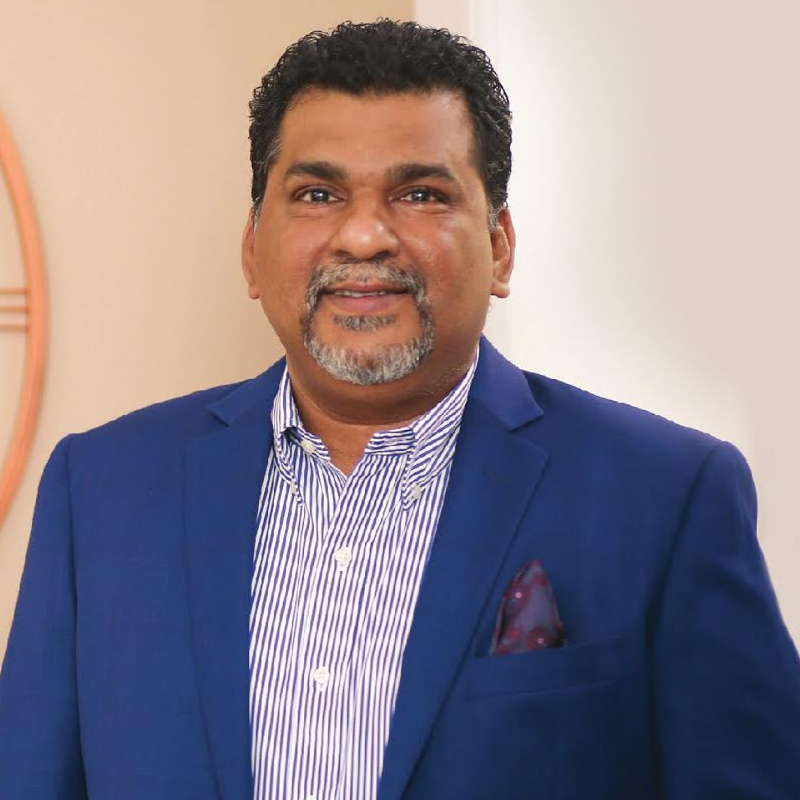
MUMBAI: Innovation is the key to sustain any business. With newer entrants capturing market share, emerging alternatives to traditional TV, the cable operators in the country have focused on creating a diverse portfolio of services. IndusInd Media and Communications Ltd. (IMCL) CEO Vynsley Fernandes, who believes in innovation to stay ahead of the competition, says it is not a cable television company but a digital services provider.
“We have launched broadband as our combo pack. Today, we are not a cable television company. We are a digital services provider. We provide video broadband and data to consumers’ homes. When we work with cable providers, we groom them to become digital service providers,” Fernandes said during a virtual fireside chat with Indiantelvision.com founder, CEO and editor-in-chief Anil Wanvari.
He mentioned that all the major cable operators have moved to fibre and provide both broadband and cable because they understand the need to have a diversified portfolio. According to him, the cable operators are ahead of the curve as they have been providing broadband well before the bigger players entered.

“You have to keep on innovating. There is no other rule book in this business for success other than innovation. Everyone – DTH, cable TV, OTT – has to innovate to stay ahead of the curve. Can you build home security products built into it? Can you create payment gateways? The only way to keep innovating new products,” he stated.
About the broadband business, he said that they have a subscriber base of 300,000 which is growing very rapidly. “The good part is you need not have one at the cost of the other. Today our product is a combo product. We are offering fibre to the home, a high-value pack: 750 channels on cable television. So consumers are opting for cable, data, and broadband. Will there be a skew? Yes, there will be a skew. But technology will evolve but the ethos and principles will remain fundamental to the business,” he added.
Fernandes added that they have spent the last year ensuring that the subscriber base is built up again while it was affected during the rollout of new tariff order (NTO). Hence, IMCL closed the year with a large number of subscribers migrating back to IMLC. It also crossed five million-mark in the month of March.
“Cable continues to work in the highly-dense markets, urban areas like Mumbai, Bangalore, Delhi, and to some extent places like Ahmedabad, Nagpur, etc. But our focus will always be major cities. We don’t have a major presence in Kolkata, but we are building it there. The cable works well because we are able to bundle it with broadband. In all our city markets we have been able to do that. HITS was always designed as a product to reach consumers in tier-3-4 markets and it has lived up to its reputation. Close to sixty-five per cent of our HITS base is from rural markets. Another 35 per cent is probably a mix between tier-2 and tier-3 markets. Our growth has continued in rural markets,” he added.
The veteran professional in the industry also said that during the last six months, a lot of businesses including competitors have realized that the future lies in collaboration. IMCL has also been working with some large pan-India MSOs to provide managed services through its HITS platform. The MSOs were also facing challenges of fibre cuts in rural India because the subscriber servicing cost (SSC) in rural India is much higher than cities because the density is much more.
“In our company today, with the WFH in place, everyone is given a new role. How can they innovate and work differently? The challenge is on revenue and margins. Revenues are going to be hit, but margins will be hit harder. The only way to do that is to substantiate the margins by building layers. So you have a cable TV layer, and you build broadband and offer OTT with it; not your own OTT, but partnering with someone to offer it as a hybrid product. You build a digital payment app over. So you build a stack of useful products. It is going to be tough and challenging in the coming days,” Fernandes commented.





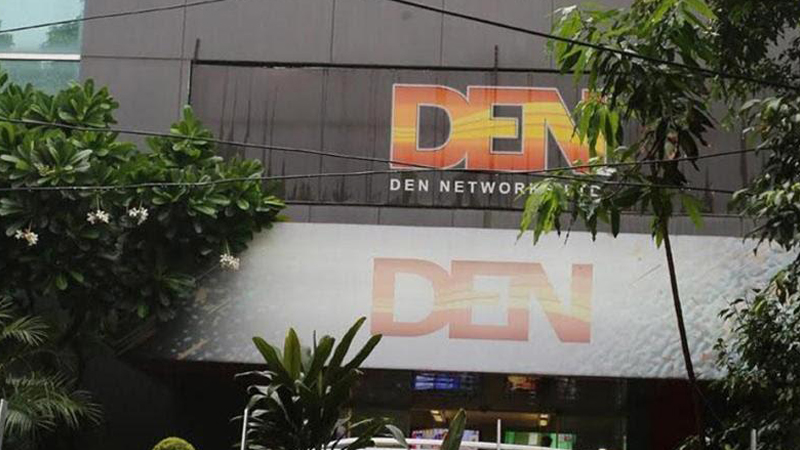
MUMBAI: When margins wobble, liquidity talks and in Q3 FY25-26, cash did most of the talking. Den Networks Limited closed the December quarter with consolidated revenue of Rs.251 crore, marginally higher than the previous quarter but down 4 per cent year-on-year, even as profitability stayed resilient on the back of strong cash reserves and disciplined cost control.
Subscription income softened to Rs.98 crore, slipping 3 per cent sequentially and 14 per cent from last year, while placement and marketing income offered some cheer, rising 15 per cent quarter-on-quarter to Rs.148 crore. Total costs climbed faster than revenue, up 7 per cent QoQ to Rs.238 crore, driven largely by higher content costs and operating expenses. As a result, EBITDA dropped sharply to Rs.13 crore from Rs.19 crore in Q2 and Rs.28 crore a year ago, pulling margins down to 5 per cent.
Yet, the bottom line refused to blink. Profit after tax stood at Rs.40 crore, up 15 per cent sequentially and only marginally lower than last year’s Rs.42 crore. A healthy Rs.57 crore in other income helped cushion operating pressure, keeping profit before tax at Rs.48 crore, broadly stable quarter-on-quarter despite the tougher cost environment.
The real headline-grabber, however, sits on the balance sheet. The company remains debt-free, with cash and cash equivalents swelling to Rs.3,279 crore as of December 31, 2025. Net worth rose to Rs.3,748 crore, while online collections accounted for 97 per cent of total receipts, underscoring strong cash discipline across operations, including subsidiaries.
In short, while Q3 showed signs of operating strain, the financial backbone remains solid. With zero gross debt, steady profits and a formidable cash war chest, the company enters the next quarter with flexibility firmly on its side proving that in uncertain markets, balance sheet strength can be the best growth strategy.






