GECs
Waman Kendre is new director of NSD


NEW DELHI: Noted theatre personality Waman Kendre has been appointed director of National School of Drama (NSD).
His appointment is for a period of five years w.e.f. the date of assumption of charge of the post or till superannuation on 62 years of age or until further orders, whichever is the earliest.

The outgoing NSD Director Anuradha Kapur’s term ended in July 2012, and she was on extension pending the decision regarding her successor. Kapur finally stepped down on 30 April this year, after which the position had been lying vacant. Several theatre persons had met the culture minister Chandresh Kumari Katoch on 27 June, seeking early appointment of the head of premier arts institutions such as NSD.
An NSD alumnus, Kendre hails from Maharashtra, known for its rich tradition of theatre, both folk and modern. He did his research in Kerala’s folklore, and played a leading role in the Dalit theatre movement in Maharashtra in the late 70s. Among his well-known plays are Mohandas, Ranangan, Janeman, Madhyam Vyayog, Zulva, Tempt Me Not and Dusara Samana. He currently heads the Academy of Theatre Arts, Mumbai University.
Kendre’s name was among the three names short-listed by a selection committee comprising Shyam Benegal, Girish Karnad, Satish Alekar, Govind Deshpande and Amal Allana. The other two contenders were Arundhati Nag from Bangalore and Abdul Latif Khatana from Kashmir.


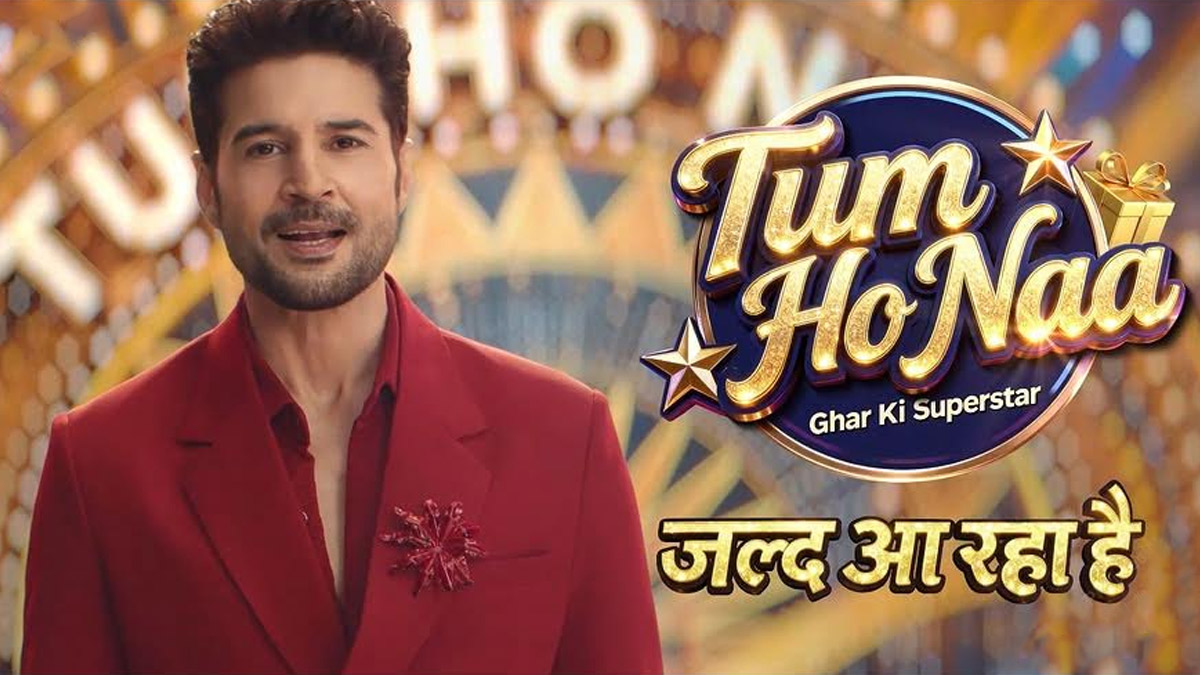
MUMBAI: Lights, camera… connection because this time, the game isn’t just about winning, it’s about who’s with you. Sony Pictures Networks India is gearing up to launch a new reality game show, Tum Ho Naa, expanding its unscripted slate with a format that promises both emotion and engagement.
The show will premiere soon on Sony Entertainment Television and stream on Sony LIV, with Rajeev Khandelwal stepping in as host. Known for his measured screen presence and selective choices, Khandelwal’s return to television adds a layer of familiarity and credibility to the upcoming format.
While specific details of the gameplay remain under wraps, the positioning suggests a reality format that leans as much on emotional resonance as it does on competition, an increasingly popular blend in Indian television, where audiences are gravitating towards content that offers both stakes and storytelling.
Khandelwal, reflecting on his return, noted that his choices have often been guided by instinct rather than convention, describing Tum Ho Naa as a project that feels “close to the heart”. His association also signals Sony’s continued focus on anchoring new formats with recognisable faces who bring both relatability and depth.
The launch comes at a time when broadcasters are doubling down on original non-fiction formats to drive appointment viewing, even as digital platforms expand parallel reach. By placing the show across both linear television and OTT, Sony appears to be aiming for a dual-audience strategy capturing traditional viewers while engaging digital-first consumers.
As the countdown to premiere begins, Tum Ho Naa positions itself not just as another game show, but as a reminder that sometimes, the biggest prize on screen isn’t the jackpot, it’s the journey shared along the way.






