Cable TV
Viren Raheja’s reengineering drive at Hathway


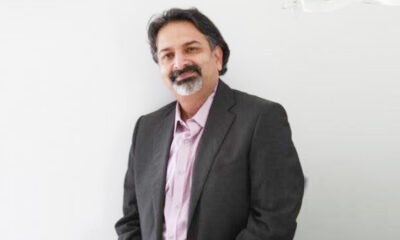
BALI: Viren Raheja is a man with a mission: to change the culture at India’s leading cable TV multi system operator Hathway Cable & Datacom. With eight million digital TV homes from a total of 11 million, the network has been regarded as one of the shining stars emerging out of India’s cable TV ecosystem. But it has lost some of that shine in recent times.
Admits Raheja who is a director of the firm: “We are going through a challenging phase – turbulence in the cable TV space – life is challenging.”

Raheja is using the changing climes in India’s fragmented cable TV ecosystem – which has been undergoing a government mandated digitization rollout – to re-engineer his firm. “The company – like most of the other MSOs – was rooted in a B2B mindset as most of the time we were dealing with LCOs,” he reveals. “Now we are working on changing the DNA of Hathway from B2B to B2C. We have already changed the entire senior management with one that has more of a B2C mindset. You will see more of that happening with talent from the telecom being hired.”
Speaking at the Media Partners Asia organized Asia Pacific Operators Summit in Bali, Raheja revealed that Hathway has done better than most in digitizing and putting set top boxes in subscribers’ homes with a 30 per cent marketshare nationally.
“Now the key challenge is monetizing, upscaling customers to HD services and getting subscribers to pay,” he said. “Gross billing has happened in some places but we are mostly at net billing with the LCOs. Over six months we see the movement to net billing being completed in phase I areas and over 12 months in phase II.”
Raheja pointed out that digitizing is leading to a new power equation being forged between LCOs and MSOs. “Over 12-18 months, this relationship will stabilize. The current revenue split between us and our LCOs in 40 per cent to us and 60 per cent for them. We see that settling at 65 per cent for us and 35 per cent for the LCOs. Once that happens, we may then think about acquiring some of them.”
He is clear that the next 12 months are going to see the MSO focus on developing local content, pushing HD services and also building up its broadband play.
“HD will help us give a better viewing experience and also the customer will pay more and local content will help keep them engaged,” Raheja disclosed.
“On the broadband front, today, 15-20 per cent of our revenue is coming in from broadband. I would like to see that going up to 35-40 per cent over the next three years. Our play includes giving world class broadband with DOCSIS 3.0 modems. For me getting a nice return from subscribers is more important. Hence, I will be open to losing a video subscriber to retain a broadband subscriber who pays a lot more.”
He believes that all this will need a cash infusion of about $100-150 million, which he intends to raise through a mix of debt and equity dilution.
No merger or acquisition is on the cards with any other multisystem operator – at least for now- he revealed. “Cable is about local operations…I am not sure a merger with DEN or anyone else will create something unique,” concluded Raheja.





MUMBAI: When margins wobble, liquidity talks and in Q3 FY25-26, cash did most of the talking. Den Networks Limited closed the December quarter with consolidated revenue of Rs.251 crore, marginally higher than the previous quarter but down 4 per cent year-on-year, even as profitability stayed resilient on the back of strong cash reserves and disciplined cost control.
Subscription income softened to Rs.98 crore, slipping 3 per cent sequentially and 14 per cent from last year, while placement and marketing income offered some cheer, rising 15 per cent quarter-on-quarter to Rs.148 crore. Total costs climbed faster than revenue, up 7 per cent QoQ to Rs.238 crore, driven largely by higher content costs and operating expenses. As a result, EBITDA dropped sharply to Rs.13 crore from Rs.19 crore in Q2 and Rs.28 crore a year ago, pulling margins down to 5 per cent.
Yet, the bottom line refused to blink. Profit after tax stood at Rs.40 crore, up 15 per cent sequentially and only marginally lower than last year’s Rs.42 crore. A healthy Rs.57 crore in other income helped cushion operating pressure, keeping profit before tax at Rs.48 crore, broadly stable quarter-on-quarter despite the tougher cost environment.
The real headline-grabber, however, sits on the balance sheet. The company remains debt-free, with cash and cash equivalents swelling to Rs.3,279 crore as of December 31, 2025. Net worth rose to Rs.3,748 crore, while online collections accounted for 97 per cent of total receipts, underscoring strong cash discipline across operations, including subsidiaries.
In short, while Q3 showed signs of operating strain, the financial backbone remains solid. With zero gross debt, steady profits and a formidable cash war chest, the company enters the next quarter with flexibility firmly on its side proving that in uncertain markets, balance sheet strength can be the best growth strategy.






