News Headline
Viewing on TV, digital doesn’t have to be either-or question

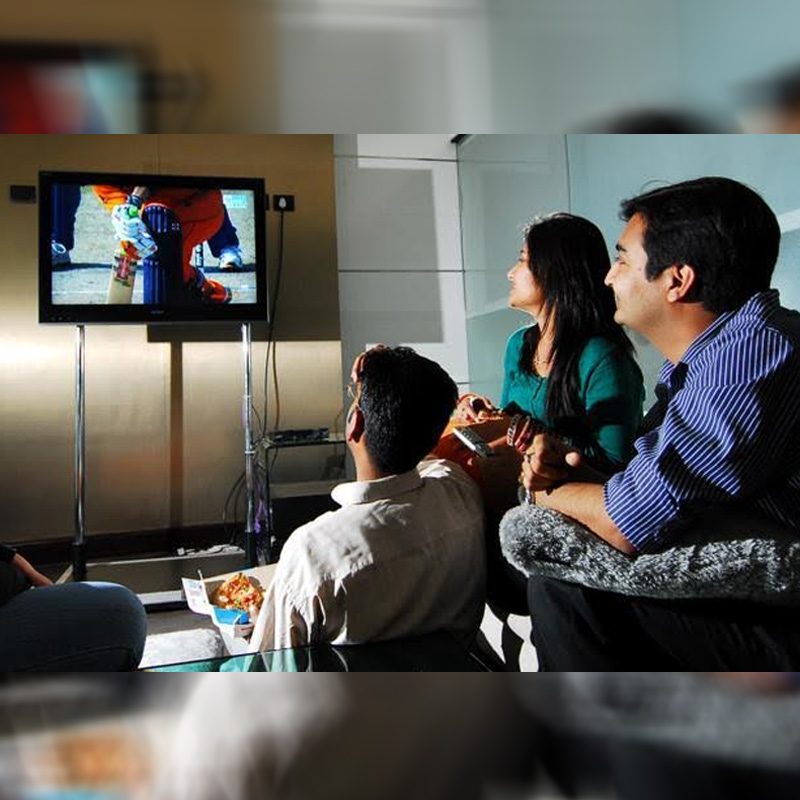
MUMBAI: For decades, television has been the platform that’s commanded the attention of the maximum number of people in India. However, thanks to cheap mobile data costs and smartphones, there has been a surge in digital video consumption, and audiences are fast changing the way they view content.
With viewers starting to divide their content consumption across TV and digital, it now makes sense for broadcasters to also spread their budgets across both mediums to reach more audiences.
To address this change, the Confederation of Indian Industry (CII) has organised the Big Picture Summit 2020, where it deliberated upon India’s multi-screen obsession and what it means for content owners. The panel comprised Shemaroo Entertainment COO Kranti Gada, ministry of information and broadcasting additional secretary (broadcasting) & CVO Neerja Sekhar, ABP news CEO Avinash Pandey, Discovery India MD Megha Tata, and Boston Consulting Group MD & partner Vikash Jain.

Of late, and especially with the onset of Covid2019, broadcasters are pushing the digital agenda, realigning their content strategies, business models to cater to consumers’ interests; some fear this may be to the detriment of their traditional business, noted Gada. However, Tata, who has spent more than three decades in the media and entertainment industry, pointed out how every time a new platform emerges, talking heads pronounce the death of the previous one. Contrary to this perception, all mediums have stayed strong and grown – whether its print, radio, cinema, television, and now digital.
“We don’t have to be an either-or world all the platforms can co-exist. It is absolutely not an easy decision to make but yes we need to think about where we are putting our money. These are very difficult questions where there is no rule book. Our approach is that both need to survive,” said Tata.
She highlighted that unlike the west, where the death knell has been sounded on linear television, India has actually beaten the trend. This requires a fine balancing act on the part of broadcasters. Both the mediums are important – one is the business of today and the other is the business of tomorrow.
“During pandemic, there has been a huge growth in television consumption but at the same time OTT growth has been stupendous. We launched Discovery+ in the middle of the lockdown. The question is how do you balance this act. You have to protect our linear business that is funding your digital business because there is still time for digital business to reach profitability and monetisation status and TV has to play a key role in that,” she explained.
There’s no denying that streaming platforms have emerged as a major challenge to linear television, but the latter is a Rs 79,000 crore industry that has stood the test of time and is still going strong, claimed Sekhar. “We are seeing the convergence in infrastructure where wired broadband and wireless distribution are much in demand and both are giving better choices to consumers. We are seeing one content on different platforms with multiple screen options.”
She went on to say that the pandemic threw up major changes in viewership pattern, where family viewership has taken over. But one factor that has remained consistent is content. There has been a huge uptick in demand for entertainment, followed by localised or regional content. She also shared that during the lockdown, OTT content was watched double that of linear programming. But linear television remains primary as far as the consumer is concerned. “With the number of OTT players rising we don’t know how self-sustaining OTT platforms are going to be. Market will change, technology will change but content will be of utmost importance.”
The question that arises in a multiscreen world is how the business model changes. Television was largely advertising-driven whereas in digital, larger multinational companies take away 60 to 70 percent of the ad pie and then broadcasters grapple with what is remaining. There are other players also who are looking at the same ad pie. It is quite a challenging situation for broadcasters.
Pandey explained that the whole ecosystem has changed: a content is created then there is a distributor cable operator which downlinks the signal and sends it to the consumer. Based on the business model, whether you are a free channel or a paid channel, you get the subscription money which is shared by the DPO operators. Then the carriage fee is accordingly paid to some other person. Broadcasters are in control of their audience through a third party – BARC, which tells you what the consumer is watching, and the price is determined on that basis. Things work differently on digital – streaming platforms that serve the consumer on pull medium, where the viewer looks for his choice of content and consumes that; the entire push system of that content is now controlled by two companies.
“Streaming platforms decide what rate to sell and they give you the share. There is no value for the content that we are creating. If you look at two big content creators, they take your content and serve it to the consumers. They know the data and how to push their content and they will be the one who will take the share out of the advertising and give you some money,” he stated.
Behind all this lies the platforms’ algorithm, which pushes the content, but no one knows what makes it tick. In Pandey’s view, the government will have to step in and see to it that all parties are treated fairly. At the end of the day, content creators need to get their due.
“Fortunately, we are seeing that in the European Union and Australia, creators are looking at getting good value for their content,” said Pandey, adding that he hopes that the day’s not far off for India, too.





NEW DELHI: Hamdard Laboratories gathered a cross-section of India’s achievers in New Delhi on Friday, handing out the Hakeem Abdul Hameed Excellence Awards to figures who have left their mark across healthcare, education, sport, public service and the arts.
The ceremony, attended by minister of state for defence Sanjay Seth and senior officials from the ministry of Ayush, celebrated individuals whose work blends professional success with a sense of public purpose. It was as much a roll call of achievement as it was a reminder that influence is not measured only in profits or podiums, but in people reached and lives improved.
Among the headline awardees was Alakh Pandey, founder and chief executive of PhysicsWallah, recognised for turning affordable digital learning into a mass movement. On the sporting front, Arjuna Awardee and kabaddi player Sakshi Puniya was honoured for her contribution to the game and for pushing women’s participation onto bigger stages.
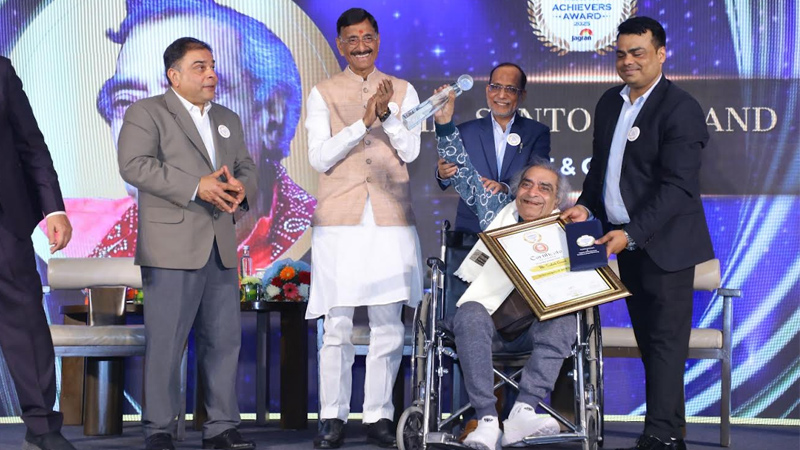
The cultural spotlight fell on veteran lyricist and poet Santosh Anand, whose songs have echoed across generations of Hindi cinema. At 97, Anand accepted the honour with characteristic humility, reflecting on a life shaped by perseverance and hope.
Healthcare honours spanned both modern and traditional systems. Manoj N. Nesari was recognised for strengthening Ayurveda’s place in national and global health frameworks. Padma shri Mohammed Abdul Waheed was honoured for his research-backed work in Unani medicine, while padma shri Mohsin Wali received recognition for his long-standing contribution to patient-centred care.
Education and social development also featured prominently. Padma shri Zahir Ishaq Kazi was honoured for decades of work in education, while former Meghalaya superintendent of Police T. C. Chacko was recognised for public service. Goonj founder Anshu Gupta received an award for his dignity-centred rural development initiatives, and the Hunar Shakti Foundation was honoured for empowering women and young girls through skill development.
The Lifetime Achievement Award went to former IAS officer Shailaja Chandra for her long career in public healthcare and governance, particularly in the traditional systems under Ayush.
Speaking at the event, Hamdard chairman Abdul Majeed said the awards were a tribute to those who combine excellence with empathy. “These awardees reflect Hakeem Sahib’s belief that healthcare, education and public service must ultimately serve humanity,” he said.
Minister Seth struck a forward-looking note, saying India’s young population gives the country a unique opportunity to become a global destination for learning, health and wellness by 2047.
The ceremony also featured the trailer launch of Unani Ki Kahaani, an upcoming documentary starring actor Jim Sarbh, set to premiere on Discovery on 11 February.
Instituted in memory of Unani scholar and educationist Hakeem Abdul Hameed, the awards have grown into a national platform that celebrates those building a more inclusive and resilient India. For one evening at least, the spotlight was not just on success, but on service with substance.