iWorld
Vibrant Indian policy-making will ensure non-discrimination: Netflix APAC MD

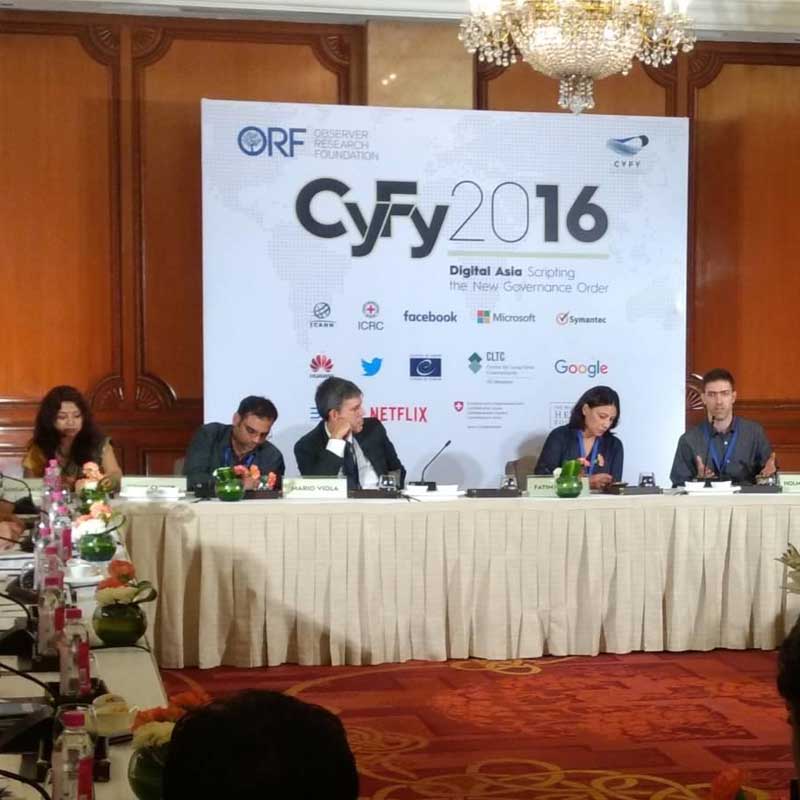
NEW DELHI: Netflix is not only upbeat on the Indian market, but feels the vibrancy in policy-making process here will ensure non-discriminatory access to the Internet for all.
Pointing out that India is a place where many innovations are being witnessed, Netflix APAC managing director Yu-Chuang Kuek said that regulatory organisations (like TRAI) should take a wholistic view on issues like net neutrality and nuance the policies in such a way so as “not to stifle innovations.”
Speaking as a panellist at a session on `The Future of Entertainment’ at ORF-organised `CyFy 2016: Digital Asia Scripting the New Governance Order’ here on Thursday, Kuek suggested Indian policy-makers should flesh out a policy after looking at all issues.

Telecom Regulatory Authority of India (TRAI), the broadcast and telecoms regulator, is in the process of coming out with a set of guidelines for OTT services and net neutrality issue after lengthy debates with stakeholders. A section of the entertainment and telecoms industry in India has been lobbying hard to regulate mushrooming OTT services that have been claiming a growing subscriber base despite challenges of inadequate bandwidth and high cost of data.
As to whether challenges of possible over-regulation (by TRAI), slow internet speed and high cost of data could pose a problem for the growth of OTT services like Netflix in India, Kuek emphasised that he’s much “heartened” by the ongoing “vibrant discussion” on net neutrality.
He, along with another panellists, went on to clarify that regulations need to be “principled and technology-based” without “overreaching” as restrictive regulations were not good for the industry as a whole.
Holding forth on Asian and global trends, the Singapore-based Kuek said that “entertainment and video consumption online is irreversible” and it becomes the “first point of contact for Internet adoption.” He added: “There has been an annual growth of 22 per cent in data consumption in Asia.”
According to another panellist, Santa Clara University Associate Professor of Communication Rohit Chopra, the lines between entertainment and news have blurred (in the US) and the second wave of Internet has caused India to “jumpstart” to this trend.







eNews
Piyush Thakur steps down as Inshorts’ chief revenue officer
Former vice president and cro says exit marks a new chapter after close to a decade of building revenue and partnerships at Inshorts Group.

NOIDA: Piyush Thakur has stepped away from Inshorts Group after nearly 10 years with the company, marking the end of a long tenure that culminated in his role as chief revenue officer.
In a farewell note, Thakur said he was “turning a new page” after almost a decade at Inshorts, calling it one of the hardest professional decisions he has made. He added that his exit was not driven by uncertainty about the future, but by reflection on a long association with the company.
Thakur joined Inshorts in October 2016 as vice president and spent around seven years in the role before being elevated to chief revenue officer in April 2024, a position he held until April 2026.
He said his tenure was defined by “thousands of mornings, late nights, product debates and breakthrough moments”, as the company evolved into a large-scale digital news platform used by millions.
In his note, Thakur emphasised that Inshorts’ growth was a collective effort across teams, adding that engineers, designers, sales teams and customer support staff all contributed to building the platform. He said the company’s success was not the result of individuals but of “everyone who stayed, passed through, and left their mark”.
Before Inshorts, Thakur worked across several digital media and business development roles. At ESPN, he served as senior regional manager from October 2015 to October 2016, focusing on growth initiatives, strategic opportunities and video distribution.
At Times Internet, he worked for nearly three years, including as head of business development from April 2015 to September 2015 and chief manager from January 2013 to March 2015. His responsibilities included monetisation of mobile platforms, managing media and developer partnerships, and driving revenue across digital properties such as The Times of India and The Economic Times.
Earlier, he worked at Brandmovers as head of business development from June 2012 to June 2013, handling digital, mobile and social media marketing solutions, client development and strategic consulting. During this period, he also worked on advertising revenue, brand strategy and CRM-based solutions.
At Inshorts, Thakur’s role focused on revenue strategy, mobile and media partnerships, and growth initiatives across platforms. His profile highlights experience in mobile product management, digital business models, partner ecosystems and revenue expansion in high-growth environments.







