News Headline
V. Narayan to succeed S. Somnath; to take over as Isro chairman

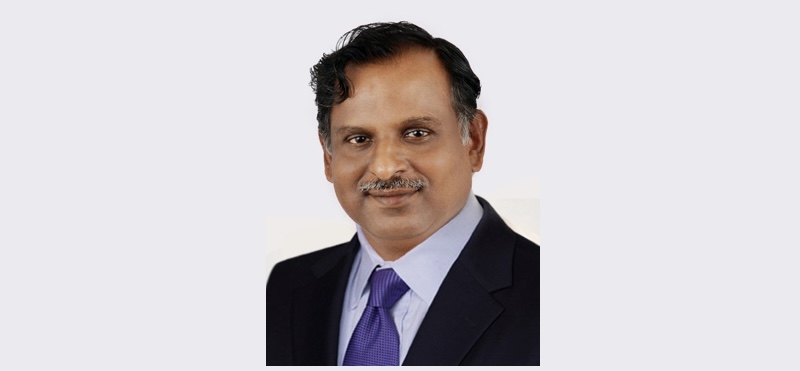
MUMBAI: There’s a new head at the Indian Space Research Organisation (Isro) and at the department of space (DoS). On 7 January, the appointments committee of the cabinet sent out a notification announcing the selection of the head of the liquid propulsion systems centre (LPSC) V Narayan in the organisation as the man for the job. He will also hold the post of chairman of the space commission. He takes over from current Isro boss S. Somnath on 14 January when the latter’s term ends.
Narayan was one of the key architects of India’s development of the cryogenic engine, which on the back of which India’s space program – including launch vehicles and space exploration – could move ahead at the pace it has.
Speaking to NDTV Narayan said: “We have a clear roadmap for India and I hope to take Isro to greater heights as we have great talent.”

As LPSC director he has been providing techno-managerial leadership which is engaged in the development of liquid, semi cryogenic and cryogenic propulsion stages for launch vehicles. chemical and electric propulsion systems for satellites, control systems for launch vehicles and transducer development for propulsion system health monitoring.
Narayanan, who is a rocket and spacecraft propulsion expert joined Isro in 1984 and functioned in various capacities before becoming director of the centre. During the initial phase, for four and a half years, he worked in the solid propulsion area of sounding rockets and augmented satellite launch vehicle (ASLV) and polar satellite launch vehicle (PSLV) in Vikram Sarabhai Space Centre (VSSC). He contributed in the process planning, process control and realisation of ablative nozzle systems, composite motor cases and composite Igniter cases.
In 1989, Narayan completed his M.Tech in cryogenic engineering with first rank at IIT-Kharagpur and joined the cryogenic propulsion area in the LPSC. Isro’s geosynchronous launch vehicles namely GSLV Mk-II and GSLV Mk-III capable of placing two-tonne and on four-tonne class communication satellites in geo transfer orbit have cryogenic propulsion stages as terminal stages.
As one of the few cryogenic members, working in this area in the initial stages, he carried out fundamental research, theoretical and experimental studies and contributed in the successful development and testing of cryogenic sub systems namely the gas generator, sub-scale cryogenic engine of one tonne thrust and thrust chamber of 12 tonne thrust.
Considering the long-lead time required for the development of cryogenic stage of GSLV MkII vehicle, for meeting the initial flights, few of the cryogenic stage hardware were procured from Russia. Towards this, as an expert in cryogenic propulsion, he contributed in the development of mission management systems, contract management and the successful flights of GSLV MkII vehicle with procured cryogenic stages.
For sustained operation of GSLV MkII, initially Isro planned for technology acquisition of cryo stage for manufacturing in India. But due to geopolitical reasons, the technology acquisition could not succeed and Isro decided to develop cryogenic upper stage (CUS) indigenously Narayanan has played crucial role in the successful development of CUS and contributed in making it operational for the GSLV Mk II vehicle.
For the GSLV MkIII experimental mission with CARE module, he conceived and realised the passive cryogenic stage and contributed for the successful experimental flight. As the project, director of the C25 cryogenic project, he provided techno-managerial leadership and conceived, designed and developed the 25 cryogenic propulsion system of GSLV Mk-III launch vehicle powered by an engine developing a thrust of 200kN.
He contributed in establishing the necessary infrastructure and facilities for design, analysis, realisation, testing and launching. Due to innovative approach, the C25 cryo stage was developed under his guidance in the shortest time frame with all successful tests and inducted in the GSLV MkIII vehicle. Subsequently he also made the stage operational.
His contribution, made India one among six countries in the world to have the complex and high performance cryogenic propulsion systems and made the country self-reliant in this area.
Narayan parallely completed PhD in aerospace engineering from IIT-Kharagpur in 2001. The work carried out as part of M.Tech thesis titled Cavitating Venturies for Flow Control in Cryogenic Rocket Engines and PhD thesis titled Thrust and Mixture Ratio Regulation Systems for Cryogenic Rocket Engines were directly employed in the development of the Indian cryogenic propulsion systems.
Towards the GSLV Mk-III M1/Chandrayaan-2 mission, L110 liquid core stage, C25 cryogenic stage, were delivered for the vehicle under his watchful eye. Propulsion systems for orbiter and Vikram lander which include the throttleable thrusters for soft landing were also developed and delivered for the Chandrayaan-2 Mission, under his guidance. As the chairman of the national expert committee constituted to study the reasons for hard landing of the Chandrayaan-2 lander ship, contributed in pin pointing the reasons and corrective actions required to overcome the observations. Realised and delivered all the propulsion systems for Chandrayaan-3.
For the Indian human space flight (Gaganyan) programme, he worked on the human rating of C25 and L110 liquid stages of LVM3 vehicle and the development of propulsion modules for crew module and service module and the cabin pressure control systems. He also focused on the thermal and humidity control systems and the propulsion stage for the test vehicle.
For enhancing the GTO payload capability of LVM3 vehicle and meeting the future Indian heavy lift rockets, Narayan guided the team and designed a Lox-kerosene semi cryogenic propulsion system and provided techno-managerial leadership for its development.
He took up the development of improving the C25 cryogenic stage performance with higher propellant (32 tonnes of LoX and LH2) loading with higher thrust (22 tonne) engine. His team is also working on developing the 100 tonne thrust Lox-CH4 engine and electric propulsion thrusters. He has also made significant contribution in the spacecraft propulsion area.
Narayan contributed as the member of two failure analysis committees (FACs) of GSLV MkII D3 and GSLV MkII F02 vehicles and , member secretary of the first Indian cryogenic upper stageeEngine FAC. He was a member of Isro’s 12th Five Year plan-drafting group and contributed in finalsing the propulsion system development during 12th five year plan. He has also finalised the propulsion road map of Isro for the next 20 years (2017 – 2037). As director of the LPSC, during the last five years, he has delivered 164 liquid propulsion systems for 41 launch vehicles and 31 space craft missions.
V Narayanan, is currently the chairman of LPSC-IPRC co-ordination committee and chairman of programme management council – space transportation systems.



NEW DELHI: Hamdard Laboratories gathered a cross-section of India’s achievers in New Delhi on Friday, handing out the Hakeem Abdul Hameed Excellence Awards to figures who have left their mark across healthcare, education, sport, public service and the arts.
The ceremony, attended by minister of state for defence Sanjay Seth and senior officials from the ministry of Ayush, celebrated individuals whose work blends professional success with a sense of public purpose. It was as much a roll call of achievement as it was a reminder that influence is not measured only in profits or podiums, but in people reached and lives improved.
Among the headline awardees was Alakh Pandey, founder and chief executive of PhysicsWallah, recognised for turning affordable digital learning into a mass movement. On the sporting front, Arjuna Awardee and kabaddi player Sakshi Puniya was honoured for her contribution to the game and for pushing women’s participation onto bigger stages.
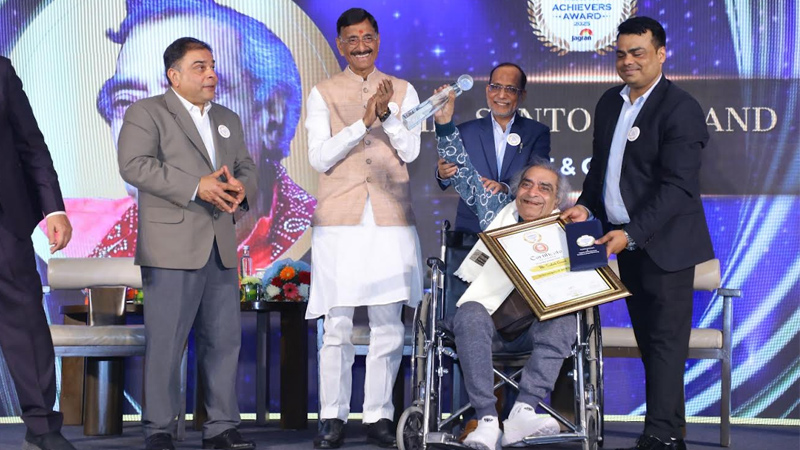
The cultural spotlight fell on veteran lyricist and poet Santosh Anand, whose songs have echoed across generations of Hindi cinema. At 97, Anand accepted the honour with characteristic humility, reflecting on a life shaped by perseverance and hope.
Healthcare honours spanned both modern and traditional systems. Manoj N. Nesari was recognised for strengthening Ayurveda’s place in national and global health frameworks. Padma shri Mohammed Abdul Waheed was honoured for his research-backed work in Unani medicine, while padma shri Mohsin Wali received recognition for his long-standing contribution to patient-centred care.
Education and social development also featured prominently. Padma shri Zahir Ishaq Kazi was honoured for decades of work in education, while former Meghalaya superintendent of Police T. C. Chacko was recognised for public service. Goonj founder Anshu Gupta received an award for his dignity-centred rural development initiatives, and the Hunar Shakti Foundation was honoured for empowering women and young girls through skill development.
The Lifetime Achievement Award went to former IAS officer Shailaja Chandra for her long career in public healthcare and governance, particularly in the traditional systems under Ayush.
Speaking at the event, Hamdard chairman Abdul Majeed said the awards were a tribute to those who combine excellence with empathy. “These awardees reflect Hakeem Sahib’s belief that healthcare, education and public service must ultimately serve humanity,” he said.
Minister Seth struck a forward-looking note, saying India’s young population gives the country a unique opportunity to become a global destination for learning, health and wellness by 2047.
The ceremony also featured the trailer launch of Unani Ki Kahaani, an upcoming documentary starring actor Jim Sarbh, set to premiere on Discovery on 11 February.
Instituted in memory of Unani scholar and educationist Hakeem Abdul Hameed, the awards have grown into a national platform that celebrates those building a more inclusive and resilient India. For one evening at least, the spotlight was not just on success, but on service with substance.







