News Broadcasting
User content sites will not replace television: BBC


MUMBAI: A few days ago UK broadcaster BBC One controller Peter Fincham
delivered a speech to the Royal Television Society. The speech was called BBC One – Risk, Creativity, Challenges and Audiences.
He debunked the notion that video clips on the net would replace traditional broadcast television. He says that predictions that video on- demand and 30-second clips on the video content site YouTube would replace traditional viewing showed breathless over-enthusiasm. This he says is reminiscent in some ways of the dotcom boom of the late Nineties, when all conventional businesses were apparently heading for the scrap heap.
“It also reminds me of the late Sixties – yes, I can just remember them – when a bloke I met in a youth hostel assured me that Western civilization was on its last knees and the future lay in self-sufficient collectives living in Wales. The trouble is, it’s missing the point. Conventional television – old media, linear, whatever you want to call it – and new media don’t exist in opposition to each other. In fact, they’re perfect partners.”

“Any anthropologist will tell you that our ancestors, although they lived in caves, had exactly the same brains and bodies that we have. Evolution just doesn’t move that fast I guess the equivalent to those cave-dwelling ancestors is people who sat in front of cathode ray televisions with a choice of two channels, the BBC and ITV. Nowadays they’ve got hundreds to choose from. And yet the evolution of taste, like evolution itself, is a very different thing. YouTube’s great. Google’s great. It’s all great. But if the conclusion you draw – and some people love drawing it – is that television is over, I think you might just be wrong.”
He was responding to an article in the Guardian a couple of weeks ago, by Jeff Jarvis. The headline was ‘Television is dead’. Jarvis had argued that all the old definitions of TV are in shambles. Television need not be broadcast. It needn’t be produced by studios and networks. It no longer depends on big numbers and blockbusters. It doesn’t have to fit 30 and 60 minute moulds. It isn’t scheduled. It isn’t mass. The limits of television – of distribution, of tools, of economics, of scarcity – are gone.’ Jarvis had said that his teen son and his friends are getting hooked on new series not via TV but through the web and iTunes.’
Jarvis, Fincham points out assumes that where technology leads, our tastes will follow. “He thinks that to embrace the new, it’s necessary to reject all that’s familiar. I think he’s wrong”. Fincham points to the new adaptation of Jane Eyre. “It was watched by seven million viewers. Jane Eyre had been widely admired and acclaimed – quite rightly in my view. Adaptations of classic novels don’t come much better than this. Does Jeff Jarvis’ new world of television mean there’s no room for adaptations of Jane Eyre? And if so, is that something we’ve gained? Or something we’ve lost? ”
“People like programmes. Seems like a pretty obvious thing to say, but in our noisy and novelty-driven world it can’t be said often enough. They also like, in my view, an intelligently-balanced linear schedule. Yes, of course video on demand will enable us to create our own schedules and time-shift programmes at will. But we won’t want to do that all the time, will we? ”
“Video on demand is to linear viewing what the microwave is to conventional cooking. Quicker, more convenient, more attuned to a busy, modern life. But it won’t improve the flavours of the cooking. User-generated content is a wonderful thing, but it won’t simply replace the professional stuff. There’s such a thing as a user-generated garden shed – you buy it from Homebase and put it together yourself. Or there’s the other sort, which I must admit I prefer – you get somebody else to do it for you. The two markets don’t cancel each other out – they co-exist. In the future, a short clip on YouTube might be all we’ve got time for. Sounds plausible, doesn’t it, but the evidence doesn’t back it up.”




News Broadcasting
WITT Summit 2026 concludes in New Delhi
Babar Azam’s comical diving attempt goes viral as league introduces anti-dew measures.
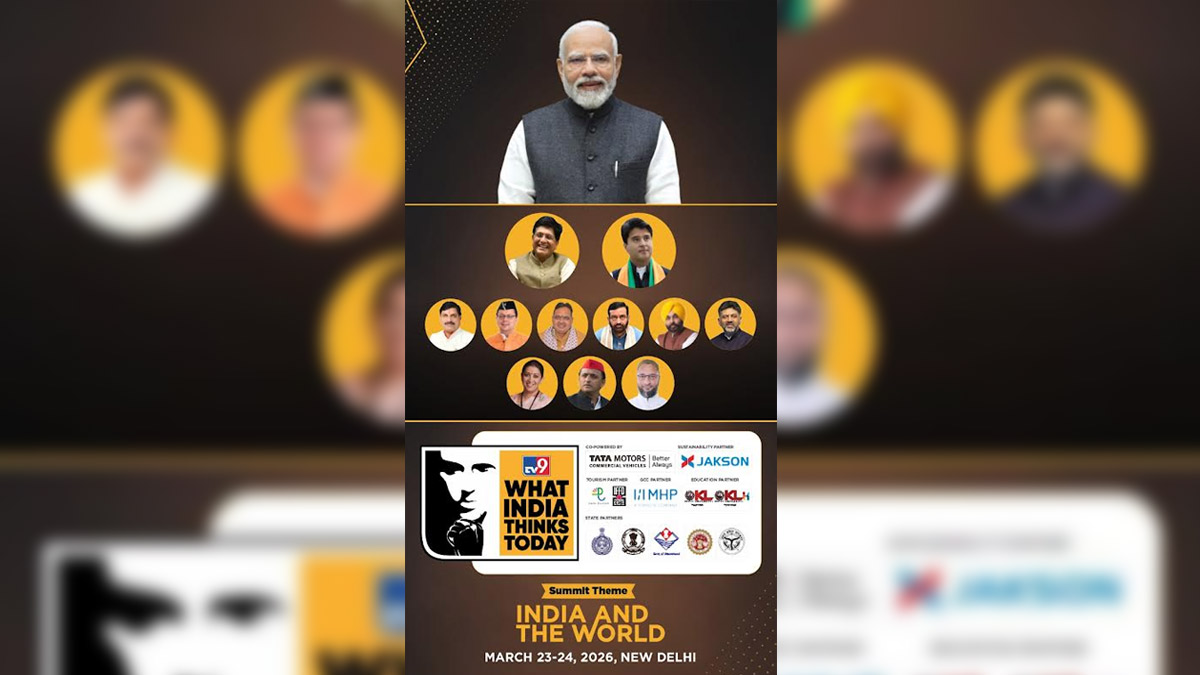
MUMBAI: The WITT Summit just wrapped up with enough big ideas to fill a policy playbook because when India’s leaders, thinkers and icons gather under one roof, even the conversations hit sixes. The eighth edition of TV9 Network’s flagship What India Thinks Today (WITT) Summit 2026 concluded on Saturday after two days of dynamic discussions at its New Delhi venue. India’s largest multi-domain public policy and culture summit brought together political leaders, policymakers, sports icons, artists and technology innovators to examine the forces shaping contemporary India and its global standing.
Prime minister Narendra Modi delivered the keynote address on the theme “India and the World” for the third consecutive year. In a wide-ranging speech, he addressed the ongoing conflict in West Asia, calling for restraint and compassion while highlighting India’s continued development trajectory despite global turmoil.
The summit featured candid conversations with state leaders. Telangana Chief Minister A. Revanth Reddy articulated a people-first governance model and contrasted it with other development approaches. Madhya Pradesh Chief Minister Mohan Yadav declared that Left-wing extremism had been effectively eliminated in his state and highlighted preparations for the upcoming Kumbh Mela. Punjab Chief Minister Bhagwant Mann defended his government’s record, citing the closure of 19 toll plazas and creation of the Sadak Suraksha Force. Karnataka Deputy Chief Minister D.K. Shivakumar expressed confidence in Congress prospects in Assam and addressed recent allegations against him.
On geopolitics and national security, Union Minister Jyotiraditya Scindia outlined India’s ambition to become a builder of trusted digital infrastructure for the world, citing the rapid 5G rollout and village-level 4G connectivity.
Cricket received significant attention. Former India captain Sourav Ganguly praised player freedom and trust as hallmarks of great leadership and named MS Dhoni as the greatest captain due to his World Cup successes. India women’s team bowling coach Aavishkar Salvi credited the BCCI and Women’s Premier League for building a pipeline of world-class talent behind the team’s recent ODI World Cup triumph.
The summit also hosted the inaugural AI² Awards 2026, celebrating the convergence of human creativity and machine intelligence in storytelling and content creation. Poet and kathavachak Kumar Vishwas delivered a nuanced take on India’s concept of Dharma and criticised the recent arrest of an 80-year-old Shankaracharya. Veteran lyricist Sameer Anjaan and storyteller Neelesh Misra reflected on changing music trends and artistic responsibility in the wake of a recent controversy involving Nora Fatehi.
In a country where conversations often run as deep as the Ganges, the WITT Summit proved once again that when leaders, thinkers and storytellers come together, the real winner is public discourse lively, layered and refreshingly unafraid to tackle the big questions shaping India’s tomorrow.








