I&B Ministry
Use the power of cinema and other modern tools to spread knowledge and learning, says Jaitley

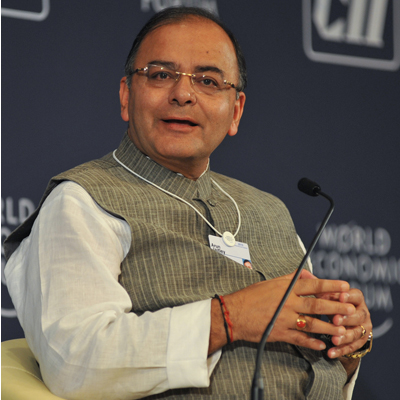
NEW DELHI: Information and Broadcasting Minister Arun Jaitley said today that filmmakers and creative people should use modern tools like cinema to spread knowledge and learning.
Referring to the Bal Swaccha Abhiyaan launched today on the occasion of the 125th birth anniversary of Pandit Jawaharlal Nehru, he said ‘Swachhta’ should be instilled as one of the core moral values in childhood so that children practice the habit of cleanliness as part of their childhood and personality.
Inaugurating the first Rashtriya Bal Film Mela which coincided with Children’s Day, he stressed that celluloid media had become a powerful source of knowledge in the Information age and cinema had been emerged as a powerful tool for education in addition to its manifest function of entertainment.
The Rashtriya Bal Film Mela would help in instilling values of cleanliness practiced and propagated by Mahatma Gandhi, the Minister added.
Jaitley called upon the young children to watch the films made by veteran film director Shyam Benegal, who was present, including ‘The Making of Mahatma’ and ‘The Discovery of India’.
I&B secretary Bimal Julka said around three million watch films made by the Children’s Film Society, India, which has organised this three-day Festival.

He pointed out that this will be held every second year, alternating with the International Children’s Film Festival (Golden Elephant) held in Hyderabad every alternate year by the CFSI which was set up at the initiative of Nehru as a soft power to unite children.
He said the Ministry was carrying forward the vision of Prime Minister Narendra Modi regarding Swachh Bharat through this festival on the theme of ‘Swachhta.’
Eminent sportsperson Sania Mirza, who recalled that she had always looked forward to the Gold Elephant as a child in Hyderabad, asked the children present to take a pledge with her to keep the country clean.
Actresses Dia Mirza and Sakshi Tanwar also demonstrated how it was easy to keep the environment clean by regularly cleaning their own neighbourhoods. Kunal Roy Kapur and Divya Dutta have anchored the show.
The three day festival would provide an opportunity for children to appreciate high-quality film content, experience value-based entertainment, and to trigger their imagination about environment conservation and cleanliness.
The festival would showcase a bunch of internationally acclaimed children’s films on the theme of cleanliness. CFSI’s latest production, Pappu Ki Pugdandi was the inaugural film in the festival.
Other films that would be screened in the festival include Kaphal which won the National Award for Best Children’s Film, Shortcut Safari which will be premiered for the first time, The Goal, Ek Ajooba (CFSI productions), Karamati Coat, Summer with the Ghost, Sunshine Berry & Disco Worms, Yeh Hai Chakkad Bakkad Bumbe Bo, The Boot Cake, Hawa Hawaii, Krish Trish Baltiboy- 3, and Goopi Gawaiiya Bhaga Bajaiiya.
The festival would feature interactive workshops on film making with experts from the Film and Television Institute of India and the Satyajit Ray FTI in Kolkata, film appreciation, animation, Charlie Chaplin’s Mimes, and storytelling. Live dance performances, magic act, sand act, and puppetry along with various competitions such as painting on the theme, ‘Swachhta’, and digital collage on the theme ‘Clean India’ and the craft of making utility items from waste materials, were being organised on the sidelines of the festival.
The inauguration was followed by a cultural programme with school children, the Prince Dance Troupe, Shiamak Davar’s Junior Group which included some disabled children, and the renowned artist Vilas Nayak giving performances.






I&B Ministry
IT Rules tweaks are clarificatory, not expansion of powers: MeitY
Govt signals flexibility as platforms push for clarity on user content rules
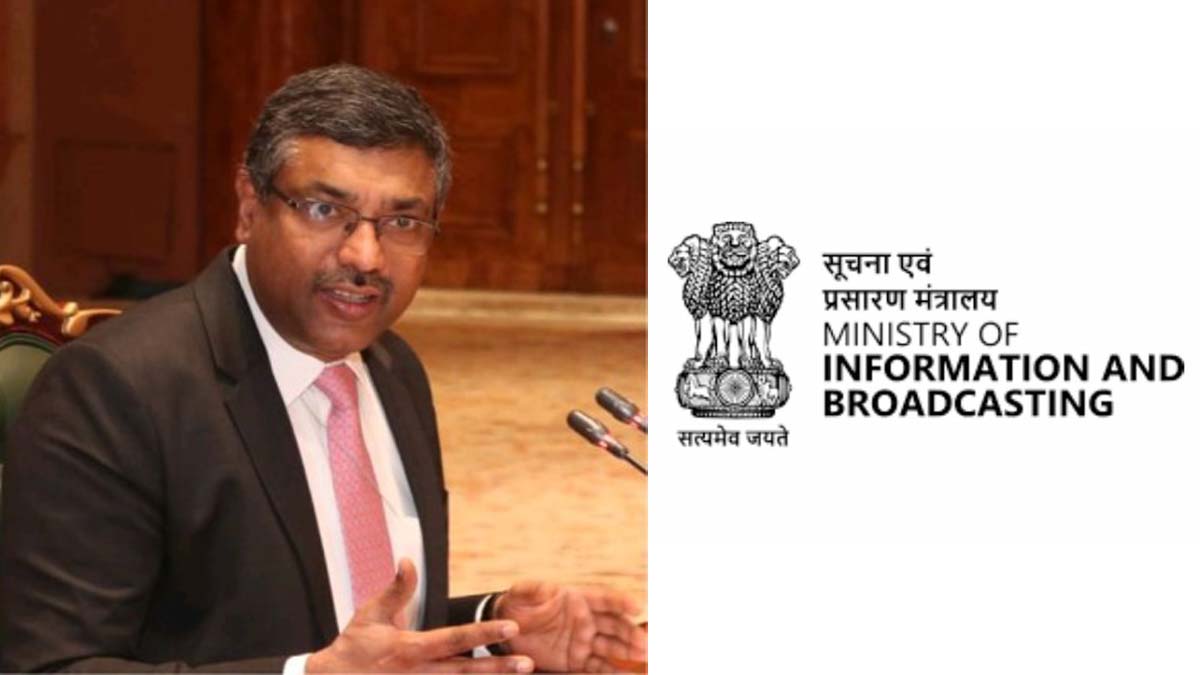
NEW DELHI: The Centre has sought to dial down concerns over its proposed amendments to the IT Rules, with Ministry of Electronics and Information Technology secretary S Krishnan asserting that the changes are intended as clarifications rather than an expansion of regulatory powers.
Pushing back against criticism from platforms and civil society, S Krishnan said the amendments “do not in any way actually give us wider powers” and are meant to remove ambiguity in how existing provisions are applied. He added that the trigger came largely from within the ecosystem, with intermediaries themselves seeking clearer guidance on compliance, takedowns and record preservation.
At the heart of the debate is the growing friction between platforms and policymakers over responsibility for user-generated content. Intermediaries have argued that they should not be treated on par with publishers, particularly when content is created and uploaded by users. Krishnan acknowledged this concern, noting that “a sharper distinction” between user content and publisher content is needed and is currently under examination.
The issue becomes more complex in enforcement scenarios. While registered publishers can be directly asked to modify or remove content, intermediaries often lack control over the original creator. “In such cases, the intermediary cannot direct those changes,” Krishnan explained, underlining the need for procedural nuance.
Another key proposal under discussion is to bring user-generated news and current affairs content within a more unified regulatory ambit, potentially under the Ministry of Information and Broadcasting. The move follows suggestions that a single authority should handle such content, regardless of whether it originates from a publisher or an individual user.
Even as the government frames the amendments as a tidy-up exercise, fault lines remain. Industry players have flagged concerns over compliance burdens, especially for smaller businesses, and questioned whether advisories could effectively become binding without explicit legislative backing. Krishnan said the government is mindful of these risks and is exploring ways to ease obligations, including possible relaxations under certain provisions.
The ministry is also considering consolidating multiple advisories and guidelines into a more structured framework, a step widely seen as addressing long-standing confusion over what platforms are expected to follow.
On takedowns, the government has reiterated that due process will remain unchanged. Krishnan stressed that actions will continue to be governed by established procedures, with reasons recorded and review mechanisms in place. He also pointed to the surge in deepfakes and synthetic media as a factor behind rising content disputes, calling it a “scale challenge” for regulators.
Interestingly, Krishnan also framed social media platforms as commercial entities rather than pure vehicles of free expression, hinting at a broader shift in regulatory thinking as platform economics come into sharper focus.
With stakeholders seeking more time and, in some cases, a rollback of the proposals, the government has kept the consultation process open-ended. Krishnan said further revisions remain on the table, signalling a willingness to adapt the draft based on feedback.
For now, the message from MeitY is clear: the rules may not be tightening in intent, but the effort to define them more clearly is well underway.






