News Headline
Uday Shankar’s tips to win COVID2019 crisis

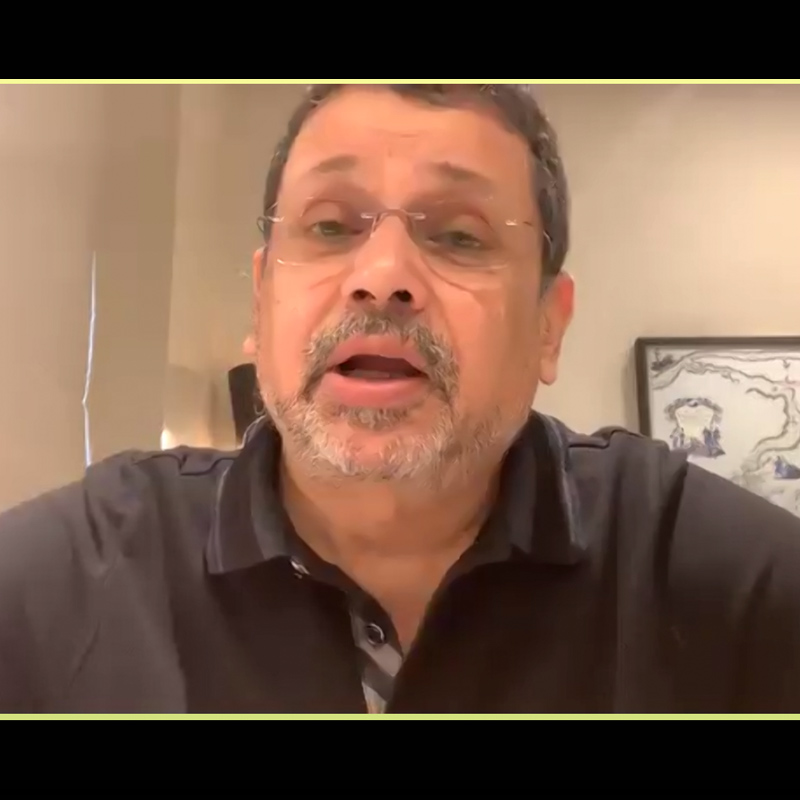
MUMBAI: It is hard to measure the impact of COVID2019, harder to predict when everything will get back to normalcy. The uncertainty created by a virus, which is worse than a war, is instilling fear into minds. How does someone come out stronger amidst this chaos? The Walt Disney Company APAC chairman and Star and Disney India president Uday Shankar suggests simple measures – building core strength, reduce liabilities, taking calibrated risks and strategising.
Even as the fear of catching the virus looms large, the economic instability is adding more worry. However, Shankar prioritises safety and reminds that unless you are safe there is nothing to look forward to.
“The economy does look bad. There’s no trying to soften the bad news. So, let’s all get prepared. Today, if the entire country is going to be locked down, the wings of economy have come to a halt and it looks like a couple of quarters will be lost in terms of economic value,” he says reminding us about upcoming second-order, complex challenges like reduction in salaries, job losses, businesses struggling with liquidity and cash, etc.

“This is a kind of economic setback that this country has not seen since independence. We had many hiccups and turbulences along the way but this kind of undifferentiated and pan-national economic crisis is not something we have seen,” he states.
Despite all the negativity surrounding us, Shankar advises us to have a positive outlook. “I think the world has become tougher. This virus has created a crisis which is unprecedented. However, the world is not going to come to an end; this is not Armageddon. It has seen crises like this and has survived to grow stronger,” he says.
Calling himself a ‘practitioner’, as is true with Shankar’s shift and rise from a journalism background to being one of the world mavericks of the media and entertainment world, his suggestion is to not let the fear of the unknown overtake you.
Here are his four tips:
Calibrated risks
Shankar’s first tip to everyone – individuals and businesses – is to reduce the risk. Focus on your core skills and build on that by acquiring knowledge. “Invest your time in learning a new skill. Knowing something is always uplifting. It gives you confidence. It is a journey from awareness to knowledge,” he says.
However, he warns against gambling in this uncertain period. “There’s a difference between a gamble and a risk. You don’t know if this is the bottom or it’s further down. So, I don’t recommend gambling,” he points out.
Reduce liabilities
With less cash in your pockets, everyone needs to reduce their liabilities. Anything that’s not urgent can wait. Sharing an anecdote from his life at Star India, Shankar says that right after he took over the business, the world was hit by the 2008 economic crisis.
“It looked like the world that would come to an end but I decided that there has to be an opportunity. My team and I decided to build on our core strength – our entertainment channel Star Plus. We decided to invest in that and not do anything new for some time. After that, our core business got stronger and we had fewer liabilities,” he shares.
Strategise
Even without an MBA background, Shankar spells out strategy in simple words: making choices. “There’s no better time than now to take decisions on what you will do, absolutely not do or postpone. All you need is clarity and purpose. Hit pause, rethink and think about how to lighten your load,” he guides those in the webinar.
What has helped Shankar take the right calls in his journey from being a journalist to a media honcho is going with his gut instinct. He advises not to turn away from any information but process it for yourself.
Star India, being one of the biggest content churning broadcasters, gets a lot of story pitches on a daily basis. Shankar picks what his gut says will work. “There’s no guarantee it will succeed but I will know that I failed doing what I wanted to do rather than what someone else wanted to do. You don’t want to fail and feel miserable that it was someone else’s suggestion. In most cases, the first attempt is not successful but if it’s something you’ve always wanted, you will make it work,” he says.
Conviction
Star India’s OTT platform Disney+Hotstar, launched five years ago as just Hotstar is today one of the top world players. But, in 2015, Shankar’s ambition was criticised. India was an expensive and data-dark market. But Shankar envisioned that people without TVs but with access to smartphones would want to consume video content. So, despite someone warning him that his “company has too much money and bosses too much faith in him”, akin to saying you’re investing in a losing proposition, his bet has played off.
As data got democratised, opportunities opened up. “I wouldn’t have had the confidence if I did not have the conviction,” he says.
Similarly, the company placed a bet on sports when everyone thought it had nothing new to offer. “I believed the power of cricket was only going to grow. That’s been our experience in the last five to six years. The number of consumers has doubled. The other is the story of kabaddi. They believed it was a 1000-year-old dead sport. Ronnie (Screwvala) was one of the first to believe that people will watch kabaddi if it’s made to look like a serious modern sport. Today, it is the second-most-watched sport in the country,” he reminisces.
Along the way, he rejected taking up many other sports, such as basketball, which have been successful in other countries. “I believed I understood India and I realise that Indians would like to watch something they’ve grown up with and seen in their neighbourhood. So, my message is to stay with your conviction and do not go for applause in the stadium,” he says.
His final message is to stay positive. If you're safe and healthy you will be able to finally triumph. He also tells people to look into the failures of those who have been successful. “There are a lot of us who admire many leaders. The problem with all of us is we read only the success. Rarely do we get an insight into the journey to success. All the people that I admire have had to face many setbacks, failures and handicaps before gaining the success that the world admires,” he states.
Praising the country’s tackling of COVID-19, Shankar mentions, “This country has been ahead of the curve. Yes, a lockdown is miserable. But individuals and the country will come out stronger. We need to be positive and not selfish. Today, we need community, friends, family and the nation even more than we have needed in the past.”
In a short Q&A session, Screwvala posed a question on how the youth can have long-term views rather than weekly. Shankar reiterates the need to think long-term because the short term is only likely to get worse.
“It is going to be fluid and bad. Though we should hope for it to get better, we need to be realistically prepared for it to get worse. India is a country of youth. We have a long life ahead of us. A few quarters and even a year or two is not what we’re planning. The youth are impatient and full of energy. They want to achieve everything overnight. You will dissipate a lot of energy and get frustrated in doing that.
To do that, Shankar says that people need to build endurance which he thinks is a skill visible in a marathon, even though the marathon runner may look ‘unattractive and unsexy’ as compared to a 100-metre sprinter.
Speaking on consumer patterns, the Disney boss is aware that people will be extremely cautious about being in crowded places and that will determine their behaviour. The environment is going to be cynical and full of fear. Consumers will be conservative as the changing lifestyle will persist even after the lockdown is lifted. Hence, instead of going for five things at a time, he asks to take one-two tasks and see if they can deliver the same business goals.
While many have been pushed into working from home, Shankar is no different. But this new normal, for him, has brought more efficiency. “It is exhausting and tiring because there is no difference between work and home but I find myself more productive since I can focus more on what’s important and urgent. At work, we spend a lot of time doing trivial and inessential things,” he shares about his work-from-home experience.
Leading a bunch of teams across APAC, Screwvala asks what qualities he admires in other countries. To this, Shankar says that China’s discipline and Japan’s dedication and collaborative spirit are admirable.
To leaders, Shankar says that it is a time to pause and start again. He calls the COVID-19 crisis a washout. Just because something worked before the crisis, does not mean it will afterwards, too. “Production of our [Star India] shows has stopped and the habit may have been interrupted. The fact that it was doing well before lockdown is not the reason why the show will be watched again,” he says grimly.
To the youngsters looking at a career in media, he says that one of the key reasons to choose this field is because “Even Corona doesn’t stop the consumption of media”. Shankar says that whenever the world feels uncertainty, it gravitates to media – content. Information and awareness give you a sense of comfort and assurance in the volatile world.
However, the media is also relentless and if you don’t mind challenging yourself every single day, and being fine with the fact that what you’re going to say is going to be judged by every person, there’s every reason to be in media.
He concludes with a cricket analogy. “It’s the time to watch every cricket ball and let most of the balls go. Then pick your ball and hit it out of the park.”







NEW DELHI: Hamdard Laboratories gathered a cross-section of India’s achievers in New Delhi on Friday, handing out the Hakeem Abdul Hameed Excellence Awards to figures who have left their mark across healthcare, education, sport, public service and the arts.
The ceremony, attended by minister of state for defence Sanjay Seth and senior officials from the ministry of Ayush, celebrated individuals whose work blends professional success with a sense of public purpose. It was as much a roll call of achievement as it was a reminder that influence is not measured only in profits or podiums, but in people reached and lives improved.
Among the headline awardees was Alakh Pandey, founder and chief executive of PhysicsWallah, recognised for turning affordable digital learning into a mass movement. On the sporting front, Arjuna Awardee and kabaddi player Sakshi Puniya was honoured for her contribution to the game and for pushing women’s participation onto bigger stages.
The cultural spotlight fell on veteran lyricist and poet Santosh Anand, whose songs have echoed across generations of Hindi cinema. At 97, Anand accepted the honour with characteristic humility, reflecting on a life shaped by perseverance and hope.
Healthcare honours spanned both modern and traditional systems. Manoj N. Nesari was recognised for strengthening Ayurveda’s place in national and global health frameworks. Padma shri Mohammed Abdul Waheed was honoured for his research-backed work in Unani medicine, while padma shri Mohsin Wali received recognition for his long-standing contribution to patient-centred care.
Education and social development also featured prominently. Padma shri Zahir Ishaq Kazi was honoured for decades of work in education, while former Meghalaya superintendent of Police T. C. Chacko was recognised for public service. Goonj founder Anshu Gupta received an award for his dignity-centred rural development initiatives, and the Hunar Shakti Foundation was honoured for empowering women and young girls through skill development.
The Lifetime Achievement Award went to former IAS officer Shailaja Chandra for her long career in public healthcare and governance, particularly in the traditional systems under Ayush.
Speaking at the event, Hamdard chairman Abdul Majeed said the awards were a tribute to those who combine excellence with empathy. “These awardees reflect Hakeem Sahib’s belief that healthcare, education and public service must ultimately serve humanity,” he said.
Minister Seth struck a forward-looking note, saying India’s young population gives the country a unique opportunity to become a global destination for learning, health and wellness by 2047.
The ceremony also featured the trailer launch of Unani Ki Kahaani, an upcoming documentary starring actor Jim Sarbh, set to premiere on Discovery on 11 February.
Instituted in memory of Unani scholar and educationist Hakeem Abdul Hameed, the awards have grown into a national platform that celebrates those building a more inclusive and resilient India. For one evening at least, the spotlight was not just on success, but on service with substance.







