News Headline
Two is company, three isn’t a crowd!

It’s an incongruity but one any marketer would have no issue with!
India may be a sports-dud country but when it comes to cricket we are the kings – on the money front most certainly, if not on the field. The Indian cricket team may be more losers than winners but it is out of India that 80 per cent of global revenues that the sport generates come. And it is big money we are talking. According to industry watchers, in a World Cup year $ 200 million worth of revenue is generated while $ 120 million is what comes from cricket even in a non-World Cup year.

Cricket (principally involving the national squad) is the engine that drives sports broadcast in this country and the power of a sports channel is basically dependent on how many days of India cricket it has in its armoury that decides the pecking order. That applies even more so for One-Day cricket.
It was working on this logic that SET India CEO Kunal Dasgupta led a bid on behalf of his network to acquire the rights for all ICC-organised One Day tournaments from 2002 to 2007 for what is estimated by most media watchers to be $ 255 million.
At around the same time as Sony was ready to make public its monster acquisition, Ten Sports was launched in India on 1 April 2002. While the cricket buy is virtually a make or break gamble for Sony, the entry of Ten Sports onto the sporting arena certainly queered the pitch for ESPN and Star Sports. The duo had formed their 50:50 joint venture to prevent a situation wherein bidding for sporting rights reached astronomical heights. ESS, which had had no competition in the cable & satellite firmament worth talking about, was suddenly facing two heavyweight players in Max and Ten.
The success of Ten Sports can be adjudged by the fact that its VP programming and events Peter Hutton claims: “It was great to see the survey that placed us above ESPN-Star for ratings in the March-November period despite two Indian tours being “on the opposition.”
ESS, however, continued to score due to its sheer breadth of programming properties. It bagged the exclusive cricket telecast rights for all international cricket in Australia, South Africa, New Zealand, Zimbabwe and England (OCSI countries) from 2003 up to 2008 in a deal which information available with indiantelevision.com puts at $140 million.
That was in the latter part of the year. In April, Ten stole the thunder from ESS by acquiring the 2002 FIFA World Cup Soccer rights. It was a property that Sony was also bidding for but after bagging the cricket, SET appeared to have lost some of its ardour for another thrust and parry session for the soccer rights.
Both ESS and Sony officials admit in private that it was a strategic faux pas on their parts to have let it go so easily. Consider this. At just around $ 3 million, Ten Sports managed to get high visibility, top of mind recall and hogged media attention within a month of its launch. The skirmishes with recalcitrant MSOs (INCableNet and Hathway in Mumbai and SitiCable in Delhi) only added to the hype. It managed nearly Rs 50 million in ad revenues from the event, sold the terrestrial rights to B4U Networks, and got its distribution kicking.
That was not all. The World Cup gave Ten ‘top of the mind’ presence not only in India, but in Sri Lanka, Maldives, Pakistan and Bangladesh as well. Ten launched as a digitally encrypted free-to-air feed initially but went pay within six months at Rs 8-10 per subscriber.
Post the World Cup soccer success, Ten Sports didn’t have much by way of cricket but made another smart buy in wrestling. The World Wrestling Entertainment (WWE) series, a property that ESS had in its complacency allowed to let slip, Ten grabbed and immediately got results in the form of youngsters hooking on. The universal appeal of the wrestling matches cuts across the language and socioeconomic barriers of the Indian market. The craze is clearly waning in the US but Indians still seem to be interested.
Another lucrative opportunity might unfold in the form of the India-Pakistan series slated for 2003. If politics intervenes and a neutral venue like Sharjah is selected, Ten Sports might reap a rich harvest! Towards the end of the year, Ten tried to develop some interesting properties such as horse racing, new to Indian viewers.
But cricket continues to rule! Looking at 2003 onwards, the following picture emerges! ESS will have West Indies, OCSI countries and Bangladesh; Ten Sports will have Sri Lanka, Pakistan, Sharjah and Morocco; MAX will have ICC cricket (two World Cups, three Champions Trophies and three Under-19 World Cups); and finally national broadcaster Doordarshan has exclusive rights to all the matches played in India.
Max may have bagged the alluring World Cup properties in 2002, but rivals claim that SET’s bid of $ 255 million was higher by at least $100 million. The total payout over the next six years is estimated to be $ 300 million (if you factor in programming and promotional costs). That means the average minimum returns that SET needs to break even is $ 50 million (approximately Rs 2500 million) a year from cricket alone. Industry watchers feel that the properties in terms of numbers are inadequate.
The final revenue tally that Sony manages out of this in terms of ad sales and distribution ramp-ups once the World Cup concludes will give a pointer to whether Sony has been sold a lemon or not.
The Champions Trophy in Sri Lanka in September last was the dress rehearsal to The World Cup in South Africa. Max came out of that in fair shape. The media bashing that its Extraaa Innings segment received was not reflected in the ratings that were quite positive. According to the figures released, the matches saw a 42 per cent increase in female viewership, which was the idea in the first place. In terms of revenues, Sony managed Rs 450 million from the tournament.
After the Champions, the attention shifted to national broadcaster Doordarshan. DD came away from the West Indies tour of India with a great learning. Without any of the so-called expert private intermediaries, it managed more than Rs 510 million, in booking and marketing of airtime for the series. It needs noting that this was more than Sony managed for the Champions. What comes out of this is that if managed well, DD still has the capacity to give a serious run to private broadcasters.
Where DD is set to flatten everyone else in the sporting arena though is in 2004. Pakistan, Australia and South Africa are scheduled to tour India in February, September and November respectively.
The high point of the year for ESS was without doubt the NatWest series in England. A superb showing by India in that series had the viewers cheering from the rafters. The performance of the Indian team at the end of the year in New Zealand though, in a way reflected how the year ended for ESS. A large part of the wind seems to have been taken out of its sails.
ESS roped in the master-blaster, Sachin Tendulkar, by paying him Rs 120 million for a three year deal as their brand ambassador. Now what is the question everyone is asking?
Does ESS believe that the master blaster will do a ‘Big B’ trick? All that the two shows that Sachin is fronting – India Vs and Sachin Speaks (on World Cup Stars) – has proved is that Sachin seriously needs tips from the Big B in order to make the leap from excellent cricketer to mega TV personality!
Still, there were some properties like Super Selector and the ESPN School Quiz that stand out as good solid propositions for the channel as far as branding is concerned. The same can also be said for Sports Centre Hindi.
2002 was also the year when the great ambush marketing protection con trick (if you are on the other side that that is) blew up in the faces of the International Cricket Council (ICC) and the Global Cricket Corporation (GCC). The so-called ambush marketing clauses that News Corp vehicle GCC got the ICC to promise to deliver when it acquired all of the commercial rights in a seven-year deal worth $550 million is probably without parallel in world sport. The restrictions on players’ rights that the ICC has got the different boards to sign on to makes bonded labour not too extreme an exaggeration.
As the full ramifications of what the players’ contracts mean have unravelled, it has split apart world cricket and left serious egg not only on the ICC, but on the respective boards that merrily signed away the players’ rights without so much as a by-your-leave.
Looking at it from News Corp’s perspective (the GCC became a wholly owned subsidiary this year after Rupert Murdoch bought out the 50 per cent stake of World Sport Nimbus in it), paying $ 550 million for the cricket rights made no financial sense really unless it was able to promise its sponsors the kind of deal that it did. After all, cricket is puppy play when compared to the kind of money games like soccer or basketball generate globally.
And the sponsors were willing to shell out what they did (reportedly an average $ 25 million per) only after such assurances were guaranteed by the GCC. What the ICC is demanding of the players is that they agree to forego personal sponsorships which conflict with those of the ICC’s official sponsors for the duration of the World Cup and for 30 days either side of it. And if that was not enough, the ICC has also given itself imaging rights where it can use the images of players taken during the tournament for a period of six months after the tournament.
The last word on this sorry affair has certainly not been heard as now the focus is on cricket’s showpiece tournament that kicks off 8 February. Max will showcase ESS brand ambassador Tendulkar’s mastery. Coca Cola brand ambassadors Saurav Ganguly and Virender Sehwag will pose for Pepsi during the World Cup. Ambush issues aside, it all makes for an interesting marketing mix!






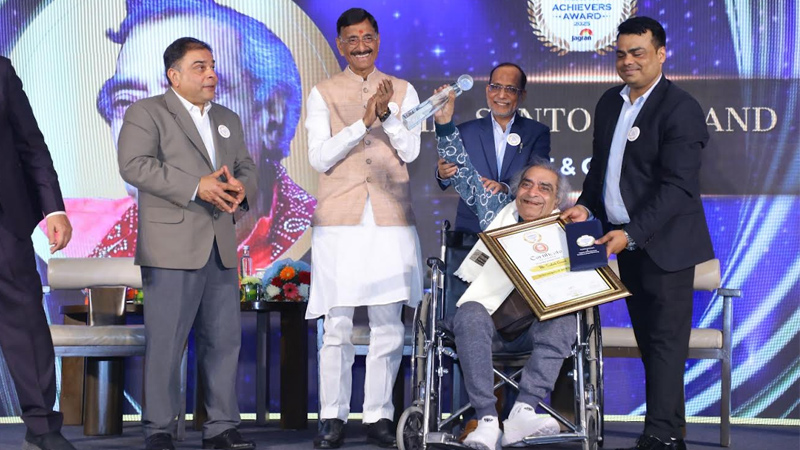
NEW DELHI: Hamdard Laboratories gathered a cross-section of India’s achievers in New Delhi on Friday, handing out the Hakeem Abdul Hameed Excellence Awards to figures who have left their mark across healthcare, education, sport, public service and the arts.
The ceremony, attended by minister of state for defence Sanjay Seth and senior officials from the ministry of Ayush, celebrated individuals whose work blends professional success with a sense of public purpose. It was as much a roll call of achievement as it was a reminder that influence is not measured only in profits or podiums, but in people reached and lives improved.
Among the headline awardees was Alakh Pandey, founder and chief executive of PhysicsWallah, recognised for turning affordable digital learning into a mass movement. On the sporting front, Arjuna Awardee and kabaddi player Sakshi Puniya was honoured for her contribution to the game and for pushing women’s participation onto bigger stages.
The cultural spotlight fell on veteran lyricist and poet Santosh Anand, whose songs have echoed across generations of Hindi cinema. At 97, Anand accepted the honour with characteristic humility, reflecting on a life shaped by perseverance and hope.
Healthcare honours spanned both modern and traditional systems. Manoj N. Nesari was recognised for strengthening Ayurveda’s place in national and global health frameworks. Padma shri Mohammed Abdul Waheed was honoured for his research-backed work in Unani medicine, while padma shri Mohsin Wali received recognition for his long-standing contribution to patient-centred care.
Education and social development also featured prominently. Padma shri Zahir Ishaq Kazi was honoured for decades of work in education, while former Meghalaya superintendent of Police T. C. Chacko was recognised for public service. Goonj founder Anshu Gupta received an award for his dignity-centred rural development initiatives, and the Hunar Shakti Foundation was honoured for empowering women and young girls through skill development.
The Lifetime Achievement Award went to former IAS officer Shailaja Chandra for her long career in public healthcare and governance, particularly in the traditional systems under Ayush.
Speaking at the event, Hamdard chairman Abdul Majeed said the awards were a tribute to those who combine excellence with empathy. “These awardees reflect Hakeem Sahib’s belief that healthcare, education and public service must ultimately serve humanity,” he said.
Minister Seth struck a forward-looking note, saying India’s young population gives the country a unique opportunity to become a global destination for learning, health and wellness by 2047.
The ceremony also featured the trailer launch of Unani Ki Kahaani, an upcoming documentary starring actor Jim Sarbh, set to premiere on Discovery on 11 February.
Instituted in memory of Unani scholar and educationist Hakeem Abdul Hameed, the awards have grown into a national platform that celebrates those building a more inclusive and resilient India. For one evening at least, the spotlight was not just on success, but on service with substance.






