iWorld
Twitter, broadcasters & brands: Building a win-win partnership

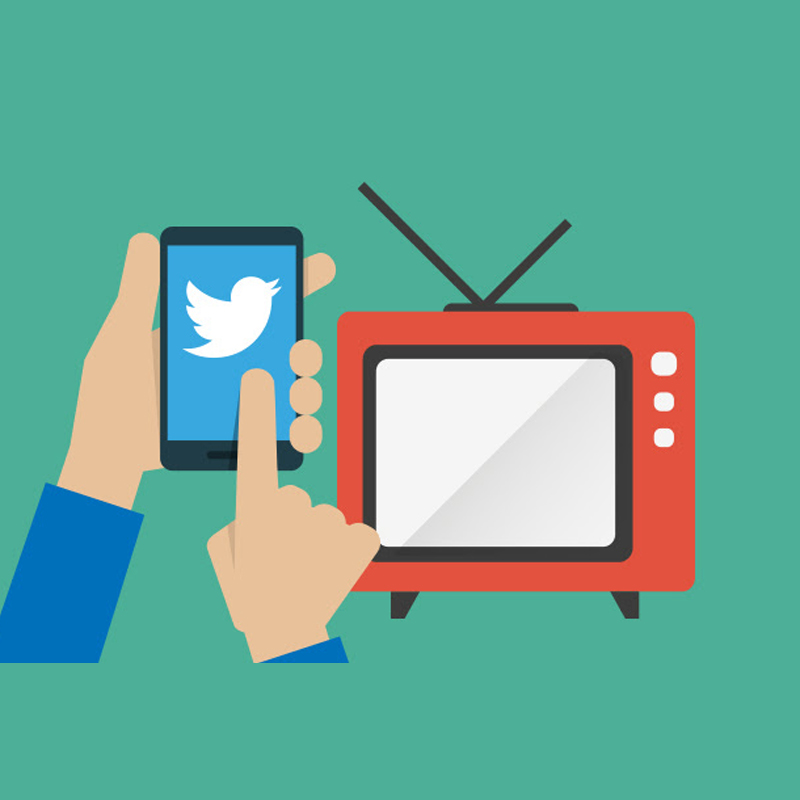
MUMBAI: For some time now, the popularity of Facebook and Twitter has majorly concerned broadcasters and other industry stakeholders for its impact on the viewership ratings. The second screen can distract its audience easily and chip away at the already reduced attention span of this attention deficit hyperactivity disorder (ADHD) generation.
Naturally companies like Twitter are mostly seen as competition, especially now that it is equipped with its own video arm. But if we were to say TV audience’s exposure to social media, and the digital chatter over Twitter is actually a plus for the broadcasters, would anyone agree?
A fine example is the reception that the singing reality show Sa Re Ga Ma Pa got for its finale episode. It notched up record ratings for Zee TV, and the latter says it owes a good part of the success to the role Twitter played.

“We were pleased to partner with Twitter India and set new benchmarks in terms of digital engagement. Twitter’s real-time, conversational capabilities helped audiences connect with the show and experience its world like nothing else can. This collaboration has also helped our contestants and mentors engage better with our viewers,” a Zee Tv spokesperson had earlier shared.
The show had gained over 25 million tweet impressions, establishing itself as the biggest singing reality TV show on the platform in India and Zee Tv’s twitter handle, @ZeeTV gained more than 100K followers in just three months.
“#SaReGaMaPa is a great example of how a TV show can leverage a platform like Twitter to celebrate the talent of a reality show, and to foster collaboration between a TV channel, talent and fans. For the first time, a multitude of voices in the TV ecosystem (TV channel, contestants, judges and fans) came together to provide a complementary experience to the reality TV show. Twitter lit up with more than 300,000 Tweets during this iconic social TV moment, and it brought viewers closer to the show via Tweets, behind-the-scenes and highlight videos,” said Twitter India head of TV partnerships Viral Jani.
In fact the 12 final contestants were given special attention from Twitter team as part of this partnership with Zee TV. “We got them on board the platform and gave them individual training sessions on how to use twitter better, and leverage their stardom with it. We also gave them an idea of how international singing reality stars use twitter both when live and behind the scenes,” Jani explained.
The result was phenomenal. Contestants tweeted twice the times of videos than the @ZeeTV handle
And added 115 per cent more Tweet impressions to @ZeeTV handle through the season (@ZeeTV with 9.5 million impressions), as per the data shared by Twitter India.
Zee TV and Sa Re Ga Ma Pa aren’t the only examples of a successful twitter + TV partnership in India in the recent past.
In July 2015, EPIC TV and Twitter launched a unique innovation for the channel’s new campaign – #EPICat10, where in the broadcaster used the Twitter Alarm letting followers set a reminder for the 10pm shows for the first time. ColorsTV and BiggBoss created massive engagement with #BB9 viewers using native video uploads on Twitter powered by SnappyTV – including sneak peeks, uncensored videos and live tweeting with fun videos, with Twitter being the only external platform showcasing Bigg Boss videos. India Today Television has joined hands with Twitter in an exclusive partnership to conduct Twitter Town Halls that gives an opportunity to followers on Twitter to engage with newsmakers, opinion makers and other eminent personalities. Apart from this Twitter also works in regional markets with other partners such as the Sun Network in the south and ZEEL’s certain regional channels.
Apart from this Star Plus, CNN IBN and IBN7 have regularly used Twitter’s live-streaming app Periscope to engage with audiences. SPNI’s SAB has also collaborated with Twitter for brand as well as several show promotions.
“In fact, for our recent show launches like Khidki and Y.A.R.O Ka Tashan we had collaborated with Twitter at a more comprehensive level. For Khidki, we actively scouted comic content from consumers. We partnered with the micro-blogging site to run a contest titled ‘#Tweetyourfunnystory’ and also did a live Q&A session with the producers of the show JD Majethia and Umesh Shukla on Twitter’s video-streaming app Periscope. This initiative sure got the viewers excited enough to share some of their funniest stories. We received over 12000 plus stories,” shared SAB TV EVP & business head Anooj Kapoor.
For its show, Y.A.R.O Ka Tashan, SAB created a unique Twitter BOT representing the Humanoid – Y.A.R.O, a lead character in its new show. The BOT replicated the characteristics of Y.A.R.O by answering all kind of question thrown at it.
“Adding to this online campaign, we also had live outdoor hoardings in several high-traffic vantage points. Wherein, if someone was around the vicinity and happen to ask a question on Twitter with #SABKaYaro, his/her tweet and the response got displayed on this outdoor medium,” Kapoor said, adding that the broadcaster has attempted several other Twitter centric promotions in the recent past.
The natural question is: did it have any significant impact in the channel or the shows’ popularity?
“While we would be unable to directly measure the growth in ratings or viewership being driven from Twitter or any social medium for that matter, we can certainly say one thing that such collaborations and engagement with viewers on the online platform does drives home more youth and newer audiences for our shows. It also helps us gauge their interest levels for our concepts, opinions, feedback and these insights together help us deliver better,” Kapoor states frankly.
When it comes finding a direct correlation between twitter engagement and a channel’s viewership ratings global info measurement leader Nielsen and its TV and social media measurement output SocialGuide has the industry covered. In 2013, a study released by data scientists identified Twitter as one of three statistically significant variables (in addition to prior-year rating and advertising spend) to align with TV ratings.
“Increases in Twitter volume correlate to increases in TV ratings for varying age groups, revealing a stronger correlation for younger audiences. Specifically, the study found that for 18-34 year olds, an 8.5% increase in Twitter volume corresponds to a 1% increase in TV ratings for premiere episodes, and a 4.2% increase in Twitter volume corresponds with a 1% increase in ratings for mid-season episodes,” the study read.
Albeit the observation was sampled from 32 million unique people in the US, but similar inferences can be drawn from the study for the Indian market as well, as youth in India aren’t a world removed from the global youth when it comes to their online behaviour especially since the explosion in smartphone penetration in the country in the past three years.
If Tweeting frequently, in greater volume and gaining traction is all there is to it, what advantages does a partnership with Twitter India give any broadcaster that its social management team can’t master on its own?
“It’s true that being an open platform, anyone can launch their own handle and tweet. When we partner a broadcaster for a brand or show promotion, there are a bunch of advantages that come with it. Firstly we invest time with our partners to create creative strategies that they can follow on Twitter, which includes sharing data and global case studies that help them get a better idea. Secondly, we also give our partners access to certain tools and accessories that are helpful in creating inherently viral content,” answers Jani.
This includes access to the Twitter India Blue Room that is a great platform for brands, TV personalities to come and interact live with the twitterati. Twitter Challenger app, the Twitter Q & A app, Twitter Challenger App, Vine and the Twitter Mirror app are some of the other accessories that could be a part of the deal with each broadcaster/ brand.
“Preferred partners are also given access to tool called Snappytv specially created for broadcasters to allow them to beam short videos through its handles picked up from its broadcast feed in real time,” adds Jani. Twitter also gives access to its co-monetised product Amplify available to only select partners, that helps them monetise broadcasters/brands its premium content on Twitter.
Interestingly, not all of these partnerships are commercial contracts per say, but ‘relationship building’ on the social media platform’s part. Most often Twitter only plays the role of a consultant explaining to the broadcaster on how it can use the platform better and more efficiently, without any promised monetary deal. “We work with our partners with the aim of audience growth,” Jani quips.
So is there anything there for Twitter in these ‘philanthropic’ endeavours?
“Globally we have seen the TV viewers tweet while watching TV, and carry the conversation online way after the show is over by following their favourite shows, or stars online. We have identified it as one of the verticals that is good to invest in. it is a mutually beneficial initiative as the broadcasters get to grow their audiences, and we get more traction and our users get good content on the platform,” Jani explains.
And how can broadcasters leverage this to their commercial benefit? A media planner says that the TV-Twitter metrics can be incorporated in the media planning and buying presence to identify shows with high audience engagement.
Brands and advertisers either sponsoring or taking up FCT on a show on television can also work with the broadcasters social teams to forge deeper conversations and engagements about the brand with the series’ audience on Twitter and vice-versa to further build buzz.
“Collaborations such as this can build brand or show love,” says the planner. “And it is this love of a brand which drives transactions and engagement with it.”
Now isn’t that a win-win situation?
(With inputs from Sonam Saini )





eNews
How short, addictive story videos quietly colonised the Indian smartphone
A landmark Meta-Ormax study of 2,000 viewers reveals a format that is growing fast, paying slowly and consumed almost entirely in secret

CALIFORNIA, MUMBAI: India has a new entertainment habit, and it arrived without anyone really noticing. Micro dramas, those short, cliffhanger-driven episodic stories built for the smartphone screen, have quietly embedded themselves into the daily routines of millions of Indians, discovered not by design but by algorithmic accident, watched not in living rooms but in bedrooms, on commutes and in the five minutes before sleep.
That, in essence, is the finding of a sweeping new audience study released by Meta and media insights firm Ormax Media at Meta’s inaugural Marketing Summit: Micro-Drama Edition. Titled “Micro Dramas: The India Story” and based on 2,000 personal interviews and 50 depth interviews conducted between November 2025 and January 2026 across 14 states, it is the most comprehensive study of the category in India to date, and its findings are striking.
Sixty-five per cent of viewers discovered micro dramas within the last year. Of those, 89 per cent stumbled upon the format through social media feeds, primarily Instagram and Facebook, without ever searching for it. The algorithm did the heavy lifting. Discovery, as the report puts it bluntly, is algorithm-led, not intent-led.
The typical viewer journey begins with accidental exposure while scrolling, moves through a cliffhanger-driven incompletion hook that makes stopping feel unfinished, and is reinforced by algorithmic repetition until habitual consumption sets in. Only then, when a platform asks for an app download or a payment, does the viewer pause. Trust, not content quality, determines what happens next, and many simply return to the free feed rather than pay. It is a funnel with a wide mouth and a narrow neck.
The numbers on consumption tell their own story. Viewers spend a median of 3.5 hours per week watching micro dramas, spread across seven to eight sessions of roughly 30 minutes each, peaking sharply between 8pm and midnight. Daytime viewing is snackable and low-commitment, squeezed into morning commutes, work breaks and coffee pauses. Night-time is where the format truly lives: private, uninterrupted and, for many viewers, socially invisible. Ninety per cent watch alone, compared to just 43 per cent for long-form OTT content. Half the audience watches during their commute, well above the 37 per cent figure for streaming platforms, a direct reflection of the format’s low time investment advantage.
The audience itself breaks into three segments. Incidental viewers, comprising 39 per cent of the total, are passive consumers who stumble in and rarely seek content actively. Intent-building viewers, the largest group at 43 per cent, are beginning to form habits and seek out episodes but remain cautious. High-intent viewers, just 18 per cent, are the ones who download apps, tolerate ads and occasionally pay: skewing male, younger and urban.
What audiences want from the content is revealing. The top three genres are romance at 72 per cent, family drama at 64 per cent and comedy at 63 per cent, precisely the same top three as Hindi general entertainment television. The format rewards emotional familiarity over complexity. Romance in particular thrives because it demands low cognitive investment, needs no elaborate world-building and plays naturally into the private, pre-sleep viewing window where inhibitions lower and emotional intimacy feels safe.
The most-recalled shows, led by Kuku TV titles such as The Lady Boss Returns, The Billionaire Husband and Kiss My Luck, share a common narrative DNA: rich-poor conflict, hidden identities, power imbalances, melodrama and cliffhangers that make stopping feel physically uncomfortable. Predictability, the research warns, is fatal. Each episode must re-earn attention from scratch.
The terminology question is telling. Despite the industry’s embrace of the phrase “micro drama,” viewers have not adopted it. They call the content “short story videos,” “short dramas,” “reels with stories” or simply “serials.” One respondent from Chennai said bluntly that “micro sounds like a scientific word.” The category is at the stage that OTT occupied in 2019 and podcasts in the same year: widely consumed, poorly named and not yet crystallised in the public imagination.
Platform awareness remains alarmingly thin. Only three platforms, Kuku TV at 78 per cent, Story TV at 46 per cent and Quick TV at 28 per cent, have crossed the 20 per cent awareness threshold. The rest languish in single digits. This creates a trust deficit that directly throttles monetisation: viewers who cannot remember which app they used are hardly primed to enter their payment details.
Yet the appetite is clearly there. Sixty-five per cent of viewers watch only Indian content, drawn by the TV-serial familiarity of the storytelling, the comfort of Hindi as a shared language and the sight of actors they half-recognise from decades of television. South languages are rising fast: Tamil, Telugu and Kannada together account for 24 per cent of first-choice viewing. And AI-generated content, still a novelty, has landed better than expected: 47 per cent of viewers call it creative and unique, with only 6 per cent actively rejecting it.
Shweta Bajpai, director, media and entertainment (India) at Meta, called micro drama “a category that is rewriting the rules of Indian entertainment,” adding that the discovery engine being social distinguishes this wave from previous content formats. Shailesh Kapoor, founder and chief executive of Ormax Media, was characteristically measured: the format, he said, is showing “the early signs of becoming a distinct content category” and, given how closely it aligns with natural mobile behaviour, “has the potential to scale very quickly.”
The format’s fundamental mechanics are working. It enters lives quietly, through boredom and a scrolling thumb, and burrows in through incompletion and habit. The challenge now is monetisation: converting a category of highly engaged but deeply anonymous viewers into paying customers who trust the platform enough to hand over their UPI credentials. The story, as any micro-drama writer knows, is only as good as the next cliffhanger. India’s platforms had better have one ready.







