News Broadcasting
TV18 to launch home shopping network, receives funding from SAIF


MUMBAI: Television Eighteen is entering the home shopping network (HSN) space which is already occupied by Subhash Chandra’s Asian Sky Shop and Hinduja’s Shop 24×7.
The company has secured initial funding from SB Asia Infrastructure Fund (SAIF) Partners to launch an integrated HSN. Though TV18 CEO Haresh Chawla refused to divulge the amount, market sources put the investment of the Asian private equity fund at around Rs 30-40 million.
TV18 will be putting up a national “virtual platform” network which “will bring forth products and services that have been evaluated by a team of experts.” According to a company statement, the shopping network “will leverage the TV18 network of five channels (CNBC-TV18, CNN-IBN, Awaaz, Channel 7 and SAW) and six internet properties (moneycontrol.com, ibnlive.com, poweryourtrade.com, commoditiescontrol.com, yatra.in and Jobstreet India). Collectively, the HSN will have a pool of more than 70 million adults to tap into – people who are very loyal to the TV18 brands and are decision makers with the ability to spend.”

The organised shopping market is is estimated to become a $30-35 billion opportunity by 2010. “With a changing socio-economic environment, higher disposable incomes, willingness to spend and availability of cheap credit, the share of organised shopping is all set to increase in the consumer’s wallet. Studies estimate that the spending population is expected to increase from 280 million in 2002 to 686 million in 2010. Nearly 75 million sq.ft. of mall space is estimated to become available in India by 2007,” TV18 said.
However, the ‘spender’ or ‘spending population’ is not easily accessible at a single point. Poor infrastructure, absence of quality locations and complex taxation issues confront sellers, TV18 said. Additional complications arise on account of the mind-boggling availability of choice. With hundreds of brands hitting the shelves every day, making the right choice takes up a significant amount of time of the spender in the transaction process, thus delaying buying decisions.
“TV18 believes that the time is ripe for a shopping enabler that integrates our media offering with a fulfillment capability. With an existing franchise of over 70 million adults that TV18s media properties reach out too, and the potential universe of affluent middle class Indian’s, it is only a matter of time before TV18 attains a dominant position in this space,” said Chawla.
“For the first time, by simply picking up the phone, clicking online, calling on their mobile, or simply ‘sms’ing their requests, people will be able to access and buy products and services that exactly meet their requirements. Our ability to build value and give value back to our viewers is what will differentiate us from the rest”.




News Broadcasting
CNN-News18 to host Fury in the Gulf conclave on West Asia crisis
Three-hour summit to unpack geopolitical fallout and impact on India
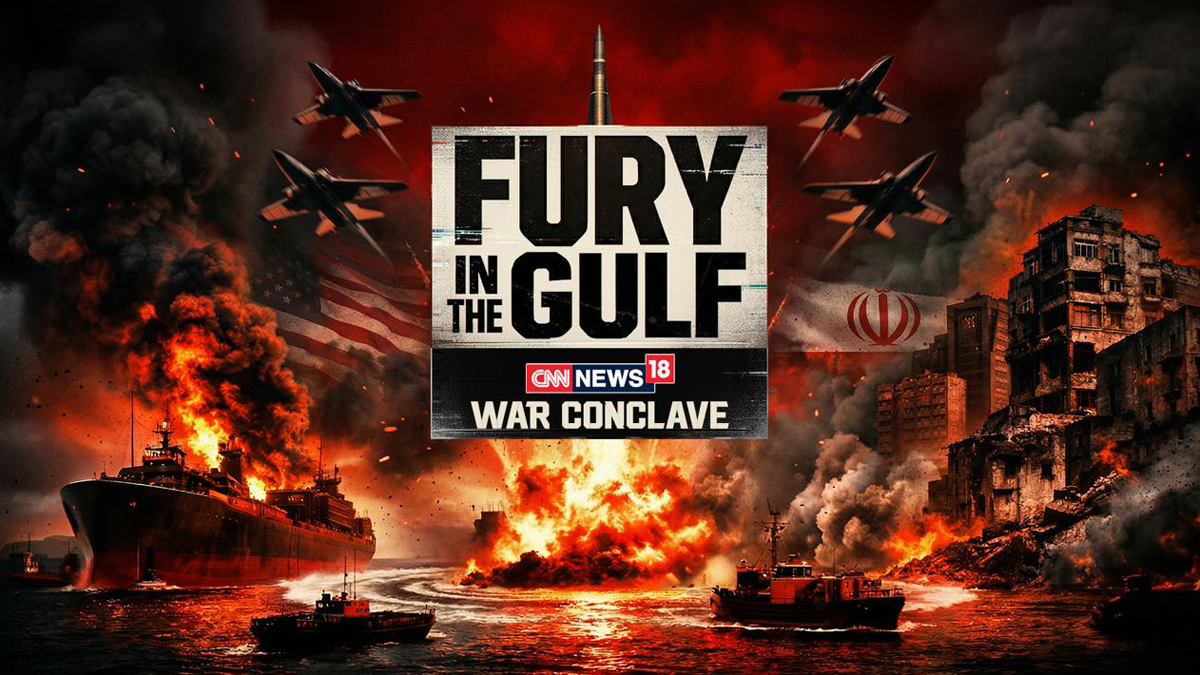
MUMBAI: CNN-News18 is set to host a special three-hour broadcast, Fury in the Gulf – War Conclave, on April 7, aiming to decode the escalating West Asia crisis and its far-reaching implications for India.
Scheduled from 4:00 PM to 7:00 PM, the conclave comes at a time when tensions between Iran and the United States are reshaping global geopolitics and triggering economic uncertainty. With India’s deep energy ties, trade links and large diaspora in the Gulf, the developments carry significant domestic relevance.
Built around the theme ‘Conflict, Consequences, and The Future,’ the programme will feature six curated sessions combining one-on-one interviews and panel discussions. The focus is to cut through the clutter and offer viewers a clearer understanding of the fast-evolving situation.
Key sessions include ‘Diplomacy in Times of War’ featuring Shashi Tharoor, and ‘World After the Iran Conflict’ with voices such as Ram Madhav, Reuven Azar, representatives from the European Union and the Iranian Deputy Envoy. Another session titled ‘Another Dunkirk?’ will bring together K. J. S. Dhillon and Jitin Prasada among others.
CNN-News18 editorial affairs director Rahul Shivshankar said, “In times of war, clarity becomes the most powerful tool. Fury in the Gulf – War Conclave brings together credible voices to address the questions and confusion that arise amid an overwhelming influx of information.”
He added that the initiative is aimed at delivering “facts, perspective, and insight” at a time when misinformation can easily cloud public understanding.
Echoing the sentiment, CNN-News18 CEO– English and business news Smriti Mehra said the conflict marks a defining global moment, with consequences that extend well beyond the region. She noted that the conclave seeks to present the crisis with “depth, nuance and responsibility” so audiences can better grasp its real-world impact.
As geopolitical tensions continue to dominate headlines, the conclave positions itself as an attempt to bring order to the noise, offering viewers a structured, insight-led look at a complex and rapidly shifting global situation.






