News Broadcasting
TV ad volume grew by 21% from 2016 to 2019


MUMBAI: The year 2019 was all about NTO and its impact; the transition period and the black-out threatened to bring down TV viewership. But despite all these, TV viewing minutes in India remained stable at 48.4 trillion in 2019, and in the last four years, television viewership has grown by 38 per cent. However, in the last four years the ad volumes has also grown by 21 per cent from 2016 to 2019 but if compared to last year (2018) 1.64 billion seconds of advertising has fallen to 1.59 billion seconds of advertising in 2019.
The BARC Yearbook 2019 -What India Watches shows that 634 channels generated 48.4 trillion television viewing minutes and 1.59 billion seconds of advertising. The year had many peak viewing moments, while overall viewership and advertising remained largely stable.
BARC India chief executive officer Sunil Lulla says, “Viewership has grown 38 per cent over the last four years, and a total of 48.4 trillion viewing minutes were consumed on television in 2019. Each household watches 5 hours, 11 minutes of television every day and as many as 222 million individuals tune in to primetime television at any given minute. And with over a 100 million homes in India yet to get a TV set, growth continues to be ahead of us.”

He adds, “BARC India now samples from a panel of 185,000 individuals across 44,000 homes and before the year ends, we will be in 55,000 homes. To enable its constituents to understand viewers and their engagement better, BARC India has introduced need-based products and tools that are gaining in popularity.”
In 2016 India recorded 35 trillion TV viewing minutes which grew to 42.3 trilliom in 2017. In 2018, it further grew to 48.1 trillion and remained stable at 48.4 trillion in 2019. In the last four years GEC witnessed 28 per cent growth in TV viewing minutes from 2016 to 2019, movies grew to 47 per cent, news to 46 per cent, kids to 56 per cent, music to 53 per cent; sports to 89 per cent and niche/others to 52 per cent.
The major growth driver for increase in TV viewership was Lok Sabha Election Counting Day (23 May) as it registered 59 billion viewing minutes for the news genre, which contributed to 38 per cent of total TV viewership for the day. In 2019, 26,080 movies were aired on TV. The four south Indian languages (Tamil, Telugu, Kannada and Malayalam) contributed to 48 per cent of these unique movie titles.
The advertising volumes on TV have grown 21 per cent from 2016 to 2019. Increasing share of advertising across most languages is another indicator of the growth of regional television. In 2016 TV generated 1.31 billion seconds of advertising which grew to 1.43 billion seconds in 2017 and 1.64 billion seconds in 2018 but in 2019 it has fallen to 1.59 billion seconds.
There has been an increase in advertising volume across languages. Apart from Hindi, the share of advertising volume has grown in Bangla, Kannada, Malayalam and Punjabi market over the previous year but the share of ad volumes has shrunk in Tamil, Telugu and English markets.






News Broadcasting
CNN-News18 to host Fury in the Gulf conclave on West Asia crisis
Three-hour summit to unpack geopolitical fallout and impact on India
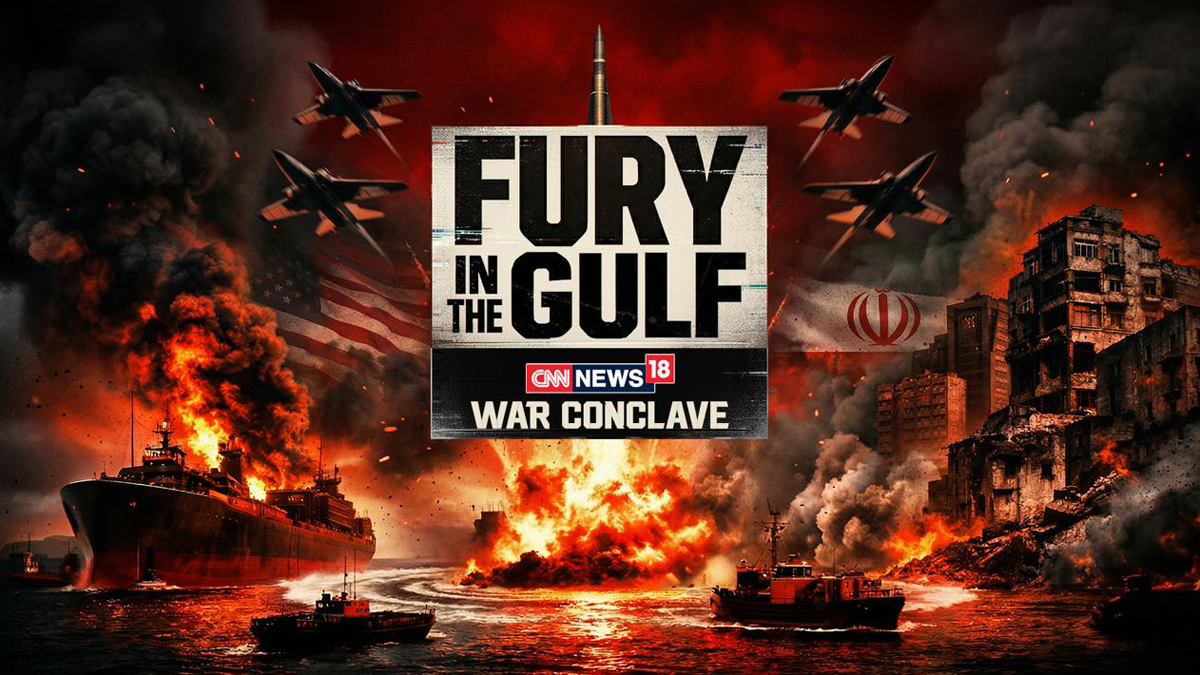
MUMBAI: CNN-News18 is set to host a special three-hour broadcast, Fury in the Gulf – War Conclave, on April 7, aiming to decode the escalating West Asia crisis and its far-reaching implications for India.
Scheduled from 4:00 PM to 7:00 PM, the conclave comes at a time when tensions between Iran and the United States are reshaping global geopolitics and triggering economic uncertainty. With India’s deep energy ties, trade links and large diaspora in the Gulf, the developments carry significant domestic relevance.
Built around the theme ‘Conflict, Consequences, and The Future,’ the programme will feature six curated sessions combining one-on-one interviews and panel discussions. The focus is to cut through the clutter and offer viewers a clearer understanding of the fast-evolving situation.
Key sessions include ‘Diplomacy in Times of War’ featuring Shashi Tharoor, and ‘World After the Iran Conflict’ with voices such as Ram Madhav, Reuven Azar, representatives from the European Union and the Iranian Deputy Envoy. Another session titled ‘Another Dunkirk?’ will bring together K. J. S. Dhillon and Jitin Prasada among others.
CNN-News18 editorial affairs director Rahul Shivshankar said, “In times of war, clarity becomes the most powerful tool. Fury in the Gulf – War Conclave brings together credible voices to address the questions and confusion that arise amid an overwhelming influx of information.”
He added that the initiative is aimed at delivering “facts, perspective, and insight” at a time when misinformation can easily cloud public understanding.
Echoing the sentiment, CNN-News18 CEO– English and business news Smriti Mehra said the conflict marks a defining global moment, with consequences that extend well beyond the region. She noted that the conclave seeks to present the crisis with “depth, nuance and responsibility” so audiences can better grasp its real-world impact.
As geopolitical tensions continue to dominate headlines, the conclave positions itself as an attempt to bring order to the noise, offering viewers a structured, insight-led look at a complex and rapidly shifting global situation.






