I&B Ministry
Tribe and true India backs a global rise for indigenous enterprise

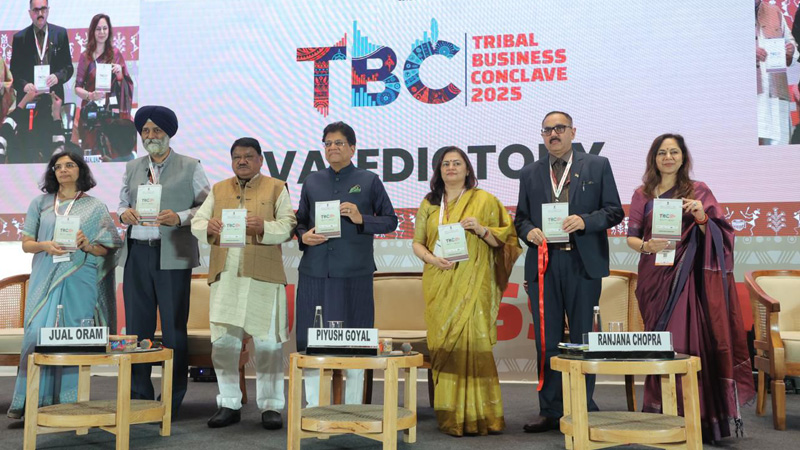
If India needed a sign that its tribal economy is ready to go from forest floors to global stores, the Tribal Business Conclave 2025 delivered it with a flourish. And at the centre of this surge stood union commerce minister Piyush Goyal, declaring that tribal enterprise is not just heritage, it is India’s next big export story.
Addressing a packed hall in New Delhi alongside union tribal affairs minister Jual Oram, Goyal said the Department of Commerce would throw its full weight behind all tribal products with export potential, with support flowing through e-commerce platforms, international warehouses for display and sales, and retail and wholesale trade networks. The announcement landed during Janjatiya Gaurav Varsh, commemorating the 150th birth anniversary of Birsa Munda, making the moment as symbolic as it was strategic.
Goyal revealed that a new scheme is under development to boost export promotion and visibility for tribal crafts, calling both domestic and international markets “immense opportunities waiting to be unlocked.” Quoting Birsa Munda’s iconic words “Our land, our kingdom” Goyal said India must honour that legacy by ensuring prosperity reaches every tribal household.

He noted that India cannot prosper unless its indigenous communities prosper, stressing that upliftment of tribal and remote regions remains a core national priority. Goyal lauded tribal communities for preserving values, art forms and craftsmanship despite decades of hardship, calling their contribution to India’s cultural identity “invaluable”.
Organised by DPIIT, under the Ministry of Commerce and Industry, in collaboration with the Ministry of Tribal Affairs and Ministry of Culture, the conclave attracted extraordinary scale:
● 250 plus tribal enterprises
● 150 exhibitors
● 100 plus tribal start-ups
● A buzzing Roots to Rise pitching platform
● 50 plus speakers across six panel discussions and four masterclasses
Industry bodies also stepped up FICCI as Industry Partner and PRAYOGI as Knowledge Partner placing tribal enterprise firmly at the heart of Viksit Bharat @2047.
Goyal highlighted transformative initiatives already reshaping tribal welfare:
● 3,900 Van Dhan Kendras uplifting 12 lakh tribal members
● 50 per cent budget increase for the Ministry of Tribal Affairs
● 50 lakh particularly vulnerable tribal families benefitting under PM-Janman Yojana, with Rs 24,000 crore disbursed
● 80 per cent fee reduction for GI applications from Rs 5,000 to Rs 1,000
“From Van Dhan to Vyapar Dhan,” Goyal said, must now be India’s rallying cry, urging all stakeholders to help tribal products take their rightful place on global platforms.
The conclave rolled out several marquee announcements:
1. Launch of the GYAN Lab
The Gramya Yuva Arth Niti Lab, developed by IIT Bombay’s Ashank Desai School of Public Policy and PRAYOGI Foundation, is designed as a public-policy innovation playground for tribal and rural enterprise models.
It will pilot:
● a Tribal Entrepreneurship Index
● micro-equity incubation models
● real-time digital and policy interventions
The lab marks a rare triad of academia, industry and government working in lockstep.
2. Tribal Affairs Grand Challenge
A joint initiative of the Ministry of Tribal Affairs, Startup India and DPIIT, inviting start-ups to build high-impact solutions backed by mentorship, visibility and funding opportunities.
3. Roots to Rise: Pitching Session Outcomes
After two screening rounds:
● 115 enterprises selected
● 43 with DPIIT registration
● 10 incubators offering support
● 57 enterprises drew investor interest from 50 plus investors, with commitments totalling over Rs 10 crore
● 33 enterprises wooed major players such as IFCI Venture Capital Funds Ltd. and Arora Venture Partners
These start-ups have already created 1,500 direct jobs and 10,000 plus indirect jobs, impacting 20,000 tribal individuals.
4. Surge on the Government e-Marketplace
The conclave saw 60 plus GeM registrations and 50 plus enquiries for TBC products, signalling a strong appetite from institutional buyers.
5. GI Certificates to honour unique tribal crafts
Designations celebrated crafts including:
● Kannadippaya (Kerala)
● Apatani Textile (Arunachal Pradesh)
● Marthandam Honey (Tamil Nadu)
● Lepcha Tungbuk (Sikkim)
● Bodo Aronai (Assam)
● Ambaji White Marble (Gujarat)
● Bedu and Badri Cow Ghee (Uttarakhand)
Each recognition adds brand value, boosts market visibility and protects indigenous heritage.
The conclave also treated attendees to a cultural showcase with a thematic pavilion and performances under “Tribal Bharat @2047: Sustaining Culture, Scaling Commerce.”
This blend of tradition and trade set the tone for a future where culture isn’t just preserved, it powers enterprise.
By the time tribal entrepreneurs, investors and policy-makers wrapped up the day, the message was loud and clear: India’s tribal talent is not waiting for opportunity, it is ready for lift-off. With structural backing, financial support, global access and a cultural edge, the path from roots to rise is no longer aspirational; it is actionable.
As Goyal put it, this is the decade when “Local Goes Global” and India’s tribal communities won’t just be part of the journey, they will lead it.






I&B Ministry
Digital radio, D2M tech set to reshape broadcasting and public messaging
Govt pushes next-gen delivery while TRAI tightens grip on spam ecosystem
NEW DELHI: India’s broadcasting and telecom landscape is undergoing a quiet but significant upgrade, with digital radio and Direct-to-Mobile (D2M) technologies emerging as powerful tools for mass communication, while regulators step up efforts to tackle spam calls.
According to the Ministry of Information and Broadcasting, digital radio and D2M are poised to transform how content reaches audiences by making more efficient use of spectrum. In simple terms, multiple channels can now be delivered over a single frequency, opening the door to a wider range of free-to-air content.
D2M technology takes this a step further by enabling video, audio and data to be broadcast directly to mobile handsets without relying on SIM cards or mobile data. The result is a resilient and cost-effective data pipe that can deliver everything from entertainment and education to critical emergency alerts, even in low-connectivity scenarios.
At the same time, the Telecom Regulatory Authority of India is tightening its grip on unsolicited commercial communication, better known as spam calls. The regulator has deployed a distributed ledger technology platform to bring transparency and accountability into the system.
Through this blockchain-based setup, consumers can register their preferences on receiving promotional messages, while businesses and telemarketers must also sign up and operate within defined rules. The platform also includes a complaint mechanism that allows users to report spam, with complaints shared across telecom operators for coordinated action.
The government’s broader push is being supported by infrastructure upgrades under the Broadcasting Infrastructure and Network Development scheme. Implemented through Prasar Bharati, the initiative focuses on modernising networks such as Akashvani and Doordarshan, including digitisation and adoption of next-generation broadcast equipment.
In a written reply in the Lok Sabha, Ministry of Information and Broadcasting minister of state for information and broadcasting L. Murugan said these steps are part of a larger effort to promote emerging technologies and strengthen the country’s broadcasting backbone. The response came to a query raised by member of Parliament Rao Rajendra Singh.
Together, these developments point to a dual-track strategy: expanding access to reliable, low-cost content while cleaning up the communication ecosystem. As digital pipes get smarter and spam filters sharper, India’s airwaves may soon feel a lot less noisy and far more useful.






