News Headline
TRAI tariff order’s impact on regional channels and ad rates

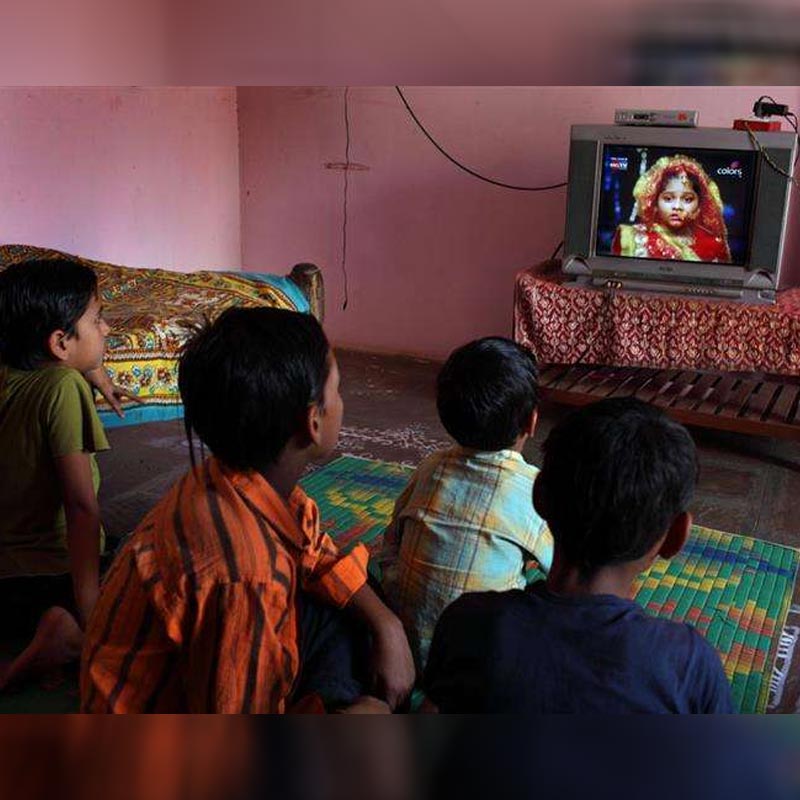
MUMBAI: India’s regional broadcast sector has taken off in the last few years. With more investment pouring in, the quality of content and production has risen up a notch. While the regional language market has a lot going for it at the moment, the Telecom Regulatory Authority of India's (TRAI) new tariff order seems to have the potential to upset the apple cart. Industry experts believe that paid regional channels are likely to experience a dip in viewership compared to FTA channels with the implementation of the new framework.
According to BARC India data, regional language viewership has witnessed a massive spike over the last two years. Bhojpuri saw a 134 per cent increase, followed by 125 per cent for Assamese, 89 per cent for Oriya, 81 per cent for Gujarati, 68 per cent for Marathi, 55 per cent for Bengali, 52 per cent for Kannada, 34 per cent for Punjabi, 23 per cent for Hindi, 18 per cent for Telugu and 17 per cent for Tamil.
Regional channels of late have been the bastions of growth not only in terms of viewership but also advertising revenue. Not only regional GECs, but regional movies, music and news have experienced growth in terms of ad volumes. However, niche and paid regional channels could be in for a bumpy ride going forward.

Highlighting the impact of the new regime on these regional channels, Dishum Broadcasting COO Partha Dey said that if the carriage deals are in place with distribution platform operators (DPOs), viewership of regional FTA channels will not be affected.
“However, this may not hold true for long tail regional pay channels. Nevertheless, we may notice slight turbulence till the time TRAI guidelines are fully implemented,” he pointed out.
Stratagem Media founder director Sundeep Nagpal voiced a similar view. Nagpal explained that the new tariff order is likely to adversely impact the penetration of regional channels in genres like music and movies as well as secondary GECs. However, the primary GECs or news channels that are not FTA may not be affected.
Enterr10 Fakt Marathi MD Shirish Pattanshetty felt that the viewership in the regional cluster is likely to grow. He mentioned that multi system operators (MSOs) and local cable operators (LCOs) that are not educating the customers, and are trying to put together different packs by adding regional channels in it, which is against the new regime.
“If they are FTA and are included as part of the base pack, they are bound to grow so the essence of distribution and content will play a good game, but for the pay, they are bound to take a haircut. The customer should be given a choice of what he wants to pick and pay and then educate him on costing and give him options,” he stated.
Meanwhile, Carat India SVP Mayank Bhatnagar said that the overall viewership and reach will get impacted but broadcasters will play it safe by having their most stable channels in the mix to minimise the risk. According to him, there is also merit to increase focus on digital to mitigate the risk.
With the new regime, there will be a re-estimation of brand and content value, said HBC founder Harish Bijoor. According to him, consumers will contemplate the value of these channels. If two channels are regionally similar, they are likely to pick one.
“So, a fair number of people have to take the decision about the entertainment repertoire as it need not include all these channels.”
The television industry in India has grown from Rs 58,800 crore in 2016-17 to Rs 66, 0007 crore in 2017-18 as per FICCI-EY Report 2018, thereby registering a growth of 12.24 per cent. The number of SD pay TV channels also saw a rise in the number from 147 in 2010 to 213 in 2018.
Dey and Pattanshetty believe that the reach of regional FTA channels is bound to grow subsequently leading to an increase in ad rates, with regional segment advertising rates likely to go up in all regional language markets.
Nagpal, on the other hand, said that it wouldn’t be significant in the short run. However, it could lead to an increase of up to 25 per cent in some cases, if there’s a shakeup.
According to Bhatnagar, this will give an opportunity to the planners to rationalise the rates across channels.
“Only those channels will be able to hold rates which add significant value and improve the effectiveness of the campaigns. Long tail channels will get impacted the most,” he highlighted.
Hindi remains the preferred language of consumption for TV audiences in India, but growth is led by regional content. Rural India, at 99 million TV homes is 17 per cent higher than urban India but is only 52 per cent penetrated.
When asked whether consumers from the rural areas would be willing to pay for the regional channels, Dey said that as per TRAI mandate of 100 FTA channels in base pack a rural or price-conscious consumer will first choose all FTA channels of the region and then go for top two or three regional pay channels and may forgo rest of regional pay channels, as FTA will suffice their consumption.
Similarly, Nagpal said, “Relatively speaking, rural penetration is likely to suffer more than the urban penetration, where the monthly subscription packages that will be developed by LCOs and MSOs, are likely to be even more attractive.”
Pattanshetty said that the rural audience might buy some of these channels but not all them. They will eliminate the ones that are not relevant to them. Furthermore, according to Bhatnagar, subscription rate will differ from region to region, given varied distribution and broadcast landscapes. Bijoor added that these rural homes are restricted as there is just one person in the whole family to decide as to which channel to watch and hence there will be a major impact on that front too.
Stakeholders of the broadcast sector are hoping for some clear trends to emerge from the implementation of the new tariff order. While its no longer business as usual for most broadcasters, they will have to pay special focus to the developments in the regional language markets after the dust settles in the next few months.





NEW DELHI: Hamdard Laboratories gathered a cross-section of India’s achievers in New Delhi on Friday, handing out the Hakeem Abdul Hameed Excellence Awards to figures who have left their mark across healthcare, education, sport, public service and the arts.
The ceremony, attended by minister of state for defence Sanjay Seth and senior officials from the ministry of Ayush, celebrated individuals whose work blends professional success with a sense of public purpose. It was as much a roll call of achievement as it was a reminder that influence is not measured only in profits or podiums, but in people reached and lives improved.
Among the headline awardees was Alakh Pandey, founder and chief executive of PhysicsWallah, recognised for turning affordable digital learning into a mass movement. On the sporting front, Arjuna Awardee and kabaddi player Sakshi Puniya was honoured for her contribution to the game and for pushing women’s participation onto bigger stages.
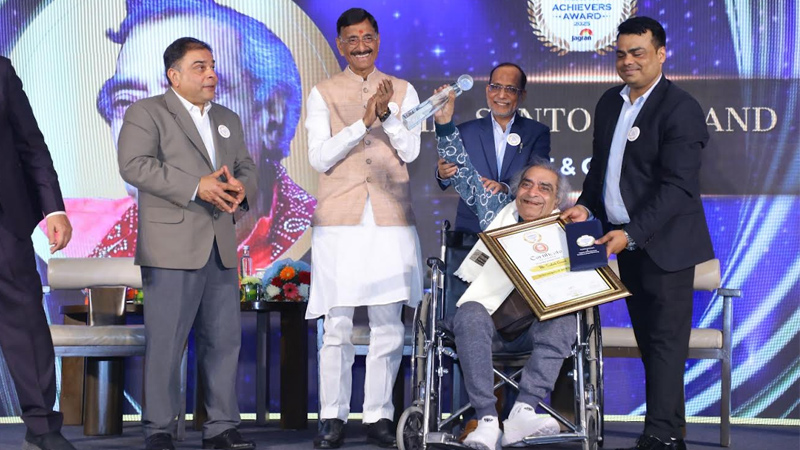
The cultural spotlight fell on veteran lyricist and poet Santosh Anand, whose songs have echoed across generations of Hindi cinema. At 97, Anand accepted the honour with characteristic humility, reflecting on a life shaped by perseverance and hope.
Healthcare honours spanned both modern and traditional systems. Manoj N. Nesari was recognised for strengthening Ayurveda’s place in national and global health frameworks. Padma shri Mohammed Abdul Waheed was honoured for his research-backed work in Unani medicine, while padma shri Mohsin Wali received recognition for his long-standing contribution to patient-centred care.
Education and social development also featured prominently. Padma shri Zahir Ishaq Kazi was honoured for decades of work in education, while former Meghalaya superintendent of Police T. C. Chacko was recognised for public service. Goonj founder Anshu Gupta received an award for his dignity-centred rural development initiatives, and the Hunar Shakti Foundation was honoured for empowering women and young girls through skill development.
The Lifetime Achievement Award went to former IAS officer Shailaja Chandra for her long career in public healthcare and governance, particularly in the traditional systems under Ayush.
Speaking at the event, Hamdard chairman Abdul Majeed said the awards were a tribute to those who combine excellence with empathy. “These awardees reflect Hakeem Sahib’s belief that healthcare, education and public service must ultimately serve humanity,” he said.
Minister Seth struck a forward-looking note, saying India’s young population gives the country a unique opportunity to become a global destination for learning, health and wellness by 2047.
The ceremony also featured the trailer launch of Unani Ki Kahaani, an upcoming documentary starring actor Jim Sarbh, set to premiere on Discovery on 11 February.
Instituted in memory of Unani scholar and educationist Hakeem Abdul Hameed, the awards have grown into a national platform that celebrates those building a more inclusive and resilient India. For one evening at least, the spotlight was not just on success, but on service with substance.