News Headline
TRAI tariff order: MSOs welcome its direction

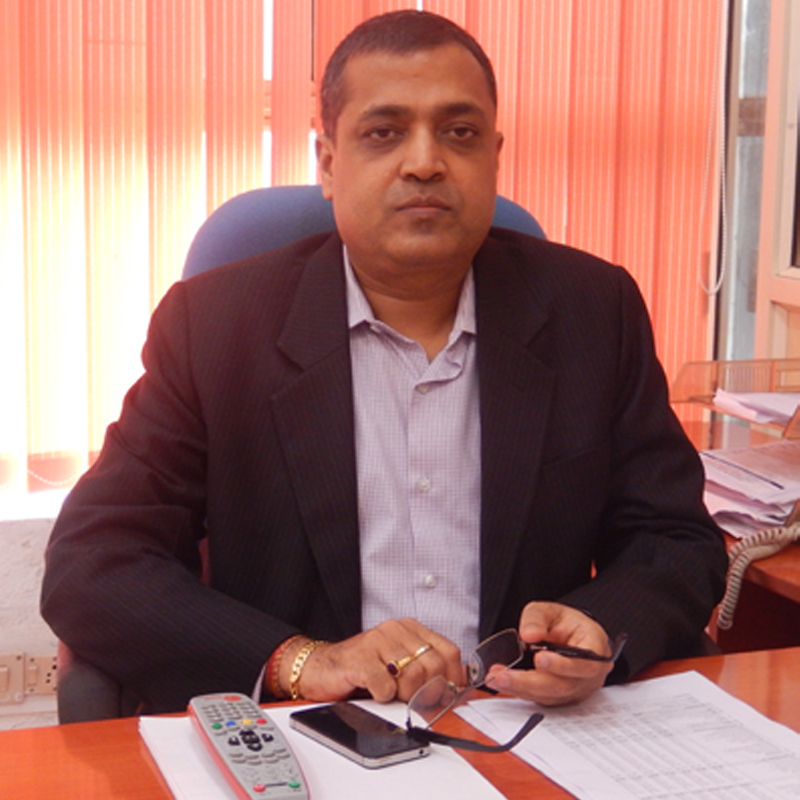
NEW DELHI: At least two multisystem operators (MSOs) have welcomed the broad drift of the Telecom Regulatory Authority of India’s (TRAI’s) Telecommunication (Broadcasting and Cable Services) (Eighth) (Addressable Systems) Tariff Order, 2016. The draft, released on Monday, seeks to bring in transparency to an otherwise disorganized sector.
Indiantelevision.com spoke to a bunch of executives from broadcasting, cable TV, and even the TRAI advisor on the proposed regulation. Most said it was too early to comment as they had not got the time to study it.
S N Sharma, who surprised many earlier this year by returning to the national multi-system operator (MSO) DEN Networks as its chief executive, said “It is a good draft; we welcome it. It brings a lot of transparency and ease, especially in the life of the consumer. We, as an MSO, look for a fair share of revenue, and hope to get the same.” He said he still had to study the draft in full, and would give further comments later.

 |
| S.N.Sharma CEO,DEN Networks Limited |
Regional MSO Ortel Communications President & CEO Bhibhu Prasad Rath, welcoming the draft, said “We believe that this draft regulation, if implemented, will bring in path-breaking changes to the industry structure with a lot of transparency and non-discrimination.”
Rath added: “Currently, there is widespread discrimination in the content deals done by some broadcasters with various DPOs (distribution platform operators). The prices of the same channels or bouquet of channels vary widely from one DPO to another across the country. The new proposed regulation intends to bring in uniformity in the cost structure so that a level-playing field will be created while we all compete in the same market.”
Rath also noted that the other major issue that the regulations attempts to address is the unbundling of channels. “Currently, many broadcasters offer around 80-90% discount / incentives on a bouquet deal as compared to the sum of a la carte prices of the respective channels. This, in my view, is unreasonable and intended to discourage a la carte subscription. The proposed regulation, by capping the bouquet discount at a maximum of 15%, will be a big relief to consumers who want to subscribe to channels on a la carte basis and will encourage DPOs to pass on to the benefit to consumers.”
“Overall, this regulation, in addition to bringing in non-discriminatory and transparent practices in the industry, will go a long way in implementing digitization in its true spirit where “choice” is in the hands of the consumers,” he concluded.
“I think it is a fabulous piece of proposed regulation,” says HITS consultant Castle Media director Vynsley Fernandes. “I think the TRAI has really outdone itself. I can only see the industry opening up and growing from hereon.”
However, National Cable and Telecommunications head and founder of Home Cable Network of Delhi, Vikki Choudhry was the dissenting voice. Said he: “This draft order is still not a cost-based tariff fixation, TRAI was supposed to conduct an exercise according to the Supreme Court and TDSAT orders. This draft tariff is completely anti-consumer. When the present tariff (rates) were coming down by 70 per cent, the regulator has further provisioned an increase of about 45-55 per cent for the Pay TV broadcasters.”
(In May this year, TDSAT had said it thought TRAI “will be well advised to have a fresh look at the various tariff orders in a holistic manner and come out with a comprehensive tariff order in supersession of all the earlier tariff orders.”) Sunil Gupta, advisor to TRAI, responding to this allegation said: “We have protected the interests of the consumer: why should he pay even one extra rupee for a channel he does not want to watch? This draft brings the power of choice to the consumer’s hands. He can choose to have a lower cable TV bill or higher.”
Gupta further added that the new category of premium channels will allow broadcasters to offer specialized channels at higher MRPs – even Rs 100 – if the consumer wants them at this price, thus overall increasing the ARPUs of all those in the value chain.
Gupta also said that the interconnection paper for local cable operators and multi-system operators would come out soon. The entire industry value chain should read this and understand we have protected everyone’s interests – the cable TV operators, MSOs, broadcasters, customers. The ARPUs of the entire industry would go up in the coming months, he said.
Also read:
Tariff Hike Case: SC rejects appeal challenging TDSAT order; asks TRAI to out new tariff






NEW DELHI: Hamdard Laboratories gathered a cross-section of India’s achievers in New Delhi on Friday, handing out the Hakeem Abdul Hameed Excellence Awards to figures who have left their mark across healthcare, education, sport, public service and the arts.
The ceremony, attended by minister of state for defence Sanjay Seth and senior officials from the ministry of Ayush, celebrated individuals whose work blends professional success with a sense of public purpose. It was as much a roll call of achievement as it was a reminder that influence is not measured only in profits or podiums, but in people reached and lives improved.
Among the headline awardees was Alakh Pandey, founder and chief executive of PhysicsWallah, recognised for turning affordable digital learning into a mass movement. On the sporting front, Arjuna Awardee and kabaddi player Sakshi Puniya was honoured for her contribution to the game and for pushing women’s participation onto bigger stages.
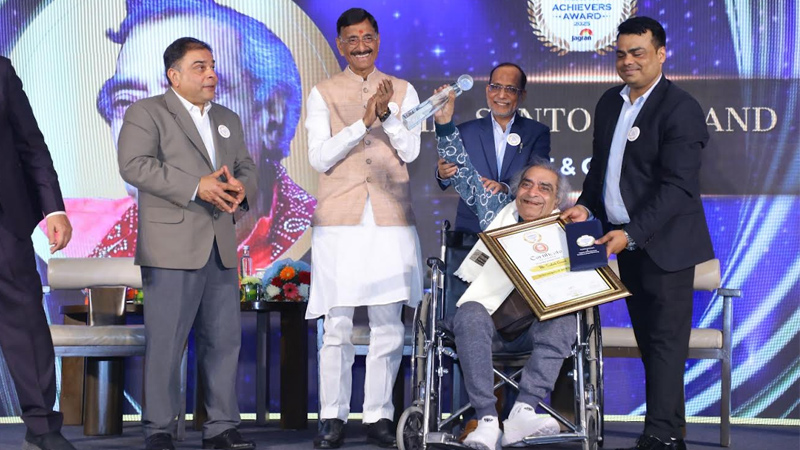
The cultural spotlight fell on veteran lyricist and poet Santosh Anand, whose songs have echoed across generations of Hindi cinema. At 97, Anand accepted the honour with characteristic humility, reflecting on a life shaped by perseverance and hope.
Healthcare honours spanned both modern and traditional systems. Manoj N. Nesari was recognised for strengthening Ayurveda’s place in national and global health frameworks. Padma shri Mohammed Abdul Waheed was honoured for his research-backed work in Unani medicine, while padma shri Mohsin Wali received recognition for his long-standing contribution to patient-centred care.
Education and social development also featured prominently. Padma shri Zahir Ishaq Kazi was honoured for decades of work in education, while former Meghalaya superintendent of Police T. C. Chacko was recognised for public service. Goonj founder Anshu Gupta received an award for his dignity-centred rural development initiatives, and the Hunar Shakti Foundation was honoured for empowering women and young girls through skill development.
The Lifetime Achievement Award went to former IAS officer Shailaja Chandra for her long career in public healthcare and governance, particularly in the traditional systems under Ayush.
Speaking at the event, Hamdard chairman Abdul Majeed said the awards were a tribute to those who combine excellence with empathy. “These awardees reflect Hakeem Sahib’s belief that healthcare, education and public service must ultimately serve humanity,” he said.
Minister Seth struck a forward-looking note, saying India’s young population gives the country a unique opportunity to become a global destination for learning, health and wellness by 2047.
The ceremony also featured the trailer launch of Unani Ki Kahaani, an upcoming documentary starring actor Jim Sarbh, set to premiere on Discovery on 11 February.
Instituted in memory of Unani scholar and educationist Hakeem Abdul Hameed, the awards have grown into a national platform that celebrates those building a more inclusive and resilient India. For one evening at least, the spotlight was not just on success, but on service with substance.






