News Broadcasting
Trai sticks with content to all stance

NEW DELHI: The cable and broadcast regulator, Telecom Regulatory Authority of India, today reiterated an earlier stand that content should not be denied to any platform or delivery mechanism citing exclusivity as it could lead to anti-competition practices. Extending that line of reasoning, Trai has also struck down exclusive deals taking place amongst stakeholders.
In a draft of the inter-connect regulations issued today, Trai said competition in India for delivery of TV channels is not only to be promoted within the cable industry, but also from distributors of TV channels using other media like direct to home (DTH) and headend-in-the-sky.
It is important that all these distribution platforms are promoted so that they provide consumers with choice. It would be very important that at this stage, vertical integration does not impede competition.

Vertically integrated broadcaster and distribution network operators would, in the absence of strong regulation, have the tendency to deny popular content to competing networks or to discriminate against them, the draft regulations stated, making it clear that the ‘must-provide’ clause is an important facet of this set of rules.
Exclusivity had not been a feature of Indias fragmented cable television market and the entry of newer technologies like DTH should not change this, Trai has in effect said, though this has been hotly contested by some broadcasters like Star, Sony and Discovery.
The regulator has given industry stakeholders till 5 November to offer feedback on the draft regulation.
However, a Trai official made it clear that the feedback should not harp on scrapping the ‘must provide’ (making available TV channels to all platforms on a non-discriminatory basis) clause. We are seeking feedback on the modalities of interconnect agreement and not why certain checks and balances have been put in place, the official explained.
Why issue a draft? According to Trai, subsequent to the release of their recommendations on 1 October, on various issues, suggestions have been made on the inter-connection regulation. Since regulation for non-discriminatory access of TV channels is a major step in the reforms of distribution of TV channels and this regulation will have far reaching and long term impact on the growth of the industry, it was decided that before finalising the regulation it would be appropriate that all stake holders were given an
opportunity to comment on the draft regulation, Trai said.
Though the regulator has made some significant changes in the draft regulation (like distinguishing between agent or intermediary and distributors of TV channels), industry people said some other important issues could have been better clarified and explained.
For example, what happens to the various minimum guarantee deals that broadcasters had struck with MSOs and cable operators to beat the continuing price freeze on subscription rates?
Though the draft inter-connect regulation admits volume discounts can be given, it fails to clarify who is to define related factors like technology of the distribution of TV channels and geographical proximity.




News Broadcasting
Rising Bharat Summit 2026 spotlights India’s global ascent
PM Modi keynotes two-day event with ministers, diplomats and icons in New Delhi.
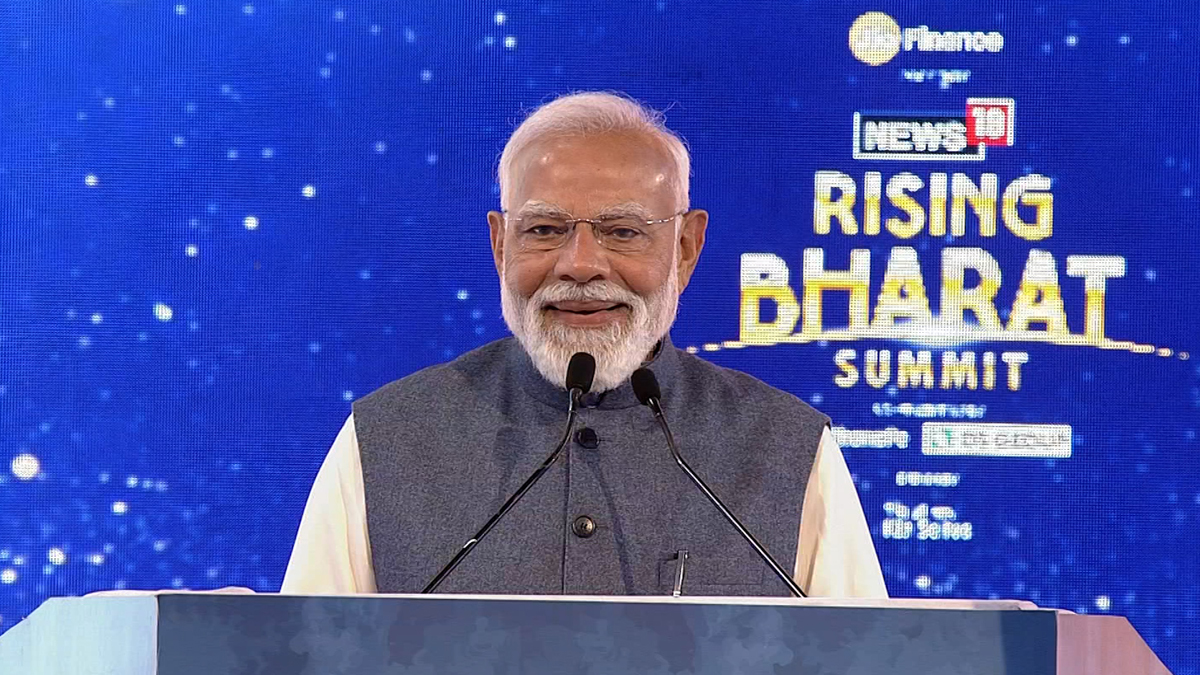
MUMBAI: India didn’t just host a summit, it threw a coming-out party for a nation ready to own the global stage. The News18 Rising Bharat Summit 2026, held on 27–28 February in New Delhi, emerged as a high-octane platform for ideas, vision and strategic dialogue, uniting national leadership, global policymakers, industry titans, defence strategists and cultural icons under the theme “Strength Within”.
Prime minister Narendra Modi set the tone with a keynote that framed India’s resurgence as a reclaiming of lost potential built over generations. “In previous industrial revolutions, India and the Global South were merely followers,” he said. “But in the era of Artificial Intelligence, India is a partner in decisions and shaping them.” He highlighted the country’s thriving AI startup ecosystem and the recent AI Impact Summit attended by over 100 nations.
Union minister Piyush Goyal (Commerce & Industry) stressed India’s readiness to scale exports and deepen manufacturing, while Ashwini Vaishnaw (Railways, I&B, Electronics & IT) positioned technology and infrastructure as twin engines of growth, especially in AI and digital trust. Jyotiraditya Scindia (Communications & North East Development) revealed India’s ambition to lead in 6G through the Bharat 6G Alliance and partnerships with over 30 countries.
Global voices added depth: former Singapore Foreign Minister George Yeo called India’s development “self-sustaining” and strategically vital; ex-UK Chief of Defence Staff General Sir Nick Carter asserted India deserves a seat at the great powers’ table; and former US Commerce Secretary Carlos M. Gutierrez joined ambassadors from Norway, Germany and Sweden in discussions on geopolitical realignment, sustainability and defence preparedness.
Other speakers included veteran investor Ramesh Damani, World Gold Council CEO David Tait, Vianai Systems founder Dr Vishal Sikka, DeepTech Bharat Foundation co-founder Shashi Shekhar Vempati, defence experts Rajesh Kumar Singh, Sunil Ambekar, Patrick McGee, Tom Cooper and Adrian Fontanellaz, plus cultural and sporting icons Kangana Ranaut, Saina Nehwal, PR Sreejesh, Mohammed Shami, Yuzvendra Chahal, Mithali Raj, Anil Kapoor and Yami Gautam.
The summit was supported by Jio Financial Services (Presenting Partner), Phonepe and DS Group (Co-Presenting Partners), Pernod Ricard India and Kia Seltos (Powered By & Driven By), state governments of Uttar Pradesh, Chhattisgarh and Uttarakhand (State Partners), and associate partners including NSE, M3M Foundation and Reliance Industries.
Broadcast live across News18 Network, CNBC-TV18 and CNBC Awaaz, the event reinforced India’s image as a confident democracy and emerging global power proving that when strength comes from within, the world can’t help but watch.