News Headline
TRAI seeks better accessibility for persons with disabilities


MUMBAI: The Telecom Regulatory Authority of India (TRAI) has turned the spotlight on one of India’s ignored sections of the society–persons with disabilities (PwD). The regulator is prodding companies to make information and communication technology more accessible to differently abled people. It notes that such people are unable to use the services either because they lack the necessary accessibility features or are incompatible for usage by them.
The TRAI has released a consultation paper seeking the broadcast sector’s views on identifying and eradicating areas that are pain points for them and where policies are required to be frame so that PwDs don’t feel discriminated. Aids and assistive devices have been made for them but a similar change in services and content is yet to take place. The TRAI states that the law must also consider the various segments within PwDs.
From 2.13 per cent of the population in 2001, the number of PwDs in India grew to 2.21 per cent, which is 2.68 crore of the total. The consultation paper points out that though set-top boxes (STBs) have been made accessible to them, there is a lack of content that can justify its usage. Certain additions need to be made for the visually impaired such that they can access STBs via audio. The functions they need to access without vision include channel/programme selection, display of programme information, setup options, closed captioning control and display options, video description control, current configuration information, playback controls, and input source selection.

Similarly, people with visual impairment cannot see screens and find it difficult to navigate the keypad and menu of a TV remote. Buttons on a remote are also not designed while keeping in mind people who are unable to use their limbs or flex their fingers. Special measures, such as giving captions for those who can’t hear and audio descriptions for the blind, need to be taken.
One section of the Rights of Persons with Disabilities (RPWD) Act 2016 states that government and local authorities must work to ensure that those with hearing impairment can enjoy TV content via subtitles or sign language. The Accessible India campaign aims to ensure that at least 25 per cent of TV shows on government channels are suited for PwDs.
The TRAI suggests actions such as creating well-designed remote controls with legible buttons, a wireless connection between a television and the viewer’s hearing aid as ways to help them.
India’s corporate social responsibility (CSR) laws have a provision to help PwDs. Broadcast companies that are required to undertake CSR have a fine way to spend the minimum requirement of at least 2 per cent of the average net profits in the immediate three preceding financial years. This can include developing applications, devices and services for their benefit.
The US FCC mandates that devices used for watching TV must be accessible to PwDs and a similar case is for the UK as well.
Also read:
Trai paper seeks to streamline uplinking, downlinking norms
TRAI’s final recommendations on net neutrality likely by September
TRAI open house to discuss ease of doing broadcast biz







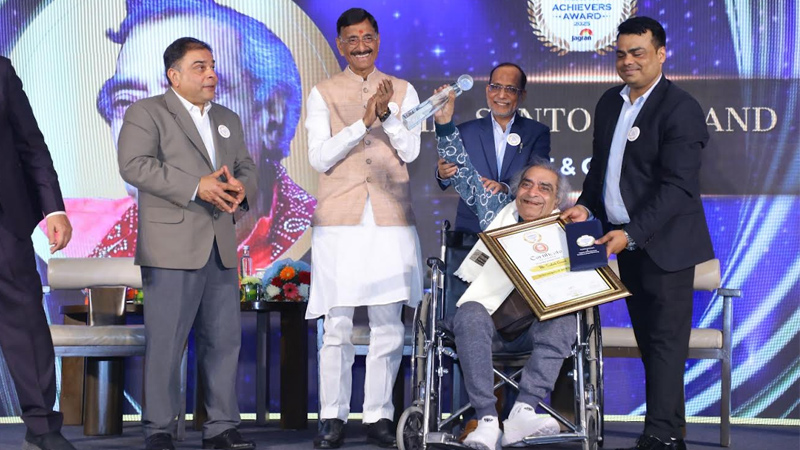
NEW DELHI: Hamdard Laboratories gathered a cross-section of India’s achievers in New Delhi on Friday, handing out the Hakeem Abdul Hameed Excellence Awards to figures who have left their mark across healthcare, education, sport, public service and the arts.
The ceremony, attended by minister of state for defence Sanjay Seth and senior officials from the ministry of Ayush, celebrated individuals whose work blends professional success with a sense of public purpose. It was as much a roll call of achievement as it was a reminder that influence is not measured only in profits or podiums, but in people reached and lives improved.
Among the headline awardees was Alakh Pandey, founder and chief executive of PhysicsWallah, recognised for turning affordable digital learning into a mass movement. On the sporting front, Arjuna Awardee and kabaddi player Sakshi Puniya was honoured for her contribution to the game and for pushing women’s participation onto bigger stages.
The cultural spotlight fell on veteran lyricist and poet Santosh Anand, whose songs have echoed across generations of Hindi cinema. At 97, Anand accepted the honour with characteristic humility, reflecting on a life shaped by perseverance and hope.
Healthcare honours spanned both modern and traditional systems. Manoj N. Nesari was recognised for strengthening Ayurveda’s place in national and global health frameworks. Padma shri Mohammed Abdul Waheed was honoured for his research-backed work in Unani medicine, while padma shri Mohsin Wali received recognition for his long-standing contribution to patient-centred care.
Education and social development also featured prominently. Padma shri Zahir Ishaq Kazi was honoured for decades of work in education, while former Meghalaya superintendent of Police T. C. Chacko was recognised for public service. Goonj founder Anshu Gupta received an award for his dignity-centred rural development initiatives, and the Hunar Shakti Foundation was honoured for empowering women and young girls through skill development.
The Lifetime Achievement Award went to former IAS officer Shailaja Chandra for her long career in public healthcare and governance, particularly in the traditional systems under Ayush.
Speaking at the event, Hamdard chairman Abdul Majeed said the awards were a tribute to those who combine excellence with empathy. “These awardees reflect Hakeem Sahib’s belief that healthcare, education and public service must ultimately serve humanity,” he said.
Minister Seth struck a forward-looking note, saying India’s young population gives the country a unique opportunity to become a global destination for learning, health and wellness by 2047.
The ceremony also featured the trailer launch of Unani Ki Kahaani, an upcoming documentary starring actor Jim Sarbh, set to premiere on Discovery on 11 February.
Instituted in memory of Unani scholar and educationist Hakeem Abdul Hameed, the awards have grown into a national platform that celebrates those building a more inclusive and resilient India. For one evening at least, the spotlight was not just on success, but on service with substance.






