News Broadcasting
Trai poised to finish CAS-related work; price fixing of pay & FTA channels next on the agenda


NEW DELHI: Telecom Regulatory Authority of India (Trai) is close to fixing prices of pay and free to air (FTA) channels, which will complete part of the formalities for rollout of addressability from 1 January 2007.
According to sources in the regulatory body, which oversees the broadcast and telecom sectors, over the next few days more directives are likely to come on pricing of channels in a conditional access system (CAS) regime.
The sources said that most major bouquets and TV channels have submitted a formula for pricing of channels for a regime when pay channels will have to go through a set top box on a mandatory basis.

“Networks like Star and bouquets like Zee Turner and (Discovery-Sony) One Alliance are there with prices of individual channels,” a Trai source said when asked whether a la carte prices of TV channels have been submitted to the regulator or not.
CAS is scheduled to be rolled out in the south zones of Kolkata, Delhi and Mumbai from midnight of 31 December 2006, as per a Delhi court-mandated understanding that the government has reached with the broadcast industry.
Trai sources said that over the weekend the regulator is first likely to fix the price of free to air channels, which will form the basic tier in a CAS regime, and then follow it up with pricing of pay channels.
Trai had asked various pay TV channels to submit a la carte prices instead of bouquet pricing, which was being pushed vigorously initially by a section of broadcasters.
The regulator had also clarified that if the pricing of a pay TV channel in a bouquet seems unreasonable or on the higher side compared to other siblings, it will then fix a price, which will be valid for a year.
What is not clear at the moment is whether Trai will okay individual prices of pay TV channels in a bouquet or go in for genre-wise pricing like bunching all movie channels across the spectrum, for example, and then fixing their individual prices.
It is also expected that the price of FTA channels in the basic tier is
likely to be more than what was fixed three years back at Rs. 72 (exclusive of taxes).
This time round, cable operators have petitioned to Trai that the basic tier should be priced around Rs. 150 keeping in view the general inflation and increase in other sundry costs like usage of electricity poles in various cities. These charges are given to local power companies as cable ops use electricity poles to string their own cable.
According to the sources in the regulatory body, the whole CAS-related work will have to be finished before month-end.
Over the past few days Trai has come out with directives on quality of service for cable operators and multi-system operators and revenue share formula amongst various industry stakeholders.







News Broadcasting
News18 India launches Command Centre war explainer with Arya
New show shifts from debates to decoding global conflicts and impacts
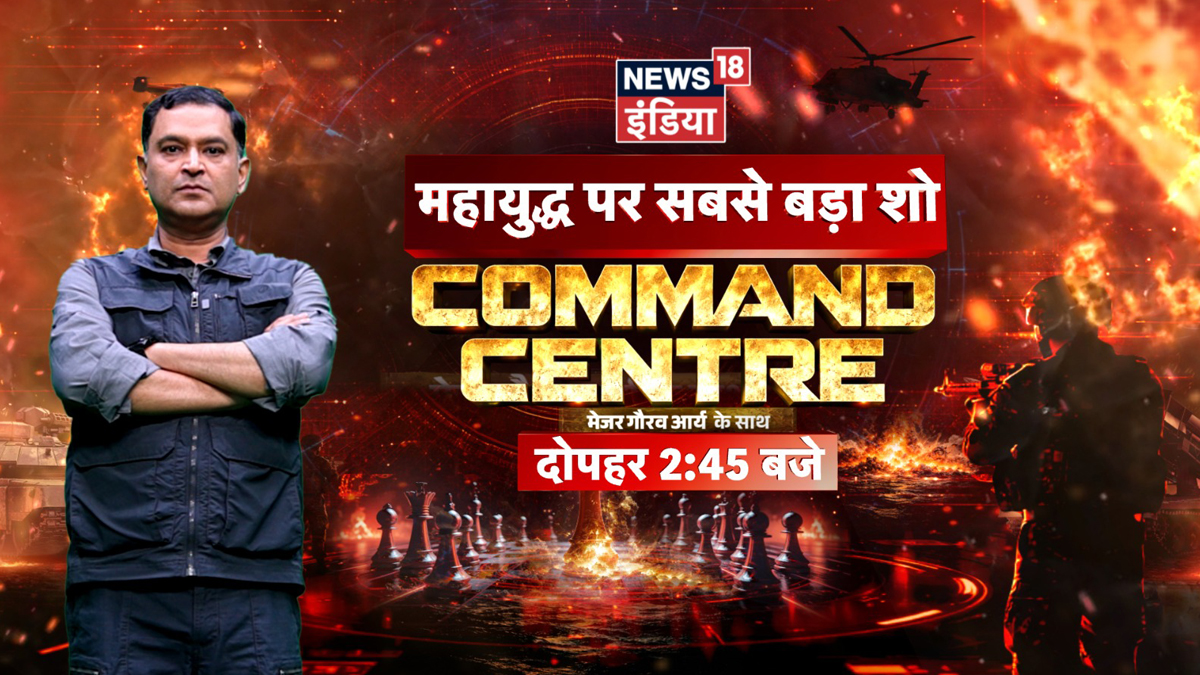
MUMBAI: News18 India has rolled out a new war-focused programme, Command Centre, featuring Gaurav Arya, as it looks to offer viewers a sharper, more grounded take on global conflicts amid rising tensions in West Asia.
Positioned as an “insider war room”, the show moves away from conventional panel debates and instead focuses on explaining military developments, decoding strategy and connecting global events to their everyday impact, from fuel prices to economic shifts.
The format leans heavily on visuals and data. The studio has been designed like a command hub, complete with large LED war maps, real-time graphics and an alert system to track developments as they unfold.
At the centre of it all is Arya, who brings his military background to simplify complex war strategies for viewers. His signature line, “Seedhi baat samjhiye”, anchors the show’s promise of clarity over noise.
News18 India managing editor Jyoti Kamal said, “Command Centre, featuring Major Gaurav Arya is designed to deliver accurate insights and a clear perspective on how evolving conflicts impact everyday life, from household budgets to national security. With expert voices analysing every development in real time, the show goes beyond headlines to decode what’s happening now, what it means, and what could come next.”
Echoing the intent, Gaurav Arya added, “In times of war, confusion is the biggest threat. With News18 India’s Command Centre, we are bringing viewers inside the war room, decoding strategies, tracking every escalation, and explaining, in the simplest terms, what it means for India and for every household. Seedhi baat samjhiye, this is where you understand not just what is happening, but what happens next.”
The weekday show will air in the afternoon slot and will also feature Gaurav Shukla, adding to its editorial depth.
With its mix of analysis, visuals and a clear focus on impact, the show reflects a broader shift in news consumption. Viewers are no longer just watching events unfold, they are looking to understand what those events mean for them.







