News Headline
Trai paper seeks to streamline uplinking, downlinking norms

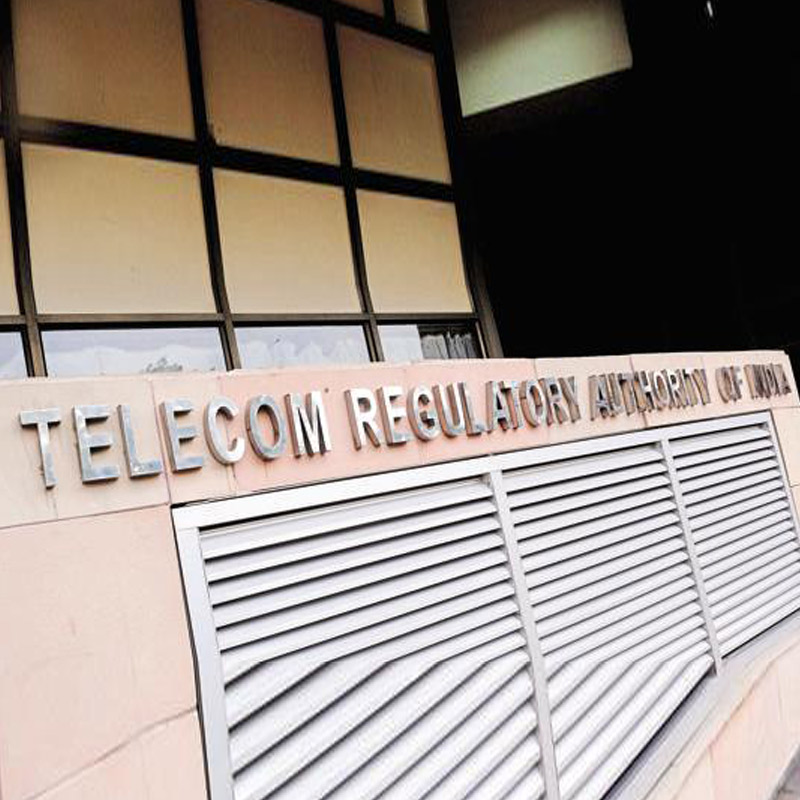
MUMBAI: Following a prod from the ministry of information and broadcasting (MIB) additional secretary Jayashree Mukherjee, the Telecom Regulatory Authority of India (TRAI) on 19 December issued an industry consultation paper which seeks to update guidelines related to uplinking, downlinking, of TV channels and the setting up of teleports.
Mukherjee had sought the TRAI’s recommendations on these issues keeping in mind changes in technology, market scenarios and lessons learnt over the past six years since the guidelines were passed.
In its paper, Trai has asked stakeholders, such as broadcasters, if there was any need to redefine news and current affairs TV channels and non-news and current affairs TV channels more specifically.

Pointing at a possible hike in the net-worth requirement of Rs 5 crore for obtaining a licence for uplinking or downlinking of TV channels, and an increase in process fees for applicants, the paper states that non-serious players were able to obtain licenses, which were either traded or leased to a different entity.
“To ensure that only serious players, who are interested in the business of satellite TV channels, apply for obtaining license for uplinking or downlinking of TV channels, one way could be to increase the entry barriers. The other way could be to eliminate the incentives, which encourage trading and/or sub-leasing of licenses. Further, sub-leasing or trading of channels can also be controlled by putting in place certain checks, which discourage such practices,” the release stated.
The paper argues that an increase in entry barriers for uplinking of TV channels from India may encourage diversion of such business opportunities to outside India. Moreover, Trai has raised the question of auctioning satellite TV channels as a complete package similar to FM radio channels. Or if industry thinks that it is possible to auction individual legs of satellite TV broadcasting – uplinking space spectrum, transponder capacity?
And it has opened up an issue which has been a sore point for the industry: if it is advisable to restrict the use of foreign satellites for satellite TV broadcasting or uplinking of satellite TV channels to be downlinked in India from foreign soil? And also whether it is possible to auction channels without restricting the use of foreign satellites and uplinking of signals of TV channels from foreign soils. The paper appeals to stakeholders if there could be a better way to grant a licence for a TV satellite channel then what is presently followed in order to simply the procedure.
Other issues the TRAI is seeking industry’s input on is whether encryption of all satellite TV signals – whether free to air or pay TV and what timeline should be given to licensed broadcasters to launch their channels from the date of issue of a licence and the penalties that should be levied on them in case they fail to restore their disrupted channels within a specified period. The consultation paper also approaches sensitive issues such as terms of the tradeability of licences by a licencee.
On the teleport side, the TRAI is seeking to get industry’s understanding of what a teleport should be defined as in a new digital era, the licensing norms, fee structures for processing a licence, if there is a need to restrict the number of teleports in India, and their location like say in a park.
The industry watchdog has requested that industry sends in its inputs by 18 January 2018.
Also Read: TRAI sees merit in using satcom for broadband delivery
TRAI’s Consultation Paper on VoIP can affect mobile TV, IPTV
MSOs move Madras HC seeking relief on inter-connect pacts







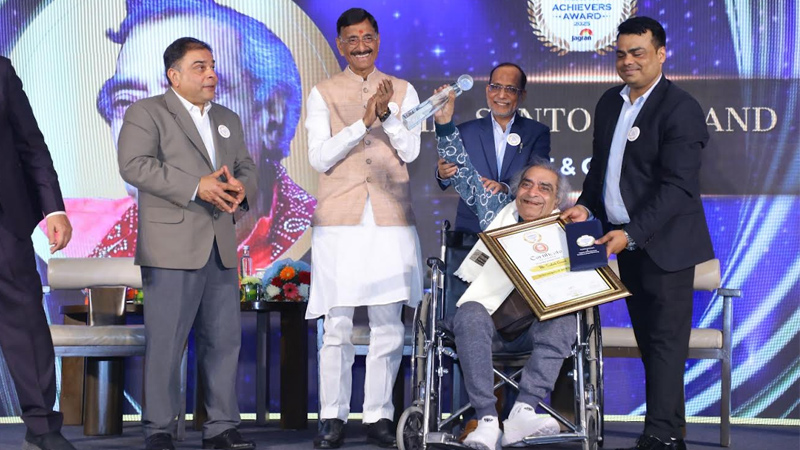
NEW DELHI: Hamdard Laboratories gathered a cross-section of India’s achievers in New Delhi on Friday, handing out the Hakeem Abdul Hameed Excellence Awards to figures who have left their mark across healthcare, education, sport, public service and the arts.
The ceremony, attended by minister of state for defence Sanjay Seth and senior officials from the ministry of Ayush, celebrated individuals whose work blends professional success with a sense of public purpose. It was as much a roll call of achievement as it was a reminder that influence is not measured only in profits or podiums, but in people reached and lives improved.
Among the headline awardees was Alakh Pandey, founder and chief executive of PhysicsWallah, recognised for turning affordable digital learning into a mass movement. On the sporting front, Arjuna Awardee and kabaddi player Sakshi Puniya was honoured for her contribution to the game and for pushing women’s participation onto bigger stages.
The cultural spotlight fell on veteran lyricist and poet Santosh Anand, whose songs have echoed across generations of Hindi cinema. At 97, Anand accepted the honour with characteristic humility, reflecting on a life shaped by perseverance and hope.
Healthcare honours spanned both modern and traditional systems. Manoj N. Nesari was recognised for strengthening Ayurveda’s place in national and global health frameworks. Padma shri Mohammed Abdul Waheed was honoured for his research-backed work in Unani medicine, while padma shri Mohsin Wali received recognition for his long-standing contribution to patient-centred care.
Education and social development also featured prominently. Padma shri Zahir Ishaq Kazi was honoured for decades of work in education, while former Meghalaya superintendent of Police T. C. Chacko was recognised for public service. Goonj founder Anshu Gupta received an award for his dignity-centred rural development initiatives, and the Hunar Shakti Foundation was honoured for empowering women and young girls through skill development.
The Lifetime Achievement Award went to former IAS officer Shailaja Chandra for her long career in public healthcare and governance, particularly in the traditional systems under Ayush.
Speaking at the event, Hamdard chairman Abdul Majeed said the awards were a tribute to those who combine excellence with empathy. “These awardees reflect Hakeem Sahib’s belief that healthcare, education and public service must ultimately serve humanity,” he said.
Minister Seth struck a forward-looking note, saying India’s young population gives the country a unique opportunity to become a global destination for learning, health and wellness by 2047.
The ceremony also featured the trailer launch of Unani Ki Kahaani, an upcoming documentary starring actor Jim Sarbh, set to premiere on Discovery on 11 February.
Instituted in memory of Unani scholar and educationist Hakeem Abdul Hameed, the awards have grown into a national platform that celebrates those building a more inclusive and resilient India. For one evening at least, the spotlight was not just on success, but on service with substance.






