News Headline
TRAI open house: Broadcasters root for tariff distinction between subscribers


MUMBAI: With an aim to get the broadcasters’ viewpoint on tariff issues related to commercial subscribers, the Telecom Regulatory Authority of India (TRAI) held an open house discussion in Delhi on 18 August.
While welcoming the open house initiative held under TRAI chairman Ram Sewak Sharma, the Indian Broadcasting Foundation (IBF) member channels discussed issues including differentiation between domestic and commercial subscribers for provision of TV signals, the criteria for drawing distinction between ordinary subscribers and commercial subscribers, tariff framework both at wholesale and retail levels, transparency and accountability in value chain to effectively minimise disputes and conflicts among stakeholders and engagement of broadcasters in the determination of retail tariffs for commercial subscribers.

IBF president and Star India CEO Uday Shankar said, “It is inconceivable that any sector regulator would actually equate five star hotels and commercial establishments with domestic consumers as far as tariffs are concerned. But that’s exactly what TRAI has done with rates for pay TV channels. I am not sure what exactly the regulator is trying to achieve with the present dispensation, i.e. five star hotels availing TV content at subsidised rates especially when they charge a leg and arm for a room, a meal or even a bottle of water? It appears to be a case of misguided regulatory zeal. I hope better sense prevails and the regulator does what is in the interest of its primary stakeholders, i.e. broadcasters and distribution platforms and not five star and four star hotels.”
IBF secretary general Girish Srivastava added, “In keeping with the priorities of the current government of improving ease of doing business in India, such fixation is not warranted and forbearance should be the way forward. We believe that the regulator will factor that putting a ceiling on tariff will not help in promoting and protecting the interests of the ordinary consumers but will serve as an aberration to the growth story of the sector. Broadcasters have been unvarying and undeviating on this front and the regulator will hopefully keep this in mind before deciding on a regulation.”
According to Multiscreen Media Limited general counsel Ashok Nambissan, commercial and residential subscribers are two completely different categories. “The residential subscriber consumes television content for his or her own use whereas the commercial subscriber provides television content for his customers to propagate the business of his establishment. Tariff regulation in today’s age is an anomaly: in any event it should not exist for commercial subscribers as a category whether at the wholesale or retail level and should be left to the market,” he said.
Zee Entertainment president – legal & regulatory A. Mohan opined, “All along it has been TRAI’s consistent stand that there is a distinction between ordinary and commercial subscribers and the same has been recognised by various judicial forums such as the Hon’ble TDSAT and the Hon’ble Supreme Court of India. This stand of TRAI is also reflected in various tariff orders of TRAI, except the last one, that the tariff applicable to commercial subscribers is under forbearance. Since the commercial establishments will use the television services for commercial exploitation, whether directly or indirectly, the tariff applicable for ordinary subscriber, which is frozen since the year 2004 (which is a subsidised tariff) cannot be applied to commercial subscribers.”
Star India president – legal & regulatory Deepak Jacob said, “The Supreme Court has time and again in sectors such as oil and gas and power, clearly upheld the principles of differential tariffs for commercial and domestic subscribers. The rationale of differentiation is based on an understanding of motive and purpose i.e. commercial establishments have a clear profit motive and that the end usage is for a valuable benefit that accrues to and is built in to the charges paid by the consumer. It is also important that the regulator respects the mandate of Parliament and acts in accordance with laws laid down by the legislature by ensuring that the TRAI regulations/tariff orders are not in derogation of or repugnant to the provisions of Copyright Act, which is the principle legislation that governs content owners including broadcasters. The Copyright Act unequivocally provides for a separate dispensation in so far as commercial establishments are concerned and hence we hope that the regulator keeps the same in mind while formulating the new tariff regime.”
BBC India COO Naveen Jhunjhunwala added, “We strongly advocate a distinction between ordinary and commercial subscribers as far as tariff is concerned since the place of viewing the TV signal and type of usage of TV signals is inherently different in both these categories. Having a global presence, we have seen that the regulators have left determination of tariffs to forbearance thereby ensuring dynamic competition. With Government focus on making India an easier place to do business, leaving things to market forces will ensure growth and be in line with international scenario.”






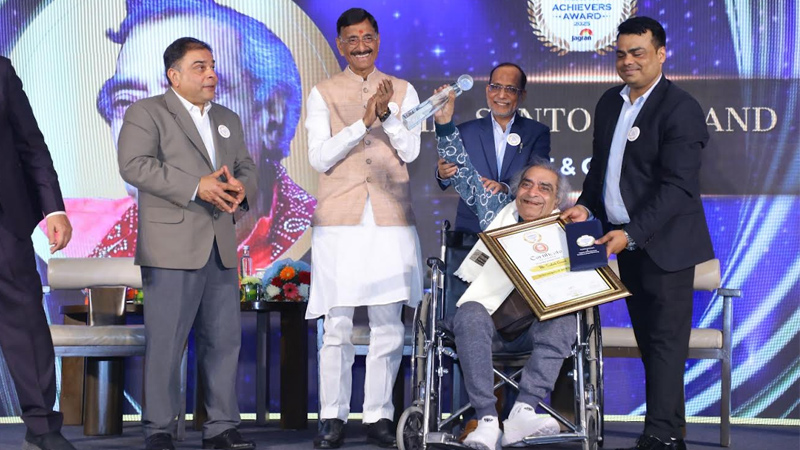
NEW DELHI: Hamdard Laboratories gathered a cross-section of India’s achievers in New Delhi on Friday, handing out the Hakeem Abdul Hameed Excellence Awards to figures who have left their mark across healthcare, education, sport, public service and the arts.
The ceremony, attended by minister of state for defence Sanjay Seth and senior officials from the ministry of Ayush, celebrated individuals whose work blends professional success with a sense of public purpose. It was as much a roll call of achievement as it was a reminder that influence is not measured only in profits or podiums, but in people reached and lives improved.
Among the headline awardees was Alakh Pandey, founder and chief executive of PhysicsWallah, recognised for turning affordable digital learning into a mass movement. On the sporting front, Arjuna Awardee and kabaddi player Sakshi Puniya was honoured for her contribution to the game and for pushing women’s participation onto bigger stages.
The cultural spotlight fell on veteran lyricist and poet Santosh Anand, whose songs have echoed across generations of Hindi cinema. At 97, Anand accepted the honour with characteristic humility, reflecting on a life shaped by perseverance and hope.
Healthcare honours spanned both modern and traditional systems. Manoj N. Nesari was recognised for strengthening Ayurveda’s place in national and global health frameworks. Padma shri Mohammed Abdul Waheed was honoured for his research-backed work in Unani medicine, while padma shri Mohsin Wali received recognition for his long-standing contribution to patient-centred care.
Education and social development also featured prominently. Padma shri Zahir Ishaq Kazi was honoured for decades of work in education, while former Meghalaya superintendent of Police T. C. Chacko was recognised for public service. Goonj founder Anshu Gupta received an award for his dignity-centred rural development initiatives, and the Hunar Shakti Foundation was honoured for empowering women and young girls through skill development.
The Lifetime Achievement Award went to former IAS officer Shailaja Chandra for her long career in public healthcare and governance, particularly in the traditional systems under Ayush.
Speaking at the event, Hamdard chairman Abdul Majeed said the awards were a tribute to those who combine excellence with empathy. “These awardees reflect Hakeem Sahib’s belief that healthcare, education and public service must ultimately serve humanity,” he said.
Minister Seth struck a forward-looking note, saying India’s young population gives the country a unique opportunity to become a global destination for learning, health and wellness by 2047.
The ceremony also featured the trailer launch of Unani Ki Kahaani, an upcoming documentary starring actor Jim Sarbh, set to premiere on Discovery on 11 February.
Instituted in memory of Unani scholar and educationist Hakeem Abdul Hameed, the awards have grown into a national platform that celebrates those building a more inclusive and resilient India. For one evening at least, the spotlight was not just on success, but on service with substance.









