News Headline
TRAI may moot MRP for bouquet TV channels; no price cap on unbundled premium products

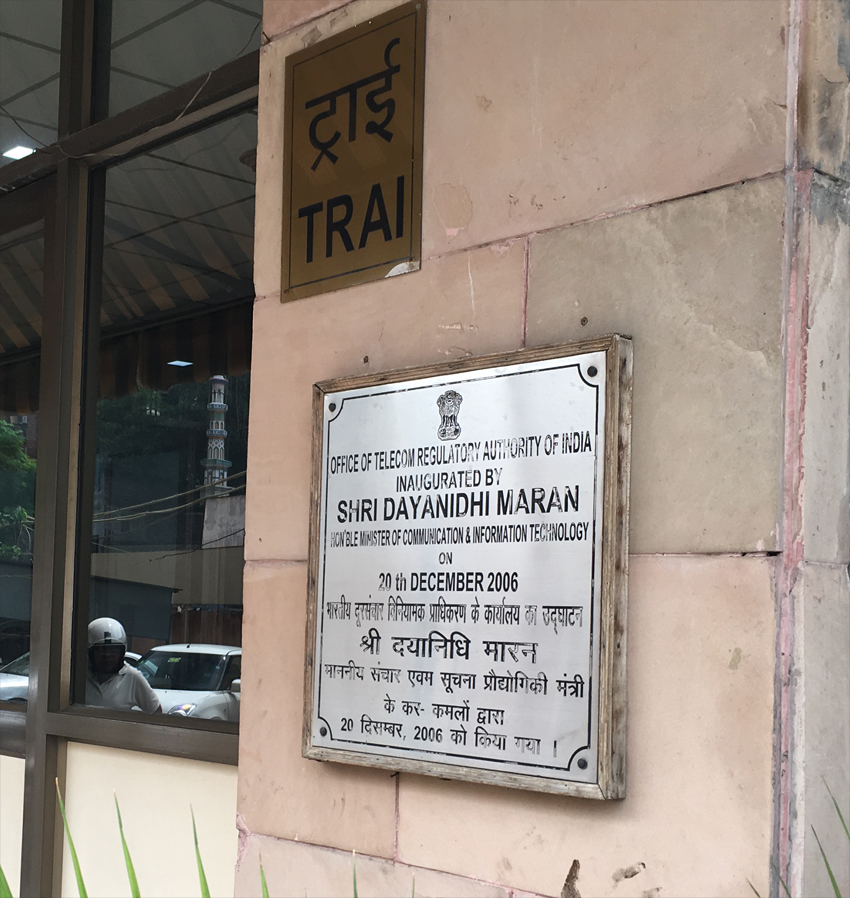
MUMBAI: Broadcast carriage regulator Telecom Regulatory Authority of India (TRAI) has lined up a slew of draft guidelines relating to tariff, quality of service and interconnections, including proposing maximum retail price (MRP) for channels being bundled in genre-wise bouquets, freeing unbundled premium channels of price caps and reining in the last mile cable operator (LCO) from breaching revenue-gravy trail.
The draft recommendations, outcome of several consultation papers issued by TRAI over the last 12 months, could be discussed in a meeting that the regulator likely to have on Wednesday with stakeholders. Representatives of organisations like All-India Digital Cable Federation (AIDCF), Indian Broadcasting Foundation (IBF) and Ministry of Information and Broadcasting (MIB) are likely to be part of the meeting.
Other topics for discussion at this meeting may revolve aroundanalogue tariffs to be levied in phase III and phase IV areas until sunset dates.

Sources in TRAI indicated the regulator is in favour of introducing MRP for TV channels that broadcasters offer in a bouquet to MSOs so the prices could be conveyed to a consumer in a transparent manner for him to make an empowered choice.
Though broadcasting companies do submit annually a-la-carte rates of their respective channels to TRAI, the regulator is of the opinion that a consumer doesn’t ultimately get to choose the channel of his choice transparently.
How will the MRP be fixed? TRAI feels that the broadcasters should convey the price themselves as they were the best judge of their products and the same would be conveyed to the consumer. Or, the regulator could moot a formula for fixing the MRP.
Fully aware that such measures could be termed restrictive and intrusive by industry players, TRAI is likely to dangle sops and suggest that broadcasters were free to price a premium channel at any level, but such channels cannot be part of any bouquet or bundling.
The draft proposals, being fine-tuned by TRAI officials, are likely to be put out in public domain over the next 7-10 days. As these guidelines pertain to carriage services, the regulator can notify them itself. The likely date from which they would come into effect is April 2017. Unless, of course, somebody moves the court challenging the guidelines.
Apart from these, TRAI is also toying with the idea of introducing an app with the help of which a consumer can get a TV channel from his distribution platform operator (DPO) after furnishing details like area of residence and area service provider’s name. The details will be get forwarded to the DPO concerned for further action.
TRAI feels that with over 90 per cent of the areas in Phase 1, II and III already receiving digitised TV services, there would be no dearth of opportunities even if the sunset date of December 2016 for Phase IV or complete digitisation gets pushed by few months into 2017.
In its consultation paper, issued in January 2016, TRAI had stated broadcast industry in India had been driven largely by satellite TV distribution business and unorganized growth of cable TV. During the early days, broadcasters were directly dealing with the cable operators who aggregated and carried broadcast TV services to end users. The distribution model was, according to the regulator, heavily skewed towards advertisement-driven revenues due to difficulties in maintaining transparency in the flow of subscription revenues across the analog value chain, which have become more transparent with the rollout of digital services or digitisation pushed by MIB andTRAI.
Though TRAI had mandated a-la-carte availability of broadcast TV channels across the value chain, including subscribers, the a-la-carte tariff is presently structured in such a manner that makes it devoid of value proposition vis-à-vis bundled offerings,TRAI highlighted in its January paper (available at http://www.trai.gov.in/WriteReadData/ConsultationPaper/Document/CP_Tariff_issues_29_Jan_2016_final.pdf ), adding consumer was the “ultimate sufferer” ending up receiving hundreds of TV channels many of which remain confined to his STB and never viewed.
ALSO READ: TRAI releases consultation paper on tariff issues for TV services
ALSO READ: TRAI allows more time for reactions on QoS methodology under DAS






NEW DELHI: Hamdard Laboratories gathered a cross-section of India’s achievers in New Delhi on Friday, handing out the Hakeem Abdul Hameed Excellence Awards to figures who have left their mark across healthcare, education, sport, public service and the arts.
The ceremony, attended by minister of state for defence Sanjay Seth and senior officials from the ministry of Ayush, celebrated individuals whose work blends professional success with a sense of public purpose. It was as much a roll call of achievement as it was a reminder that influence is not measured only in profits or podiums, but in people reached and lives improved.
Among the headline awardees was Alakh Pandey, founder and chief executive of PhysicsWallah, recognised for turning affordable digital learning into a mass movement. On the sporting front, Arjuna Awardee and kabaddi player Sakshi Puniya was honoured for her contribution to the game and for pushing women’s participation onto bigger stages.
The cultural spotlight fell on veteran lyricist and poet Santosh Anand, whose songs have echoed across generations of Hindi cinema. At 97, Anand accepted the honour with characteristic humility, reflecting on a life shaped by perseverance and hope.
Healthcare honours spanned both modern and traditional systems. Manoj N. Nesari was recognised for strengthening Ayurveda’s place in national and global health frameworks. Padma shri Mohammed Abdul Waheed was honoured for his research-backed work in Unani medicine, while padma shri Mohsin Wali received recognition for his long-standing contribution to patient-centred care.
Education and social development also featured prominently. Padma shri Zahir Ishaq Kazi was honoured for decades of work in education, while former Meghalaya superintendent of Police T. C. Chacko was recognised for public service. Goonj founder Anshu Gupta received an award for his dignity-centred rural development initiatives, and the Hunar Shakti Foundation was honoured for empowering women and young girls through skill development.
The Lifetime Achievement Award went to former IAS officer Shailaja Chandra for her long career in public healthcare and governance, particularly in the traditional systems under Ayush.
Speaking at the event, Hamdard chairman Abdul Majeed said the awards were a tribute to those who combine excellence with empathy. “These awardees reflect Hakeem Sahib’s belief that healthcare, education and public service must ultimately serve humanity,” he said.
Minister Seth struck a forward-looking note, saying India’s young population gives the country a unique opportunity to become a global destination for learning, health and wellness by 2047.
The ceremony also featured the trailer launch of Unani Ki Kahaani, an upcoming documentary starring actor Jim Sarbh, set to premiere on Discovery on 11 February.
Instituted in memory of Unani scholar and educationist Hakeem Abdul Hameed, the awards have grown into a national platform that celebrates those building a more inclusive and resilient India. For one evening at least, the spotlight was not just on success, but on service with substance.