News Headline
TRAI gets support from Subhash Chandra on inter-connect guidelines

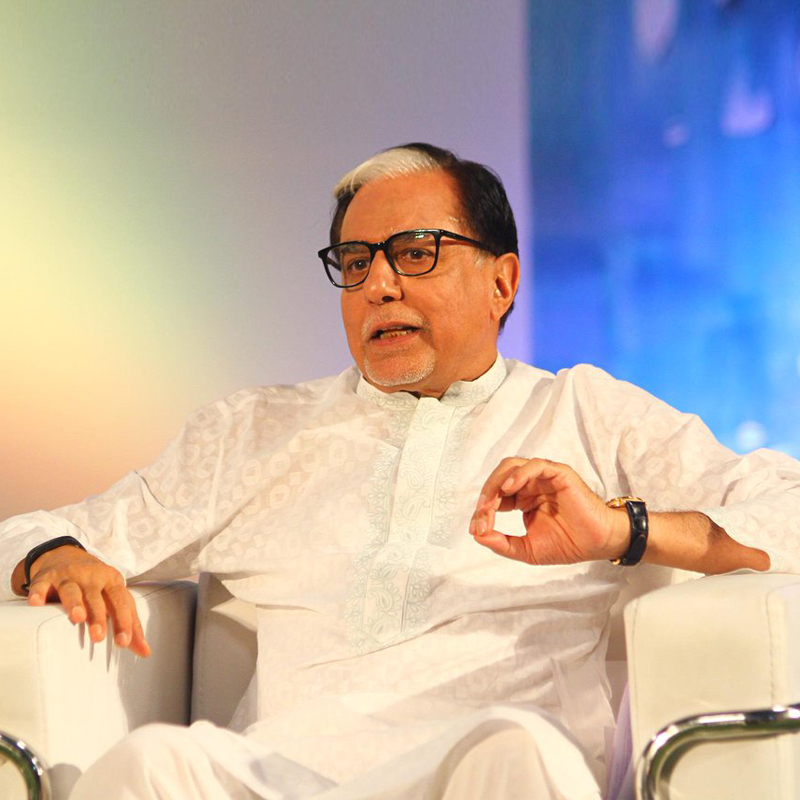
NEW DELHI: Urging all the stakeholders of the Indian broadcast and cable segments to sink their differences and “come together” for the overall benefit of the industry, Zee group chairman Subhash Chandra supported regulator TRAI’s draft inter-connect guidelines that, amongst other such broadcast regulations, have been put on hold owing to them legally challenged in courts.
“I am a strong supporter of (TRAI’s draft) inter-connect regulations,” Chandra, a Rajya Sabha Member of Parliament from Haryana state, said, adding that in order to reduce litigations amongst stakeholders in the industry it was paramount to “support” such regulations.
However, Chandra made it clear that though broadcast and cable industry should back TRAI draft guidelines at present — “at least temporarily” — such guidelines should be relaxed over a period of time and jocularly added that rampant litigations financially enriched lawyers only. He was responding to a question from the audience on growing division between broadcasters and distribution platforms, especially the MSOs and LCOs.

Earlier, delivering the keynote address at the SATCAB meet organized by the All-India Dish Antennae Aavishkaar Sangh, the Zee/Essel Group founder said that there was no reason why the estimated 230,000 (his estimates) local cable operators in the country should not shed allegiance to multiple industry bodies and “unite under one umbrella” to become a force to reckon with so that their voice could be heard more forcefully in the corridors of power.
Pointing out that not only the MSOs and LCOs should unite, but “all stakeholders” like broadcasters too, Chandra sounded a word of caution, “As an industry we need to be alert to technological evolution.” He added that unless that happens, others, like telcos, “will take a lead over consumer experience”, which will be “our weakness.”
Chandra said the cable industry had to prepare itself “to catch up with the future” as at present the industry was at “ground level with basic set top boxes”, for example, when technology (like 3D printing) could soon make it possible for viewers to get a different experience in, say, a TV cookery show.
Referring to various concerns of the LCOs, he said he had ensured that the issue of entertainment tax got subsumed in the Goods and Services Tax (GST), but for him to take up issues relating to the sector stakeholders needed to unite.
Going back in time to 1992, he dwelt on how the idea of Zee had been drawn up and how when he had given this information to a senior official in the Ministry of Information and Broadcasting (MIB), he had been strongly criticized for the whole idea and was told it would never succeed. “But in just three months of launch”, he said, “Zee had 300,000 television homes subscribing to it.”
ALSO READ:
Top M&E industry honchos see no major benefit from Budget ’17
MSOs join issues with TRAI tariff plea at Madras HC
Tariff order: Don’t notify without SC nod, TRAI told; Madras HC case to continue





NEW DELHI: Hamdard Laboratories gathered a cross-section of India’s achievers in New Delhi on Friday, handing out the Hakeem Abdul Hameed Excellence Awards to figures who have left their mark across healthcare, education, sport, public service and the arts.
The ceremony, attended by minister of state for defence Sanjay Seth and senior officials from the ministry of Ayush, celebrated individuals whose work blends professional success with a sense of public purpose. It was as much a roll call of achievement as it was a reminder that influence is not measured only in profits or podiums, but in people reached and lives improved.
Among the headline awardees was Alakh Pandey, founder and chief executive of PhysicsWallah, recognised for turning affordable digital learning into a mass movement. On the sporting front, Arjuna Awardee and kabaddi player Sakshi Puniya was honoured for her contribution to the game and for pushing women’s participation onto bigger stages.
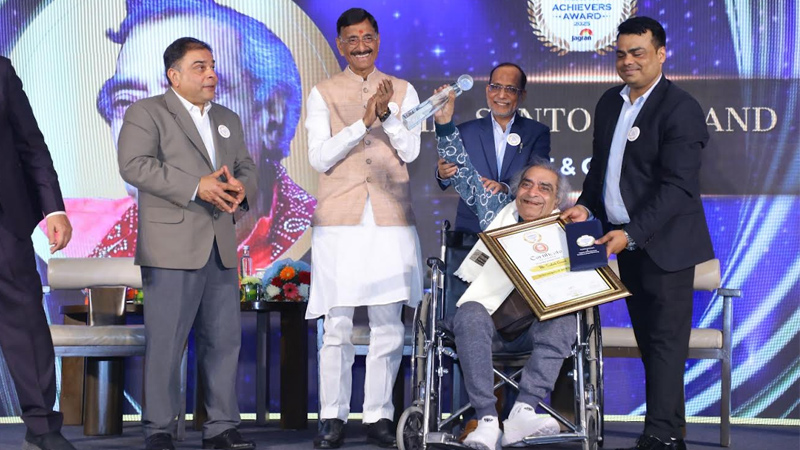
The cultural spotlight fell on veteran lyricist and poet Santosh Anand, whose songs have echoed across generations of Hindi cinema. At 97, Anand accepted the honour with characteristic humility, reflecting on a life shaped by perseverance and hope.
Healthcare honours spanned both modern and traditional systems. Manoj N. Nesari was recognised for strengthening Ayurveda’s place in national and global health frameworks. Padma shri Mohammed Abdul Waheed was honoured for his research-backed work in Unani medicine, while padma shri Mohsin Wali received recognition for his long-standing contribution to patient-centred care.
Education and social development also featured prominently. Padma shri Zahir Ishaq Kazi was honoured for decades of work in education, while former Meghalaya superintendent of Police T. C. Chacko was recognised for public service. Goonj founder Anshu Gupta received an award for his dignity-centred rural development initiatives, and the Hunar Shakti Foundation was honoured for empowering women and young girls through skill development.
The Lifetime Achievement Award went to former IAS officer Shailaja Chandra for her long career in public healthcare and governance, particularly in the traditional systems under Ayush.
Speaking at the event, Hamdard chairman Abdul Majeed said the awards were a tribute to those who combine excellence with empathy. “These awardees reflect Hakeem Sahib’s belief that healthcare, education and public service must ultimately serve humanity,” he said.
Minister Seth struck a forward-looking note, saying India’s young population gives the country a unique opportunity to become a global destination for learning, health and wellness by 2047.
The ceremony also featured the trailer launch of Unani Ki Kahaani, an upcoming documentary starring actor Jim Sarbh, set to premiere on Discovery on 11 February.
Instituted in memory of Unani scholar and educationist Hakeem Abdul Hameed, the awards have grown into a national platform that celebrates those building a more inclusive and resilient India. For one evening at least, the spotlight was not just on success, but on service with substance.








